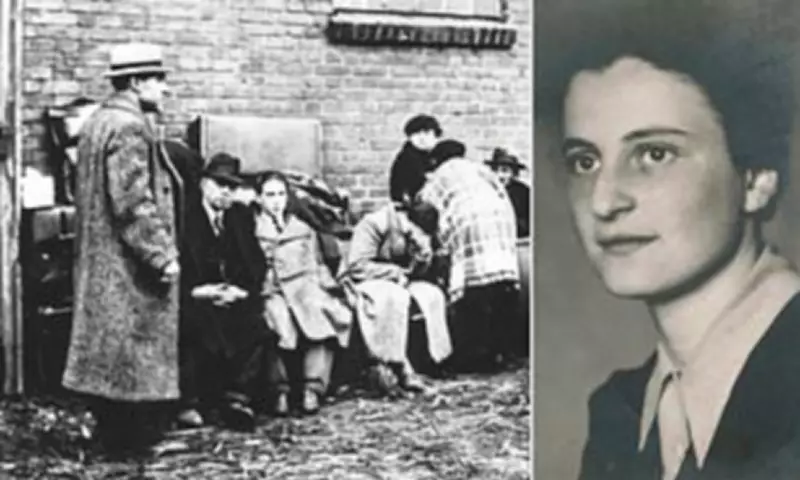
To her grandchildren, Rosi Schul appeared as a kind, proud, and impeccably groomed German woman whose past was shrouded in mystery, remembered only for embarking on a 'great adventure' long ago. The truth she concealed was far darker: she was a Jewish woman arrested, imprisoned, and interned by the Nazis, her story buried for decades. In a profoundly moving new book, her granddaughter, actress and impressionist Jess Robinson, unveils Rosi's hidden ordeal through diary entries spanning from October 1938 to March 1943, beginning when Rosi was just twenty-three years old.
A Life of Music and Culture Shattered by Persecution
Rosi grew up in a loving household rich with music and cultural pursuits, skilled at playing both piano and guitar. Surrounded by siblings, she naturally gravitated towards teaching, finding a position at an orphanage in the picturesque town of Esslingen, near Stuttgart. This idyllic setting became her benchmark for happiness, with Jess noting how Rosi would later compare English hills to Esslingen and judge new acquaintances against its standards. Photographs reveal a near-perfect existence where she performed plays with adoring children, discussed culture with headmaster Herr Rothschild, and enjoyed youthful romances. Jess describes her as a genuine Maria figure, albeit without the convent or Christopher Plummer.
The Night the Gestapo Came
This tranquility shattered at 10:30 PM on October 28, 1938, when the Gestapo arrived for Rosi and three of her young charges. Gathering her belongings, she bid farewell, taking little Theo's hand and urging the boys to remain cheerful. Unaware of the grim fate awaiting her, Rosi was confined to a cell before being herded by sneering guards into train carriages, treated like livestock with those moving too slowly shoved roughly aboard. Her defiance emerged when she retrieved a guitar delivered by Herr Rothschild and sang to fellow captives, a small act of resistance amidst systematic Nazi persecution.

Internment in Zbaszyn and Unyielding Stoicism
The group arrived at the Polish town of Zbaszyn on November 1, 1938, where thousands of Jews endured squalid conditions in stables, barns, and on train platforms with scarce food or water. Rosi's diary poignantly captures her stoicism and strength, revealing a maturity beyond her years. She understood that facing Germany's relentless, harsh power made responses of upset, indignation, or entreaty futile. This resilience is starkly contrasted by the book's second narrative thread: Jess's own diaries from 2006 onwards, creating a fascinating parallel between two twenty-three-year-olds—one surviving Nazi atrocities, the other navigating life and love in Noughties London.
Parallel Lives: Trauma and Modern Struggles
On the day Rosi arrived in Poland, crammed in filth and stench, Jess was arranging a mortgage. When Jess was assaulted by a taxi driver, Rosi focused on entertaining trapped children in Esslingen. And as Jess faced rejection from a play for looking 'too Jewish', Rosi awaited deportation for her Jewish identity. These juxtapositions force readers to acknowledge universal experiences of young women—love, lust, and loss—while highlighting stark historical contrasts. Both women underwent profound transformations: Rosi endured over six months of internment horrors in Zbaszyn, relying on her lifelong skills to teach and entertain children, striving to maintain normality amidst chaos.
Escape to England and Family Secrets Unraveled
In August 1939, Rosi accompanied children on a Kindertransport, finally settling in England as war erupted. Her love for the children she met remains palpable, offering a glimmer of hope. Jess's experiences, though less intense, were life-changing: surviving two assaults, landing a role on BBC's Dead Ringers, buying a flat, ending a toxic relationship, and, like Rosi, turning to teaching. The book's most affecting section delves into family dynamics, as Jess, her mother Jackie, aunt Stephie, sisters, and niece—dubbed the 'cool bitches'—seek German citizenship. This quest prompts Jess to request Rosi's diaries, pictures, and documents, unlocking truths hidden for eighty years.

Confronting Fractured Family Memories
The diaries reveal divergent memories of Rosi: Jackie, a gifted pianist, recalls a demanding mother who imposed high standards, restricting social outings for missed practice or weight gain, while Stephie remembers a nurturing, devoted figure. Text chains among the 'cool bitches' expose sibling tensions, with Jackie harbouring resentment and Stephie struggling to comprehend her sister's feelings. Yet, as the narrative progresses, acceptance and peace emerge, culminating in receiving German passports. This moment coincides with Jess recalling Rosi at an event at The Wiener Holocaust Library in London, where former children reunited with her, chorusing 'you were like a mother to me'.
In witnessing this reunion and claiming their passports, there is a powerful sense of reclaiming home—for Rosi, who never forgot her beloved Germany, and for a family long feeling displaced. Jess Robinson's work not only honours her grandmother's legacy but also bridges generational divides, offering a testament to resilience and reconciliation.