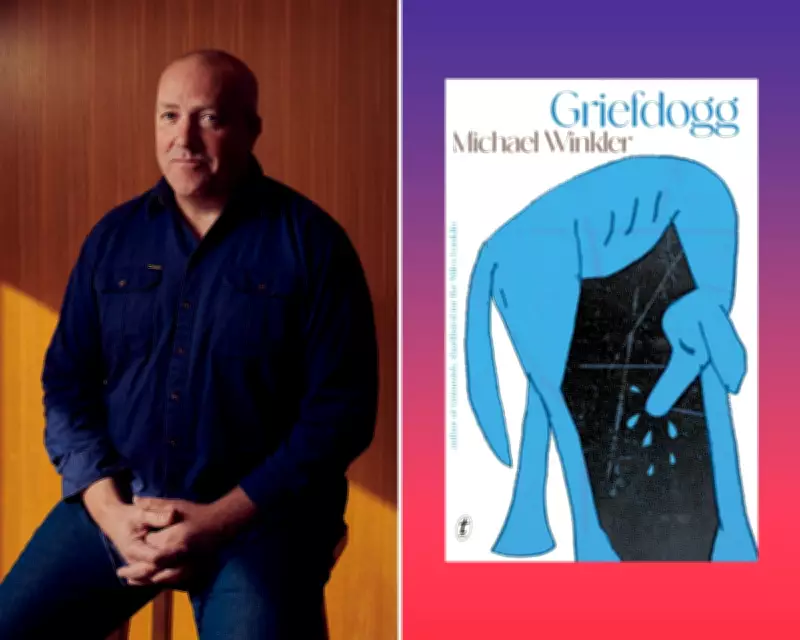
Michael Winkler's Griefdogg: A Cryptic Exploration of Psyche and Transformation
In his latest novel Griefdogg, Michael Winkler returns to the deep psychological terrain that has defined his acclaimed literary career. This ambitious work presents a surreal narrative where a man undergoes a profound metamorphosis into a family pet, serving as a vehicle for Winkler's signature exploration of existential themes. The novel builds upon the author's previous successes, including his award-winning 2016 essay on depression and the Miles Franklin-shortlisted Grimmish, continuing his examination of personal and collective psyches.
The Unraveling of Jeffrey Watson-Johnson
The story centers on Jeffrey Watson-Johnson, a middle-aged hydrologist living in Mildura whose life appears meticulously ordered. He maintains a climate-conscious lifestyle, adheres to vegan principles, and demonstrates disciplined routines both professionally and personally. Yet beneath this surface of control lies a growing sense of futility. Jeffrey's work studying water flow begins to feel meaningless against the backdrop of what he perceives as a lost climate battle, defeated by what the novel describes as "crony capitalism and toasty-warm apathy."
This existential crisis intensifies following two pivotal events: an unexpected inheritance and a consequential affair with his cousin. Jeffrey's carefully constructed world begins to fracture, leading him to a radical conclusion. He implores his family and friends to "opt me out of everything," declaring his desire to "be a human, but live as a pet." This sets in motion the novel's central transformation, where Jeffrey becomes Hubert, a family dog seeking Zen-like detachment from human responsibilities.

Metaphysical Inquiries and Narrative Complexity
Through this unusual premise, Winkler explores profound questions about human existence. The narrative examines how individuals cope with what the author terms "secret grief"—the hidden anguish that pools within every person. It questions the nature of privilege that allows for disillusionment and ponders whether treating the natural world differently would emerge if it possessed "memory and feelings."
Winkler employs sophisticated narrative techniques that draw attention to the novel's constructed nature. An unnamed narrator, who serves as an implied surrogate for the author, frequently breaks the fourth wall, acknowledging the metaphorical excavation at the story's core. These autofictional elements create a layered reading experience where the boundaries between creator, character, and reader deliberately blur. The narrator's admission "But I lie. (You know I lie!)" underscores this intentional artifice, inviting readers to question what constitutes meaningful truth in storytelling.
Bleak Comedy and Philosophical Depth
Despite its weighty themes, Griefdogg maintains a distinctive comedic tone throughout. Winkler injects the narrative with what he describes as "innumerable, gutturally groan-inducing dad jokes" that afflict Jeffrey like a psychological condition. This humor provides crucial levity against the novel's darker philosophical undercurrents, creating a unique blend of entertainment and intellectual stimulation.
The novel demonstrates Winkler's growing literary voice—erudite yet accessible, uncanny yet familiar, bleakly comic yet strangely uplifting. It functions simultaneously as an ode to ordinary people concealing ordinary secrets, a sardonic critique of navel-gazing introspection, and an investigation into contemporary masculinity and midlife inertia. The hydrological imagery that permeates the story serves as both literal description and powerful metaphor for emotional currents flowing beneath surface realities.
Critical Reception and Literary Significance
Early responses to Griefdogg have highlighted its compelling nature while acknowledging certain narrative challenges. Critics note that while Winkler excels at "scratching a metaphysical itch you didn't realise you had," the novel's disparate elements don't always harmonize perfectly. Some have observed an ironic detachment that permeates the work, possibly intentional given its themes of emotional withdrawal.

Nevertheless, the novel represents a significant contribution to contemporary Australian fiction. Published by Text Publishing and priced at $34.99, Griefdogg continues Winkler's tradition of pushing literary boundaries while maintaining accessibility. It joins a growing body of work that blends surreal premises with serious philosophical inquiry, offering readers both intellectual engagement and narrative pleasure. The novel's exploration of climate consciousness, personal transformation, and the nature of grief positions it as a timely meditation on contemporary anxieties and possibilities for reinvention.