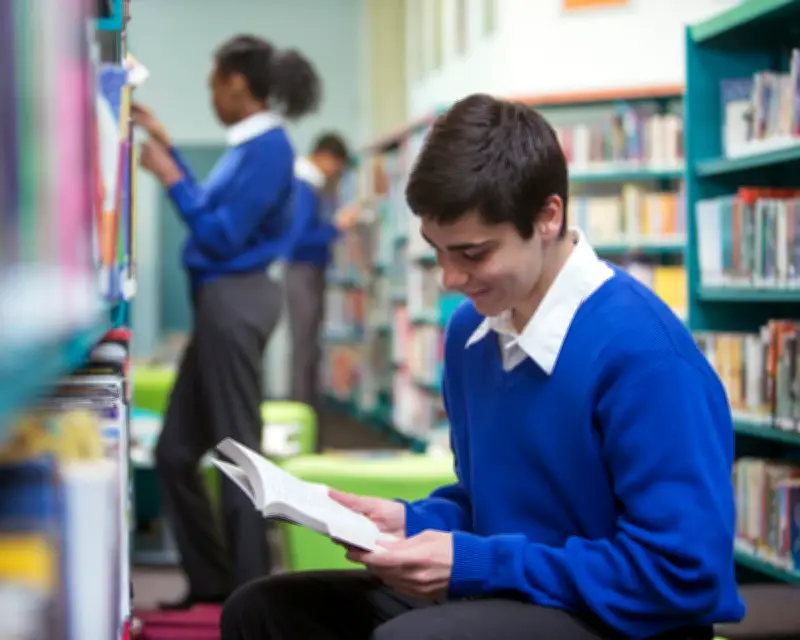
The National Year of Reading should be extended to a National Decade of Reading, according to an education committee inquiry into reading for pleasure. The committee also proposes a National Reading Guarantee to ensure all children have regular opportunities to enjoy reading.
Inquiry Findings and Recommendations
The Reading for Pleasure inquiry, launched last November, responded to a sharp decline in children reading for pleasure. Jonathan Douglas, CEO of the National Literacy Trust, told the committee that this year's National Year of Reading should be "turned into a decade of reading to sustain the foundations that are being laid." The inquiry report, published Friday, states that extending the initiative would make reading for pleasure "remains a long-term priority" and could "embed reading for pleasure into all areas of education."
The proposed National Reading Guarantee would ensure all children, "regardless of background," have frequent opportunities to "enjoy books, stories and shared reading experiences from birth to 18 as part of everyday life." The report suggests a "broad" definition of reading but emphasises encouraging engagement with "traditional" books, "recognising the particular benefits that traditional books bring." Jo Taylor, an associate professor at UCL, noted that "the complexity of the language in a graphic novel will not be the same as the complexity of a language in a traditional novel."
School Libraries and Public Funding
The cross-party committee, chaired by Labour MP Helen Hayes, recommends that the Department for Education (DfE) extend its pledge to deliver a library in every primary school to secondary schools. It also calls for restoring public library funding lost since 2010 and supports issuing library cards automatically at birth.
Screen Use and Other Factors
The report identifies screen use as a "major factor" reducing time spent reading for pleasure. Author and teacher Onyinye Iwu recounted students saying, "Miss, but we have TikTok. What is the point?" However, the report states that "England is lagging so far behind the international average that we cannot place the blame solely on screens." Other factors include the cost of living, modern work patterns, lack of library access, and "competing curriculum demands."
Gender and Special Needs
Douglas noted that boys may struggle to read because "from birth girls are more likely to be bought books as presents and to be taken to the library." Fewer male teachers and a lack of male role models who read may also contribute. The report highlights children with special educational needs and disabilities (SEND), especially those with dyslexia, as a "key priority group" missing from the year-long initiative.
Curriculum and Policy Changes
The report argues that last year's curriculum review was a "missed opportunity" to create space for reading enjoyment. It calls for diversifying the GCSE English Literature curriculum, noting that "in 2023, only 1.5% of students had studied a text by a writer of colour at GCSE." The inquiry concluded that the decline in reading for pleasure is "not inevitable" but a result of "policy choices, fragmented systems and unequal access."
Isobel Hunter, chief executive of Libraries Connected, said the committee issued a "clear call to action," urging the incoming government to "make reading for pleasure part of its wider mission to spread opportunity and improve life chances." The DfE responded, saying it would reply to the recommendations and that "everyone has a role to play in rekindling children's love of reading."