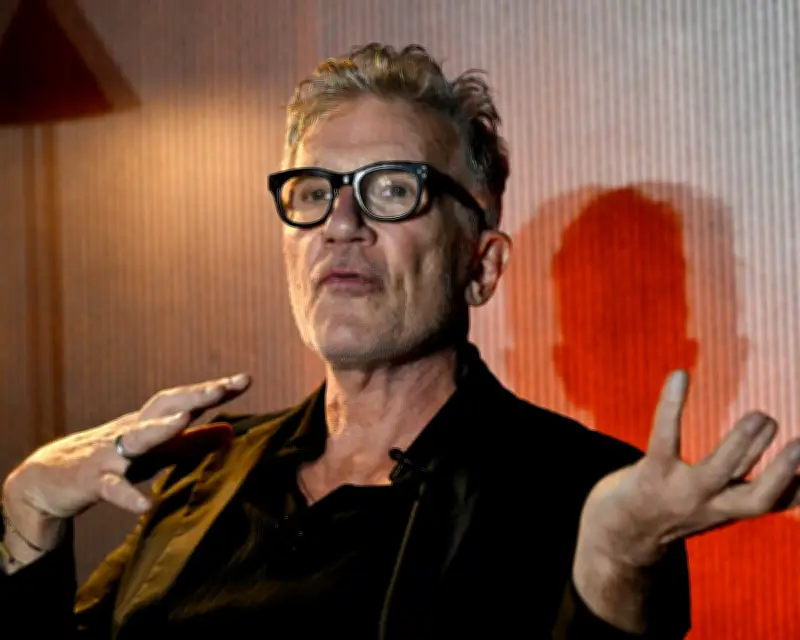
As an eight-year-old in suburban California, Michael Cunningham felt compelled to make art before he understood what it was: a painting of souls ascending to heaven, where paradise resembled the Griffith Park Observatory and the dead were shown in profile because he couldn't draw full faces. There was also a cigar box covered in gold-sprayed macaroni and a clay Noah's Ark—anything to challenge the painting of a placid white chicken on his parents' wall.
From visual arts to writing
If Cunningham moved on from visual arts, it wasn't because the creative impulse withered. Making material art served as a temporary outlet, less painful and embarrassing than capturing the world in words. 'Unsayable,' a combination of memoir and writing guide, asks what causes those feelings of embarrassment and pain. They seem to proceed from the gap between language and the vast terrain it tries to describe. Cunningham's writerly insecurity lives in that gap, feeling like an ever-present judgment on his endeavors.
Success and The Hours
Cunningham became extremely successful when he published 'The Hours' in 1998, a triple-stranded riff on Virginia Woolf's 'Mrs Dalloway.' His celebrity increased four years later with a film adaptation starring Nicole Kidman, Meryl Streep, and Julianne Moore. He later returned to a similar structure in 'Day.' He says, 'I don't work on an epic scale, though my ambitions run to more epic proportions than I like to admit.'

Discovering Virginia Woolf
Cunningham might never have discovered Woolf if he hadn't found himself secretly smoking at high school with a cool girl named Natalie, whom he wanted to impress despite suspecting heterosexuality wasn't for him. He overheard her mention Allen Ginsberg and asked what she was reading. 'It's funny you should ask,' she replied. 'I'm being just so completely transformed by Virginia Woolf.' Soon, he was too.
Personal anecdotes and reflections
The book includes observations familiar to writers on writing, but Cunningham is most engaging in depictions of himself as a man anxious to fit in. One chapter begins, 'During my senior year at Stanford, I started going to San Francisco on weekends to work as a rent boy'—a brilliant evocation of bravado and pathos. He also writes about people he won't write about: his beloved sister, and an elderly gay couple who befriended him in Provincetown. After their deaths, he wonders if they chose their lives or adapted to what society allowed. These pages are touching and unsentimental, confirming Cunningham made the right choice when he shelved the gold pasta cigar box.