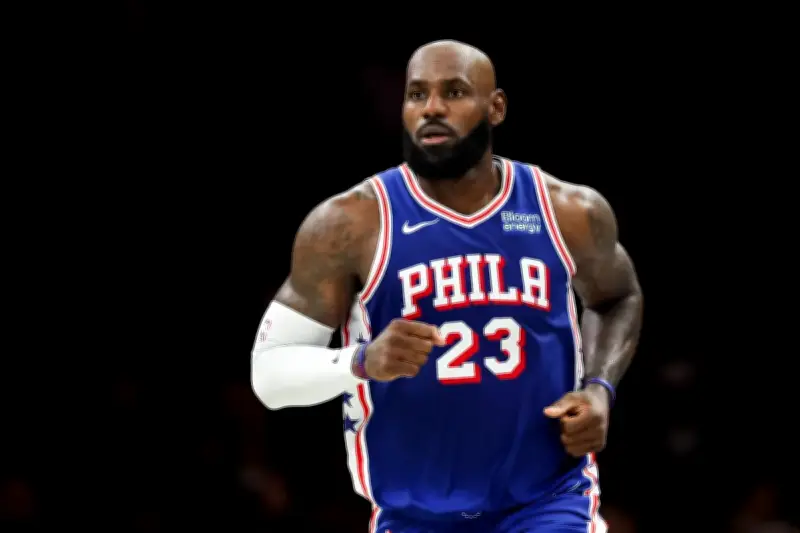
LeBron James made his pre-season debut with the Philadelphia 76ers on Thursday, stepping onto the court in Brooklyn as the city's newest sporting hope. Yet his arrival has stirred a complex reaction in a town that prizes commitment above celebrity, a tension laid bare by his own words and his choice of commute.
A City's Sporting Anxiety
The 76ers' new-look starting five debuted against the Brooklyn Nets, carrying an outsized share of Philadelphia's hopes. The timing is uncomfortable: the city is losing an athlete who spent 14 years making it his own, just as it welcomes the greatest basketball player to ever live, who has given little indication he intends to do the same.
Philadelphia's sporting identity has long been shaped by its uneasy relationship with New York, a history that has bred civic pride and insecurity. The 76ers haven't won a championship since 1983, and the city's athletes are expected to understand that burden, or at least pretend to share it.
James's Candid Confession
James admitted at last month's media day that Philadelphia had not been his preferred landing spot in free agency. The 41-year-old had dreamed of finishing his career at Madison Square Garden, only to abandon the idea after the Knicks ended their 53-year title drought in June, wary of being perceived as a ring-chaser.
Asked where he would live, he answered: "Both. Multiple residences." That apparently means commuting from New York in a Fanatics-branded helicopter that gets roughly 1.6 miles to the gallon. Publicly available flight-tracking data showed 18 trips between Manhattan and Northeast Philadelphia Airport in the first days of October alone.
From Activist to Billboard
The environmental optics have raised eyebrows. The Leonardo AW139, supplied through his sponsorship arrangement with Michael Rubin's sports merchandising empire, is unusually emissions-intensive, even by the standards of private helicopters. But in Philadelphia, the symbolism is as offensive as the carbon footprint.
James's reported $15m-a-year partnership with Polymarket, a prediction-market platform, and his involvement with Fanatics, with its connections to the gambling industry, have drawn criticism. Six years after co-founding More Than a Vote to combat voter suppression, he's now hawking online gambling and brown liquor, a transformation from athlete-activist into walking corporate billboard.
Johnson spent 14 years protecting Philadelphia's quarterbacks before deciding there were things more important than football and money. James has accumulated enough wealth to say no to almost anything, yet he keeps finding reasons to say yes.