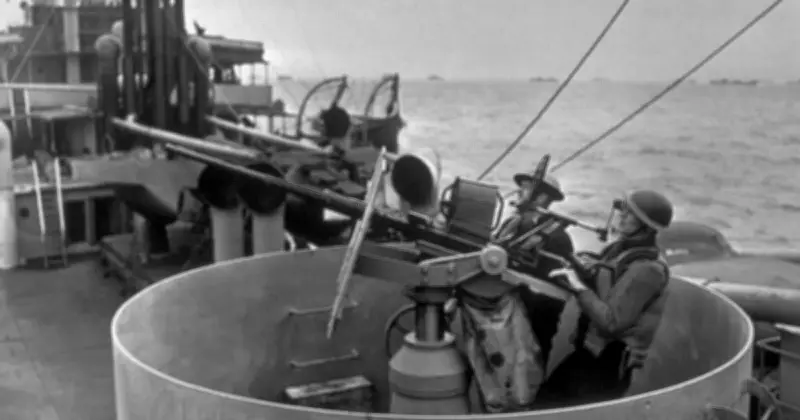
Around 33,000 Norwegian sailors spent more than five years sailing the globe on merchant ships that were, in effect, floating bombs, transporting 145 million tonnes of cargo for the Allies. Without their efforts, the UK would almost certainly have starved and the war effort collapsed. As Sir Philip Noel-Baker, Parliamentary Secretary to the Ministry of War Transport, once admitted, “Without the Norwegian merchant fleet, Britain and the Allies would have lost the war.”
Sacrifice and Suffering at Sea
Half of the 1,000 Norwegian vessels involved in supporting the Allies were sunk. One out of every nine merchant sailors died, and around a third of Norway’s mariners saw their ships attacked and sunk by enemy U-boats, planes, navy or mines. Many sailors emerged from the war hurt and traumatised, both mentally and physically, their stories of service and sacrifice lost to the wider world.
Among the estimated 2,600 sailors who served continuously in the Norwegian merchant fleet from the war’s outbreak to its end was John Toralf Vignes, the grandfather of the article's author. Born on the small island of Finnoy in 1911, John had just turned 28 when the Second World War began, having joined the Norwegian merchant navy aged 15. When Germany invaded Norway in April 1940, he was consigned to a life of peril at sea for as long as the war might continue, serving on board seven different ships over the next five years.
The Human Cost of War
The first of those ships, the Barfonn, was torpedoed and sunk by a German U-boat on October 17, 1941, taking 14 of his shipmates to the bottom of the Atlantic Ocean. The remaining six vessels were more fortunate as they criss-crossed the world from ports such as Buenos Aires and New York City with vital supplies bound for the UK, though all had their near misses. The fifth, the Kul, emerged unscathed from D-Day having carried ammunition from Southend to the Normandy beaches in support of the attacking Allied forces.
While many Norwegian sailors came to regard Liverpool as a second home, John found refuge in Cardiff, then one of the busiest ports in northern Europe. He met and later married a local girl, Phyllis Lewis. John never returned to live in Norway despite serving on board Norwegian merchant ships for the rest of his working life, being laid to rest in the Welsh capital aged 76 in 1988.
Post-War Neglect and Recognition
According to American author Kenneth Privratsky in his new book The Norwegian Merchant Fleet In The Second World War, unlike most of the Norwegian military, these sailors did not return to Norway immediately after the war ended. They remained spread throughout the world and only returned home when their ships were ready to do so, trickling back with little notice and no fanfare. When they did make it home, they found themselves in a country focused on other issues, not on what might have happened to them over the past half-dozen years.
There were problems with pay for those who returned to Norway, with sailors unable to access what was rightfully theirs due to bureaucratic obstinacy and their money being tied up in multiple bank accounts around the world. Other merchant sailors found their names had been removed from electoral registers because they’d been away for so long, while many received conscription notices because they hadn’t actually served in the military. Those without the support of family often struggled to find places to live, and securing work was also difficult, especially for those with health problems relating to the war. Many sailors succumbed to alcohol, depression, mental health problems and even suicide in the decades after the war’s end.
Norwegian historian Bjorn Tore Rosendahl attributes the change in recognition to a series of novels published in Norway by the author Jon Michelet about the war sailors. Since then there have been other books, a major motion picture (War Sailor, the most expensive Norwegian film ever made, released in 2022) and a public apology made by the Norwegian government for the way the country had treated its merchant sailors.
An Online Register for Families
Perhaps most crucially, an online register has been created containing the names and movements of all men, women and boys who sailed on board Norwegian merchant vessels during the Second World War, enabling families to discover what really happened to their loved ones. That register – krigsseilerregisteret.no – is now available in English as well as Norwegian and will be one of the focal points of a new museum dedicated to the Battle of the Atlantic due to open in Birkenhead next year.
“I feel so lucky to have had the opportunity to work as a historian on this topic as I get to meet so many people like you who had a father, grandfather or great-grandfather who never said anything about what they experienced,” Rosendahl said. “Now, thanks to our work with the online register, we are able to tell them something.”
Today, there is only one known survivor of Norway’s wartime merchant fleet. Born in March 1927, Ole Furuholt had just become a teenager when his homeland was invaded by Germany. During the final months of the war he worked as a messboy on board the 5,240-tonne Rena as it transported supplies mainly within British and Irish waters, with one return voyage to Canada thrown in. Now 99, Furuholt lives close to Rosendahl in the city of Kristiansand and is still, according to the historian, “remarkably vigorous and active”.
“This story is, of course, Norway’s story, but it’s also a story that belongs to Britain and the world because of the time when it took place,” adds Rosendahl, who this week gave a talk about the Norwegian war sailors in Cardiff as part of a Royal Historical Society conference on heritage links between the UK and Norway. “I think it’s important to get an impression about how it was for them and to recognise how war affected these civilians in the most brutal of ways. Hopefully what we’ve been doing over the past few years can stimulate other people into trying to find out more.”