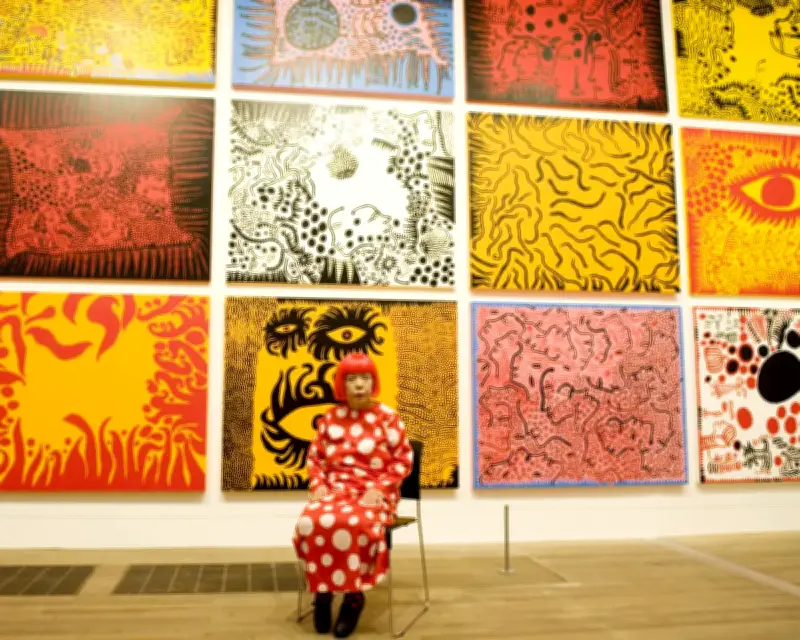
Yayoi Kusama, the 97-year-old Japanese artist known for her polka dots and immersive installations, has long credited art as her means of survival. "I fight pain and fear with art," she has said, describing how her practice channels intense psychological experiences into works that have captivated global audiences.
Her signature motifs—repeating dots, nets, and mirrored rooms—stem from hallucinations and obsessive thoughts she has experienced since childhood. Rather than hiding these experiences, Kusama transforms them into monumental, participatory pieces that invite viewers into her perceptual world.
A Pioneer for Neurodivergent Artists
Kusama's openness about her mental health struggles has made her a reference point for neurodivergent artists. By publicly living in a psychiatric facility while maintaining an active studio practice, she has challenged assumptions about creativity and disability.

Her influence extends beyond the art world. Museums and galleries increasingly recognize how her work speaks to those with autism, ADHD, and other neurodivergent conditions, seeing in her repetitive patterns a reflection of their own sensory experiences.
From Personal Struggle to Global Phenomenon
Now in her late nineties, Kusama continues to produce new work from her studio near the psychiatric hospital where she has lived voluntarily for decades. Her exhibitions routinely draw record crowds, and her Infinity Mirror Rooms have become social media sensations.
Her trajectory—from a young woman who left Japan for New York in the 1950s to a global art superstar—has inspired a new generation of artists who see her as proof that personal adversity can fuel extraordinary creative output.
Legacy and Continuing Impact
Kusama's legacy is firmly established, yet her work remains as urgent as ever. Major retrospectives continue to tour the world, and her influence is visible in the work of younger artists who cite her as a formative inspiration.
For neurodivergent artists, Kusama's career offers a powerful model: one where difference is not a barrier but a source of unique vision. Her insistence on making art from her own experience has not only produced some of the most recognizable images of our time but has also helped shift cultural conversations about mental health and creativity.