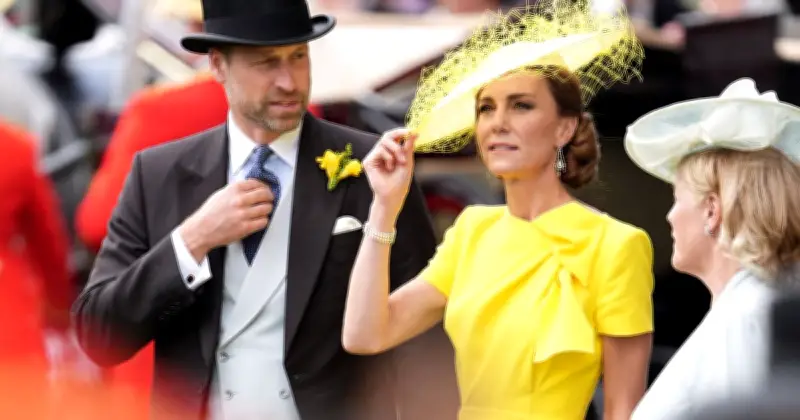
On Wednesday, June 17, the Prince and Princess of Wales attended day two of Royal Ascot at Ascot Racecourse in Berkshire, joining the King and Queen in a stylish display. While Princess Catherine's vibrant yellow dress captured attention, a subtle detail in Prince William's attire held deeper meaning.
William's Daffodil Boutonniere
Prince William wore a three-piece suit and black top hat, complying with the formal dress code. On his lapel was a bright yellow daffodil boutonniere, complementing his wife's outfit and serving as a tribute to Wales, whose national emblem is the daffodil. The flower is traditionally worn on St David's Day alongside leeks.
Notably, William chose the daffodil on June 17, the very day the Prince of Wales's Stakes took place. This historic race, named for Queen Victoria's son Albert Edward during his time as Prince of Wales, first ran at Ascot in 1862. After a hiatus during World War II, it returned before King Charles assumed the title in 1969.
Coordinated Outfits
Princess Catherine wore a yellow midi dress by Roksanda with a floaty A-line skirt, short sleeves, and an oversized bow on one shoulder. She accessorised with a netted Jane Taylor hat and neutral pointed-toe heels. Fans noted she had previously worn the same dress to the 2022 Wimbledon Women's Singles Final.
The couple arrived by horse-drawn carriage, waving to crowds, and appeared relaxed and joyful. They travelled in the second carriage with the Duke and Duchess of Richmond and Gordon, while the King and Queen rode in the first carriage with Lady Sarah Chatto and her husband. Other royals included Princess Anne, the Duke and Duchess of Edinburgh, and Zara and Mike Tindall.
Significance of the Daffodil
According to Hello, the daffodil created a charming coordinated touch with the Princess of Wales's look. As the current holder of the Prince of Wales title, William's boutonniere represented a proud show of support for the long-standing event and his principality.
Royal Ascot remains a highlight of the summer social calendar, blending fashion, sporting tradition, and royal pageantry. The Waleses' appearance reinforced their strong public presence and affinity for British heritage events. The daffodil detail, though modest, added personal significance to a picture-perfect day.