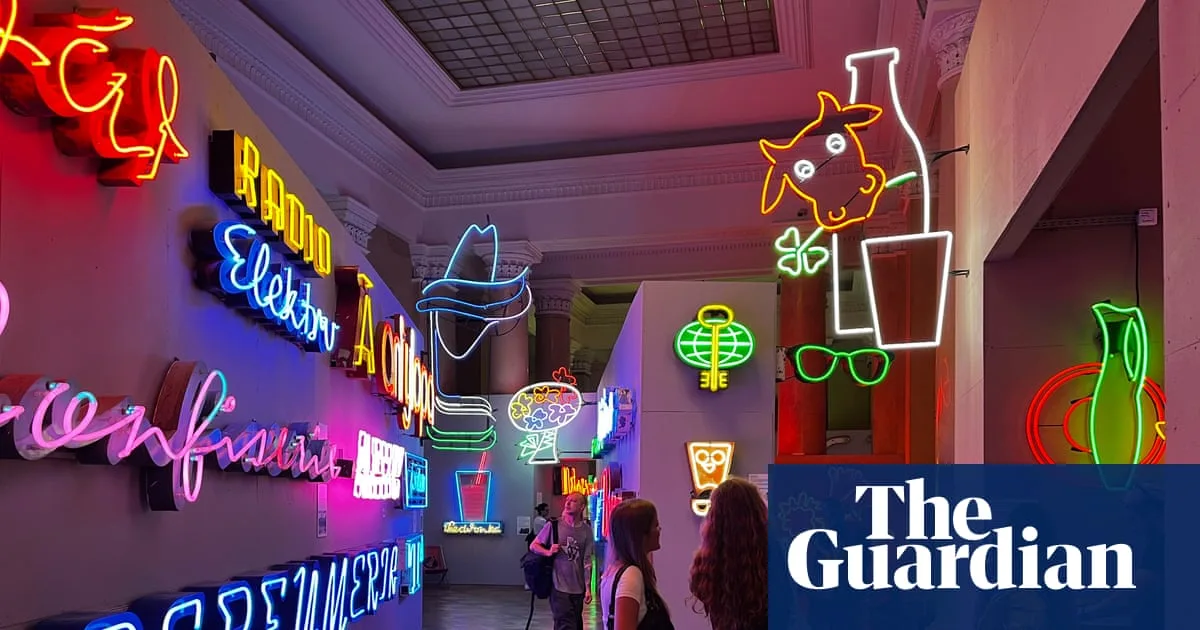
Warsaw's neon signs, once symbols of light and hope in the grim decades of Communist rule, are experiencing a renaissance, thanks to the efforts of a museum that has rescued them from neglect. The Warsaw Neon Museum, founded in 2012 by photographer Ilona Karwińska and graphic designer David Hill, attracts more than 100,000 visitors a year with its collection of Cold War-era illuminations.
After the fall of communism in the late 1980s, many signs lost their purpose, left to rust or taken to scrapyards. Karwińska and Hill began photographing the remnants on a 2006 visit and soon found themselves devoted to their preservation. "When we started this, the neon signs were unloved and unwanted," Hill recalled. After her photographs were exhibited and published, people offered signs, leading to the museum's opening.
The history of neon stretches back to the late 19th century, with the discovery of the noble gas by British chemists William Ramsay and Morris Travers, followed by Georges Claude's pioneering use of sealed glass tubes in Paris. Warsaw installed its first neon sign in 1926, but few survived the Second World War when occupying Nazis razed up to 90% of the city. In 1956, the Soviet-backed government launched a "neonisation" programme through the Reklama company, commissioning prominent designers such as Jan Mucharski and Tadeusz Rogowski to create striking signs.
The signs also carried political significance. During martial law from December 1981 to July 1983, authorities often turned off the lights, plunging the city into darkness. Hill noted that while bureaucrats were wary of Western-style advertising, creative designs sometimes became popular logos, creating a "tricky situation" for officials.
Today, the museum not only displays signs but also restores them to their original locations, including a 4-metre-tall red cockerel and a Syrenka mermaid. The revival has inspired new neon creations, such as Mariusz Lewczyk's "It's nice to see you" sign on the Gdański Bridge, ensuring Warsaw's luminous heritage continues to glow.