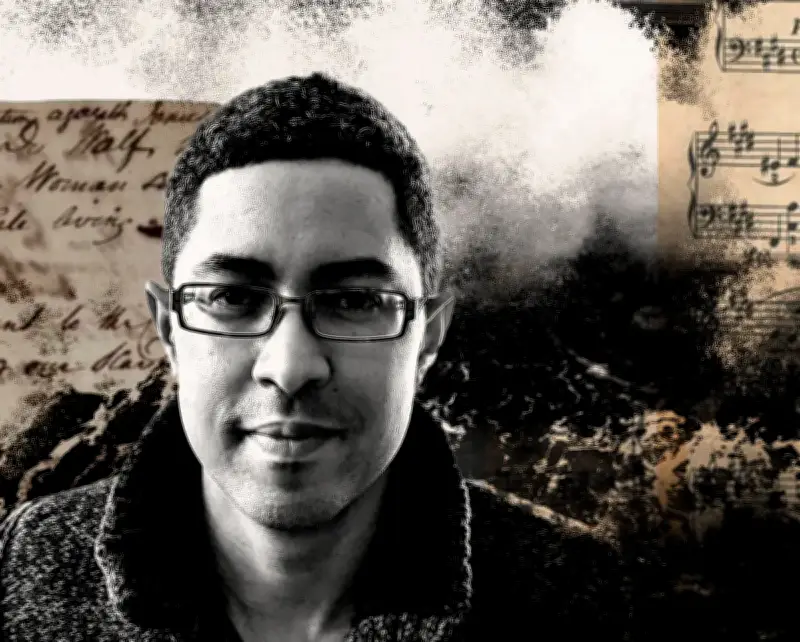
The Atlantic Requiem, a new work by Manchester-based composer David Önaç, will premiere on Sunday at LSO St Luke's in London, performed by the London Symphony Orchestra and BBC Singers. Commissioned by the arts and heritage charity Culture&, the piece grew out of research into Lloyd's of London, the historic insurance market whose members helped insure ships and enslaved Africans during the transatlantic slave trade.
A requiem born from insurance documents
The project began when Dr Errol Francis, artistic director and chief executive of Culture&, noticed a contradiction in a centuries-old insurance document detailing the trafficking of enslaved Africans. The document began with the words “In the name of God, Amen,” yet treated human beings as cargo. This gave him the idea of using such documents to create a requiem in memory of those enslaved.
Sponsored by Lloyd's, the 40-minute, five-movement work brings together Catholic liturgy, historic insurance documents and testimony concerning the killing of an enslaved African woman aboard a ship in 1790. Its musical language combines contemporary classical composition with jazz, gospel and other traditions that emerged on both sides of the Atlantic. The performances, taking place during Black History Month, will be conducted by Grammy award-winning conductor Malcolm J Merriweather.
Confronting violence and exploring heritage
While the work ultimately moves towards reconciliation and joy, some of its most harrowing passages confront the violence of enslavement directly. The second movement draws on a 1791 grand jury testimony concerning the killing of an enslaved African woman aboard the brig Polly, commanded by James DeWolf. The testimony, preserved by the Newport Historical Society, records the account of John Cranston, a crew member who described a horrific incident during the ship's voyage from Africa to the West Indies in 1791.
According to Cranston, an enslaved woman suspected of having smallpox was bound to a chair, gagged and thrown overboard on the captain's orders, amid fears she would infect others aboard the ship. For Önaç, who is of mixed heritage and hails from both sides of the Atlantic, the piece was an opportunity to explore longstanding questions about where he belongs.
Commentary on modern society
Lloyd's has acknowledged its historical links to enslavement, and after the publication of the Underwriting Souls interactive archive, it announced its Inclusive Futures programme, aimed at supporting Black and ethnically diverse communities. Francis is careful to distinguish the requiem from important questions of financial redress, saying, “It's not about reparations; it's about an artwork that acknowledges the suffering, but also the survival of African people.”
Önaç added that the requiem is not only a response to historical atrocities but a commentary on modern society: “Everything's so polarised and segregated and polemical right now, it seems to me, and I've tried to portray that in the black and white notes. It's not just for then; it's a commentary on now as well.”