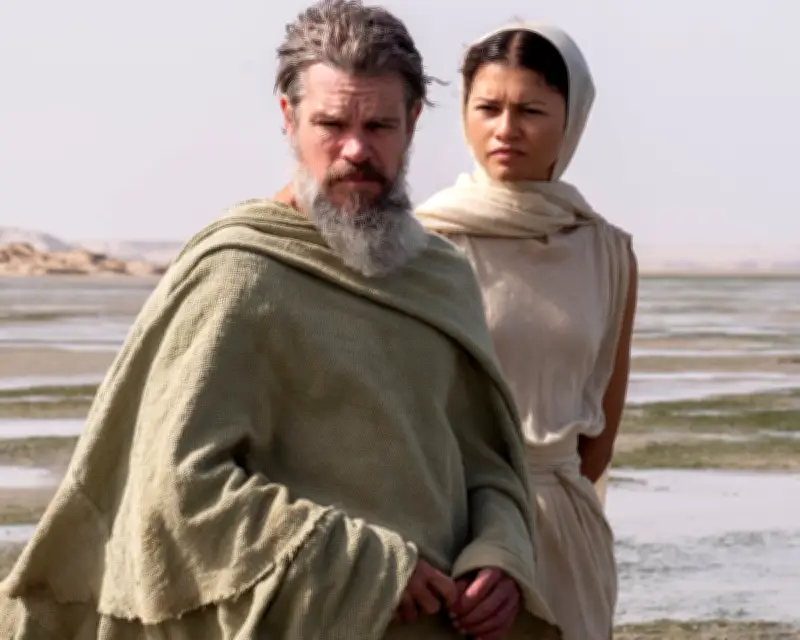
Emily Hauser, an ancient historian and author, offers a classicist's verdict on Christopher Nolan's film adaptation of Homer's Odyssey. She argues that while Nolan's epic captures the visual grandeur of the ancient poem, it fundamentally reshapes the hero Odysseus into a modern, guilt-ridden figure, while downplaying the complexity and agency of female characters.
The Hero's Transformation: From Cunning to Remorseful
Homer's Odysseus is a complicated man—a liar, a storyteller, and a pragmatist who accepts the loss of his crew with a bitingly pragmatic attitude: 'We sailed off sadly, happy to survive, but with our good friends lost.' In contrast, Nolan's Odysseus, played by Matt Damon, is a sensitive and repentant hero who spends much of the film seeking forgiveness for the deaths of his men and the destruction of Troy. This modern Hollywood hero learns remorse and seeks absolution, a departure from the Greek heroic ideal where heroes often destroy their communities in pursuit of their goals.
Omissions and Additions: What Nolan Changed
Nolan's film makes significant omissions from Homer's original. The hubris of Odysseus that brings a curse upon his crew is omitted. In the film, Odysseus returns to Ithaca and faces armed suitors, unlike Homer's version where he locks up their weapons. Most notably, Nolan alters the fate of the enslaved women: in Homer, Telemachus hangs them, but Nolan has Penelope execute Melantho. The film also cuts the character of Nausicaa, the princess who helps Odysseus return to Ithaca, and portrays Calypso as drugging Odysseus with lotus to make him forget his home.

The Role of Women: Nuance Pushed Overboard
Homer's Penelope is a match for her cunning husband, proffering the famous bed test that demands mutual recognition. In Nolan's film, this challenge is absent, and Penelope is more readily accepting of Odysseus's return. Hauser notes that female characters like Calypso and Penelope are stripped of their complexity, becoming straightforward obstacles or supporters rather than nuanced individuals. This shift reflects a Hollywood tendency to focus on the male hero's inner turmoil at the expense of other stories.
What Nolan's Hero Says About Our Times
Hauser argues that Nolan's Odysseus is a product of modern sensibilities—a man seeking redemption, solidarity among men, recognition from women, and absolution for the fall of a civilisation. This reorientation tells us what Nolan, and Hollywood, sees as heroic: a flawed genius grappling with trauma and guilt, reminiscent of protagonists like Oppenheimer. While the film offers stunning visual effects and epic spectacle, it sacrifices the moral ambiguity and richness of Homer's original.
In the gap between Homer's sung verses and Matt Damon declaiming to an Imax camera, Nolan's Odyssey presents a hero for our times. As Hauser concludes, 'Make of that, in the current climate, what you will.'