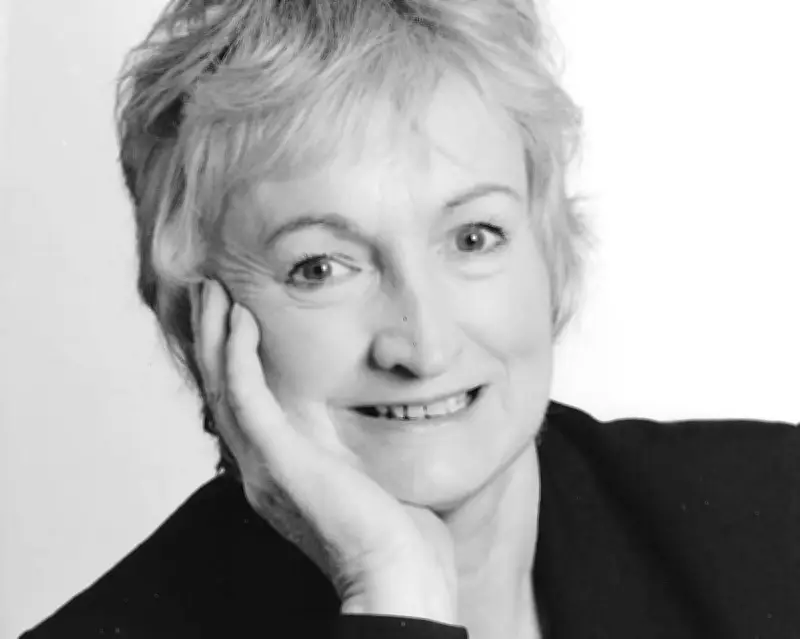
Mary John, a developmental psychologist and instrumental figure in movements for equal rights for people with disabilities and children's rights, has died aged 85. Her childhood experience of isolation in an iron lung inspired her later work.
Career and advocacy
In the 1970s and 80s, Mary found her vocation as an academic specialising in disability in the social sciences faculty of the Open University, where she worked closely with Vic Finkelstein. During that time, she also served on the US Committee on the Employment of the Handicapped under the Jimmy Carter administration and helped set up the European Commission's Bureau for Action in Favour of Disabled People.
In 1992, now at the University of Exeter, Mary hosted the first global conference on children's rights to involve children themselves. She later edited the book series Children in Charge, including her own title, Children's Rights and Power: Charging Up for a New Century (2003). In 1996, she received a European Woman of Achievement award, and in 1999, the OU awarded her an honorary doctorate for her lifetime's work for disadvantaged people.

Early life and education
Born in Wigan, Lancashire, Mary was the daughter of Elvira (nee Evans) and William John, a headteacher. At age seven, she was hospitalised with peritonitis and septicaemia and placed in an iron lung. As was medical orthodoxy at the time, her parents were not allowed to visit, but no one explained any of it to her. She later wrote she was "a child abandoned, bewildered, drugged, hallucinating and desperately solitary … This child faced the same problems that have beset children in many places, at many times – problems of recognition of her needs, of establishing identity, agency, of managing relationships wisely and richly, of exercising power and of finding a voice that is heard."
After Wigan county high school for girls, Mary studied psychology at the University of Nottingham, graduating in 1962. A Medical Research Council scholarship under Elizabeth and John Newson, who were revolutionising the study of parenting, followed, and in 1996 she completed her PhD on the social adjustment of children. Mary then lectured at Nottingham and Bristol universities, and for seven years at Exeter, before joining the OU in 1974.
Later career and legacy
In 1990, she returned to Exeter as the first female professor of education. She became dean of education and director of the Women's Studies Centre in 1995, before being appointed deputy vice-chancellor the following year. After retirement in 1998, Mary continued to work as an author, editor and consultant.
Outside work, Mary pursued creative endeavours, from a full-size papier-mache pony for her student union ball to watercolours for friends and an immaculate pair of curtains that still hang in the family window. In 2008, she was learning calligraphy when a stroke left her with severe disabilities. Characteristically, she reflected on her situation from a societal and academic perspective.
A marriage to John Croxen in 1964 ended in divorce in 1978. She is survived by her sons, Dan and Adam, four grandchildren, Cerys, Huw, Martha and Harry, and her sister, Heulwen. Her brother, Gareth, predeceased her.