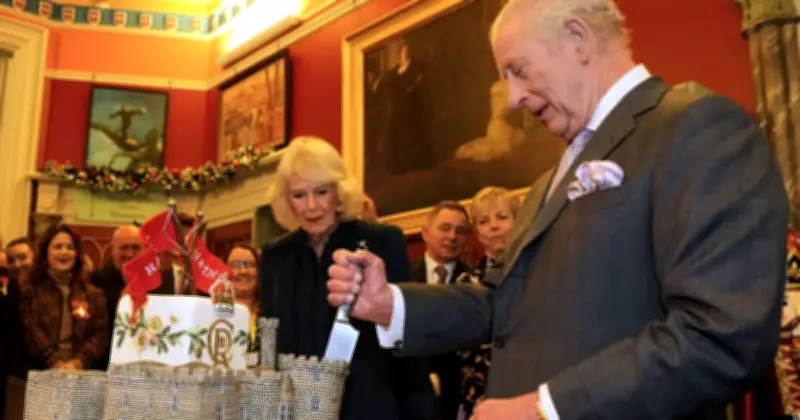
People are just realising why King Charles has two birthdays, and they are not happy about it. King Charles III was born on November 14, 1948, but he also celebrates his birthday on the second Saturday of June every year. By Alan Johnson, Social News Reporter. PUBLISHED: 07:02, Sat, Jun 13, 2026.
The King has two birthdays, and some people are only just discovering why. King Charles III may have been born on November 14, 1948, but he will be celebrating today (June 13) too. In a tradition that dates all the way back to King George II in 1748, the reigning monarch benefits from two birthdays: both the date on which they were born and the second Saturday in every June.
Known as the official public birthday of the king or queen, the occasion is marked by the grand military parade, Trooping the Colour. The idea behind a June birthday is simple: to help improve the likelihood of a sunny, warm day during such a public celebration. Despite the tradition being around for centuries, however, it seems some Brits are only just learning it exists, and they are not impressed by it.
"This tradition dates back to 1748, when the monarch's birthday began to be celebrated with the Trooping the Colour parade," explained the Great British Tea Party Facebook page. "However, it was Edward VII (born in chilly November) who decided to hold his official birthday in May or June, hoping for better weather for the grand outdoor event. Charles' grandfather, King George VI, reintroduced the idea of having an 'official birthday', a tradition continued by Queen Elizabeth II and now by King Charles III."
Writing in response on social media, one person who was previously unaware of the tradition fumed: "Must be nice to be rich and powerful." Another slammed: "That is one of the dumbest, richest things I've ever heard." A third pondered: "What bigger waste of time and money is there?" And a fourth hit out: "That is the most British thing I've ever read."
However, one Royals fan said she supported the idea, commenting: "I'm all for it, especially if you get cake and presents at all celebrations, especially cake." A second individual agreed: "As someone with a birthday in February, I like this idea. My birthdays have always been indoor events. And I've never had a parade for my birthday." A third quipped: "So what you're saying is... they celebrate unbirthdays? I love it." And a fourth wrote: "It's the royal equivalent of when the kids whose birthdays were over the summer could 'celebrate' them at school at the beginning of the next school year."
At the beginning of the Trooping the Colour ceremony, the King is greeted by a Royal Salute on Horse Guards Parade and a 41 Gun Salute fired by The King's Troop Royal Horse Artillery from The Green Park. The King then inspects his troops. One regiment of the Foot Guards is selected to troop their Colour in front of the King each year. This year is the Grenadier Guards' turn, who have Queen Camilla as their Colonel. There are five regiments of the Foot Guards who march from Buckingham Palace to Horse Guards Parade in Whitehall: the Grenadier Guards, the Welsh Guards, the Irish Guards, the Scots Guards and the Coldstream Guards.