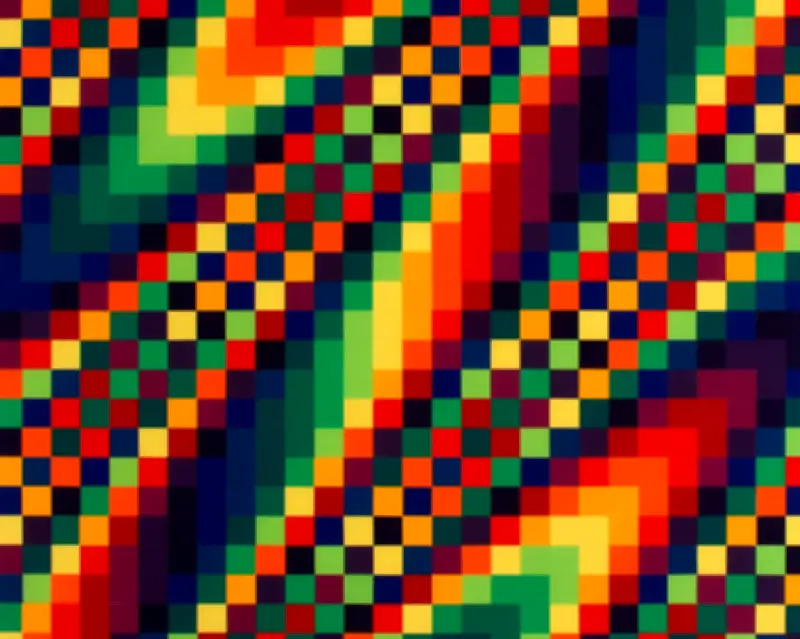
The Tate Modern in London is currently hosting a vibrant retrospective of the late Argentine-French artist Julio Le Parc, a key figure in the 1960s avant-garde movement GRAV. The exhibition, which runs from 11 June 2026 to 3 May 2027, invites visitors to engage physically with the artworks, challenging traditional notions of passive spectatorship.
A Carnival of Perception
Le Parc, who passed away on 30 May 2025 at the age of 96, found his artistic voice in the febrile atmosphere of 1960s Paris. This exhibition, imbued with an anarchist spirit, encourages visitors to push buttons, spin paintings, and interact with the works. It is as if Bridget Riley had decided to open a riotous funfair, replacing contemplative silence with playful engagement.
One of the simplest yet most effective pieces, Pattern to Manipulate, consists of a disc painted with a black-and-white abstraction. A red arrow on the wall indicates the direction to spin it; when spun rapidly, the black and white merge into pure white. Such works are not subtle, but Le Parc and his colleagues in GRAV (Groupe de Recherche d'Art Visuel) were deliberately rejecting the quietude of traditional museums.

From Op Art to Interactive Spectacle
Le Parc began his career experimenting with geometric paintings that warp and shimmer, much like Op Art pioneer Bridget Riley. His early works challenge viewers to question their perceptions, revealing the fragility of reality. However, GRAV sought to go further, involving the onlooker physically. In Screen with Reflective Blades (1966), a red canvas hung behind mirrored slats changes with every movement of the viewer, creating kaleidoscopic illusions. Ensemble of Eleven Surprise Elements (1967) features shelves with random objects—bicycle spokes, fan belts, geometric cutouts—that move and make noises when buttons are pressed, blurring the line between art and play.
Le Parc's works also achieve transcendent beauty. One piece, which appears as a bunch of unfurled toilet rolls, when activated by a fan, creates the illusion of a giant squid's tentacles casting sublime shadows on the ceiling. Another, Continual Light with Four Forms in Contortion, uses reflective metal strips and lamps to warp light in expanding patterns, mystifying yet materialist.
A Paradoxical Legacy
Le Parc was a pioneer of spectacle, using simple materials to create effects that today would require advanced technology. His late work Blue Sphere, a room-filling planet of blue shards and lights, creates shimmering ethereal patterns, but risks becoming mere entertainment. The exhibition's revolutionary impulse can get lost in the light, transforming Le Parc's anarchist intentions into a soothing experience. As Matisse once said, he wanted his art to be "a soothing, calming influence on the mind, something like a good armchair." Le Parc, who aimed to change the world, may have instead designed a new kind of armchair. Nevertheless, this exhibition is a riotous good fun, offering a glimpse into a pivotal moment in art history.