From Embarrassment to Empowerment: How Ellie Verrecchia is Transforming Metal Detecting for Women
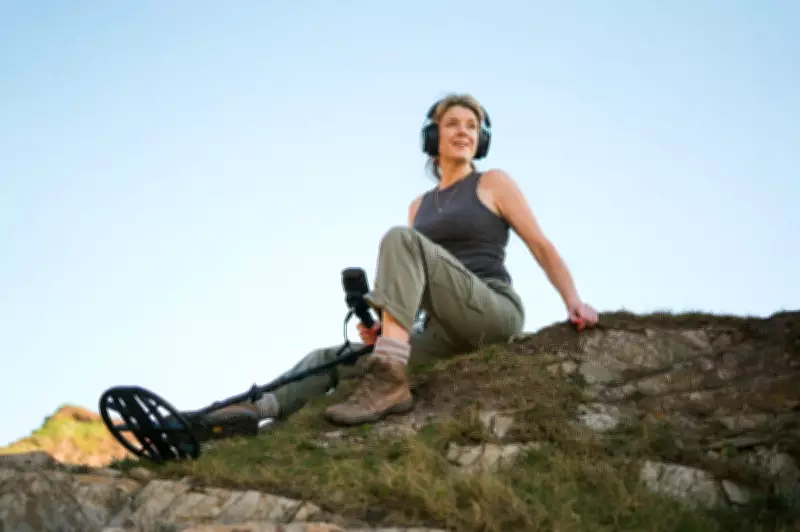
When Ellie Verrecchia arrived at her first metal detecting dig in the Cornish countryside three years ago, she immediately felt out of place. The married mother-of-two was the only woman present, surrounded by seasoned detectorists who seemed to question her presence with silent stares. "I didn't know how to hold my gear and no one said anything to me," she recalled. "It felt like the others were thinking 'who the hell are you coming to our dig?'"
A Childhood Dream Almost Abandoned
After a fruitless search during that initial outing, Verrecchia felt dejected and ready to abandon her childhood aspiration, inspired by treasure-hunting films like The Goonies and Indiana Jones and the Raiders of the Lost Ark. Just as she reached her car to drive home, however, a breakthrough occurred. One member of the group approached her, offering the name of a club and urging her to try again. "I joined it, and to be honest, I haven't looked back since," she said.
That moment marked the beginning of a remarkable journey that has seen Verrecchia, now known online as Miss Detectorist, become one of several women using social media platforms to open up the hobby to others. With thousands of followers on Instagram and YouTube, she shares her best finds—including Roman coins, Bronze Age tools, and Saxon artefacts—while encouraging more women to pick up detectors and trowels.

Changing Perceptions and Statistics
The marketing professional has helped make the hobby, traditionally associated with middle-aged men in camouflage, appear more accessible and fashionable. This shift is reflected in membership statistics from the National Council for Metal Detecting, which has seen its numbers quadruple over the past decade to 42,000 today. According to general secretary Alan Tamblyn, women now constitute between 10 and 20 percent of members—a significant increase from previous years.
"When I first started, I felt like a black sheep," Verrecchia admitted. "I looked quite different to the older guys, and unlike most of them appearing in camouflage, I would turn up in sports gear and a fleece. But things began to change quite quickly, and people were so welcoming." She believes her first dig might have been with a club unaccustomed to seeing someone like her show up, but the broader community proved more inclusive than initial impressions suggested.
Significant Finds and Personal Connections
Supported by fellow enthusiasts, Verrecchia soon made her first significant discovery: a Roman coin in a Devon field. "Being from Bath, I was thrilled," she said of the sestertius, a large bronze coin with minimal detail that nevertheless "got me completely hooked." While she has yet to find anything meeting the Treasure Act's definition—objects at least 200 years old made of at least 10 percent precious metal, or hoards of coins—her collection includes Roman and medieval coins, Roman shoe nails, and Georgian gold rings.
Her favourite discoveries have been Roman coins featuring empresses' busts. Last month, she unearthed a silver coin dating between 193AD and 211AD bearing the image of Empress Julia Domna, with the Latin inscription "age of good fortune" on the reverse. "For me, as a female detectorist, when you look down at the earth and first make out the figure of a woman looking back at you from a coin 1,800 years old, that's a special moment," she reflected. "Both she and me have different lives, but we still share the same juggles with work, family and politics. It's like a connection through time."
The Rise of Women in the Field
Verrecchia attributes the growing popularity of metal detecting to social media groups and the hit comedy series Detectorists, alongside more readily available equipment and well-advertised organised digs. Among supportive communities is the Sassy Searchers Ladies Metal Detecting Tribe, founded in 2018 and now boasting 2,400 members.

Leading group member Emma Youell, 34, shared similar initial experiences of intimidation when she started detecting twelve years ago. "It felt like everyone was looking at me and thinking 'all the gear and no idea'," she said. "Some of it was in my head, and I had to get over inner demons, but now it is much easier for women joining." The animator now attends digs where up to half of participants are women, noting that "an old-school perception that it was not what women do" has completely changed.
Last year, Youell discovered an Iron Age gold quarter stater from the Iceni tribe, led by Boudica during her revolt against Roman rule around 60AD. "For me, metal detecting is about gaining a clear head in the field with nature around," she explained. "It sort of resets me ahead of the working week. Then the bonus is the finds of history and the excitement of unearthing something dropped by someone thousands of years ago."
Rules and Responsibilities
According to the National Council for Metal Detecting, practitioners must adhere to several key rules:
- Obtain landowner permission before detecting
- Never detect on protected sites
- In England, Wales and Northern Ireland, the landowner owns any non-treasure item found on their land unless otherwise agreed
- Dig carefully and always fill holes properly
- Dispose of all rubbish responsibly
- Follow the Countryside Code
- Know and follow Treasure laws
Under the Treasure Act, finds potentially classified as treasure must be reported to a local finds liaison officer for assessment through the British Museum-managed Portable Antiquities Scheme. If declared treasure, The Crown claims it, with rewards offered to both detectorist and landowner. Notable 2024 discoveries included a hoard of 179 silver pennies likely buried before the Battle of Hastings in 1066.
Looking to the Future
For Verrecchia and many detectorists, most finds don't qualify as treasure, instead filling home collection drawers. Yet as the hobby grows in popularity, she remains committed to encouraging more women's participation. "Women make excellent detectorists because we are perhaps a little bit more thoughtful about the land and human story, and bring a fresh perspective," she asserted. "A lot of history was written by men, so it is great that we now have all different people in the process of unearthing what was left behind."
From that initial moment of embarrassment in Cornwall to becoming a prominent voice in the community, Ellie Verrecchia's journey exemplifies how personal passion and online platforms can transform traditional hobbies, making them more inclusive while preserving their historical significance for future generations.