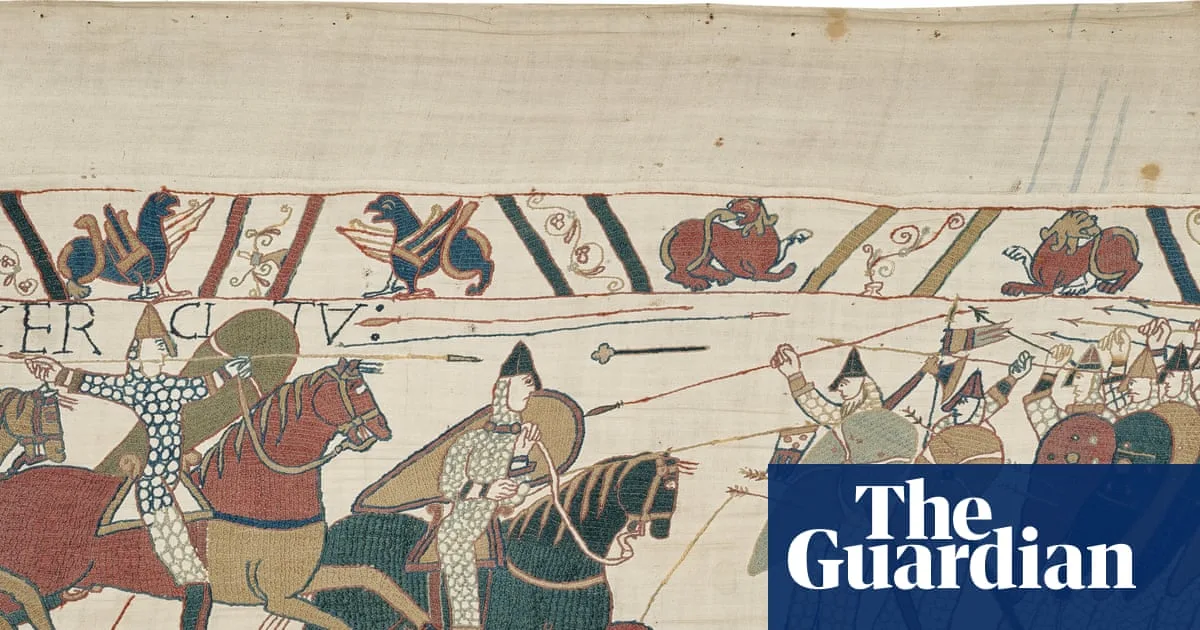
The Bayeux Tapestry is set to make a secret journey across the Channel to the UK, with French officials detailing extensive precautions to protect the fragile 11th-century embroidery. Catherine Pégard, the French minister of culture, stated that a specially constructed cradle within a container will absorb all vibrations that could damage the fibres. Humidity will be controlled, and the hanging rails fitted with shock absorbers. ‘Never in the history of moving such an object have so many test runs been carried out,’ she said, declining to specify the timing for security reasons.
The 70-metre-long work, which depicts the Norman invasion of England in 1066, will be displayed at the British Museum from 10 September until 11 July 2027. It will be shown flat in a single continuous length inside a specially designed case, alongside other artefacts from UK and European institutions to provide historical context. In return, treasures from the British Museum including Sutton Hoo artefacts and the Lewis chess pieces will be sent to museums in Normandy.
Lord Peter Ricketts, the UK special envoy, confirmed the tapestry would be returned. ‘Yes, of course we will give the tapestry back, safe and sound,’ he told a gathering of French officials. The loan has been controversial, with conservators and historians fearing damage to the Unesco-listed artefact. Pégard acknowledged the concerns but argued the work ‘lives through the eyes of those who see it’, describing the loan as an act of friendship marking 1,000 years of shared history.
The tapestry has seldom been moved since the Middle Ages, with notable exceptions including Napoleon Bonaparte's order to transport it to Paris in 1803–1804 and a transfer to the Louvre during the Second World War. Its exact provenance remains unknown, but it is thought to have been commissioned by William the Conqueror's half-brother Bishop Odo of Bayeux in the 1070s and sewn by English women. It features 58 scenes, 623 humans, over 700 animals, and 37 buildings.