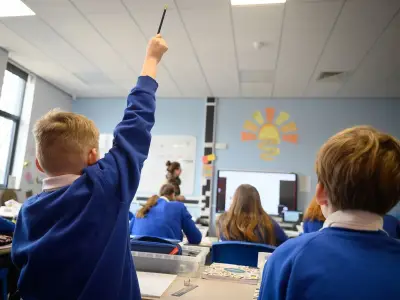
Students across the UK will receive their GCSE results on Thursday, August 20, 2026, following months of hard work and revision. Schools will receive the results on Wednesday, August 19, before students can collect their individual grades on Thursday.
Each school should provide information on what time students can collect GCSE results on Thursday, although this typically starts around 8am.
How to Get GCSE Results Online
For the first time this year, Year 11 students across England will be able to view their GCSE results on their phones, according to the government website. Students should be able to see their grades on the Education Record app.
Advice stated: "Pupils will still go into school on results day to meet face-to-face with their teachers and receive their results. Their results will later become available on the app."
Skills Minister Jacqui Smith said: "No student should have to rifle through drawers looking for a crumpled certificate when they’re preparing for a job interview. This app will give young people instant access to their results whenever they need them while freeing up teachers and college staff from unnecessary paperwork."
Some schools may also have their own online portals where they can publish exam results, so it is important to keep up-to-date with the latest information for each individual school.
Collecting Results in Person
If you are unable to collect your results in person because you are on holiday, or for any other reason such as illness or being unable to travel to school, you can usually arrange in advance for your school to send your results to you via email or post. You can also nominate someone else to collect your results on your behalf, but you will usually need them to sign a letter and bring photo ID.
Education site BBC Bitesize suggests bringing the following for results day: a fully charged mobile phone to call your family, photo ID just in case, a bottle of water to stay hydrated, a family member or trusted adult for support, and a pen and piece of paper to write down any information.
GCSE Grading System and Next Steps
GCSE exams in England use a 9-1 grading system, with 9 being the highest and 1 the lowest. A 7 is equivalent to an A, with a 4 being a standard pass and U being ungraded or fail.
The results can influence a student's future career path and next steps. Grades can determine whether a student can progress to A-levels, further education, or apprenticeships, and may even impact future university applications and career options.
When you have got your grades you can start thinking about your next steps. Some students may not achieve the grades they need to go on to study at their planned education provider, but schools should advise you on what you can do. The school or college may accept them anyway, or they may require the student to resit a GCSE. In a situation where a student has their offer withdrawn, the school may assist the student in contacting other providers to see if they have spaces. Students may opt to resit any exam if they wish, but it is a requirement for any student who receives a grade lower than a 4 in English or maths to retake the exam.