Children who are smacked by their parents struggle to achieve good exam results and are more prone to bullying others, causing a negative impact on society, according to new research that calls for a ban on smacking.
Key Findings from the UCL Study
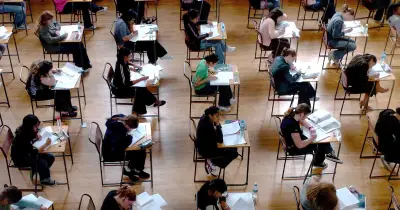
The study by University College London (UCL) found that children in England who were physically punished at the ages of three, five, and seven were significantly less likely to pass their GCSE exams compared with other children. This held true even after accounting for factors such as family background.
Using data from 19,000 children born in the UK in the early 2000s, the research also revealed that teenagers who experienced physical punishment in early childhood were markedly more likely to bully siblings and others or engage in cyberbullying.

Calls for Legislative Change
The findings have revived calls from experts, MPs, and children's welfare charities for legislators in England and Northern Ireland to take action. Joanna Barrett, the NSPCC's associate head of policy, said: 'This UCL research shows yet again that physical punishment does not improve children's behaviour and in fact has an adverse impact on their wellbeing and links to poorer outcomes in the future.'
'As is already the case in Scotland and Wales, children in England and Northern Ireland should be afforded the same protection from assault as adults. It's time to change the law and remove the defence of reasonable punishment once and for all,' Barrett added.
Jess Asato, the MP for Lowestoft, said: 'The government must act on the recommendations of this report urgently. Scotland and Wales have already shown there is a way forward that works. Now it is time for England to follow.'
Government Response
A spokesperson for the Department for Education said the new Children's Wellbeing and Schools Act in England 'will provide greater protection for vulnerable children who are at risk of abuse and neglect' but stated that the government has 'no plans to legislate at this stage' for a smacking ban.
The law in England currently allows parents to use 'reasonable punishment' as a defence if accused of hitting their child under Section 58 of the Children Act 2004.
Impact on Children
UCL's research found that physical punishment was still used by parents against more than 20% of 10-year-olds in 2020-21, and was likely to be more common among younger children in their preschool years.
The effects of smacking appeared most immediately in behaviour problems among infants, while repeated experience of physical punishment at ages three, five, and seven was associated with lower literacy.
Young people who experienced physical punishment in childhood were less likely to achieve passing grades in GCSE subjects compared with their peers. After taking family circumstances, parental attitudes, and socio-economic background into account, 48% of children who suffered repeated exposure to punishment failed to pass five GCSEs, including English and maths, compared with 42% of those who hadn't experienced it. The effects of smacking on boys appeared to be more detrimental than for girls.
Among the young people surveyed, smacking was also associated with antisocial behaviours towards others at age 14, including bullying, aggression, and vandalism.
'Given these findings, physical punishment may have a negative impact on society as a whole,' the study concluded.
Expert Opinion
Dr Anja Heilmann, the principal investigator and an associate professor at UCL, said the study's key recommendation was for England and Northern Ireland to change their laws allowing 'reasonable punishment', such as smacking by relatives.
'The decisions by lawmakers in Northern Ireland, and last year in England, to drop plans to outlaw physical punishment are a huge missed opportunity and deeply disappointing. Children have the right to be brought up free from all forms of violence,' Heilmann said.