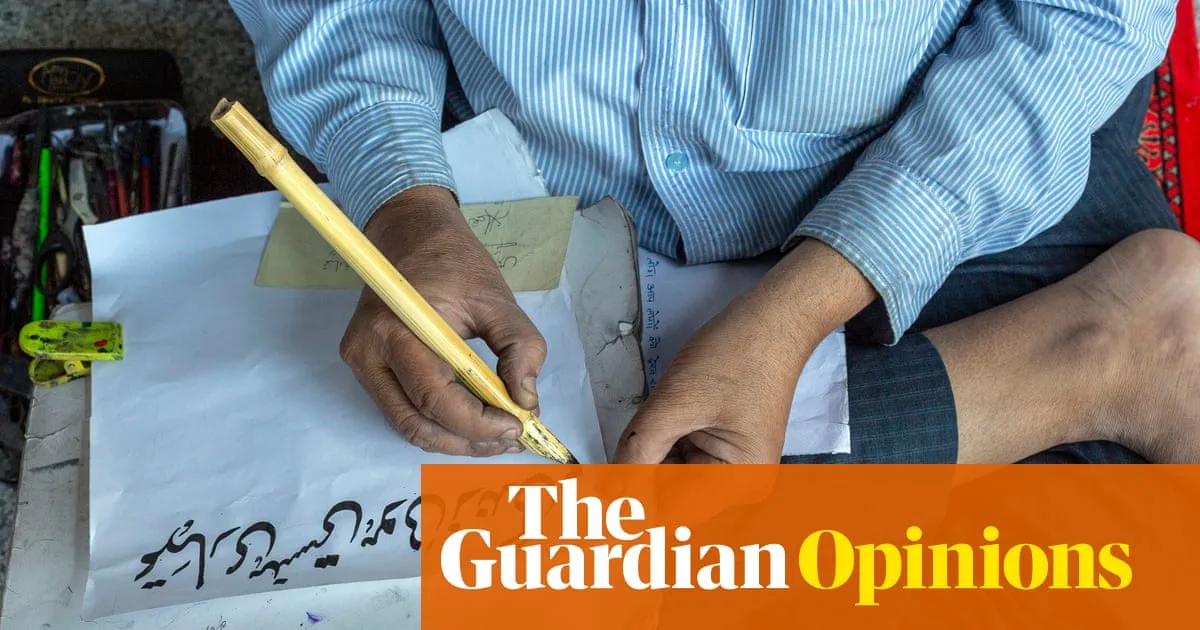
For years, English was the language of my thoughts, my work, and my imagination. I published two novels in it and spoke it fluently. But beneath that fluency, a part of me still belonged to another tongue: Urdu, the language of my earliest childhood in Pakistan.
I left Pakistan just before starting primary school, and the transition to English was abrupt. My mother told me I would figure it out, and I did. English soon became my default, while Urdu began to slip. At home, we still spoke it, but I found myself searching for words, replacing them with English ones. It was a familiar migrant dialect, stitched together from memory and convenience.
During a recent visit to Pakistan, I was startled by how quickly Urdu came back. From the moment I landed in Karachi, my brain switched. I fell into conversation easily, though my family delighted in accusing me of losing my Urdu. Soon, the opposite happened: I struggled for English words, and one night in Islamabad, I woke up and asked for the heater in Urdu. My Scottish husband, who speaks only English, told me the next morning.
That moment made me realise my mother tongue had never truly left me. It had been buried under years of distance, but it was still there, alive. Speaking Urdu enriched every interaction during my travels, giving me access to humour, intimacy, and nuance. It made Pakistan feel less like a place I was visiting and more like somewhere that still knew me.
Language offered a belonging that geography alone could not. Home, I realised, is not always a place on a map. Sometimes it is a sound, or a way of being understood before you have even finished your sentence. For me, Urdu was that sound, a current pulling me back to my earliest self.