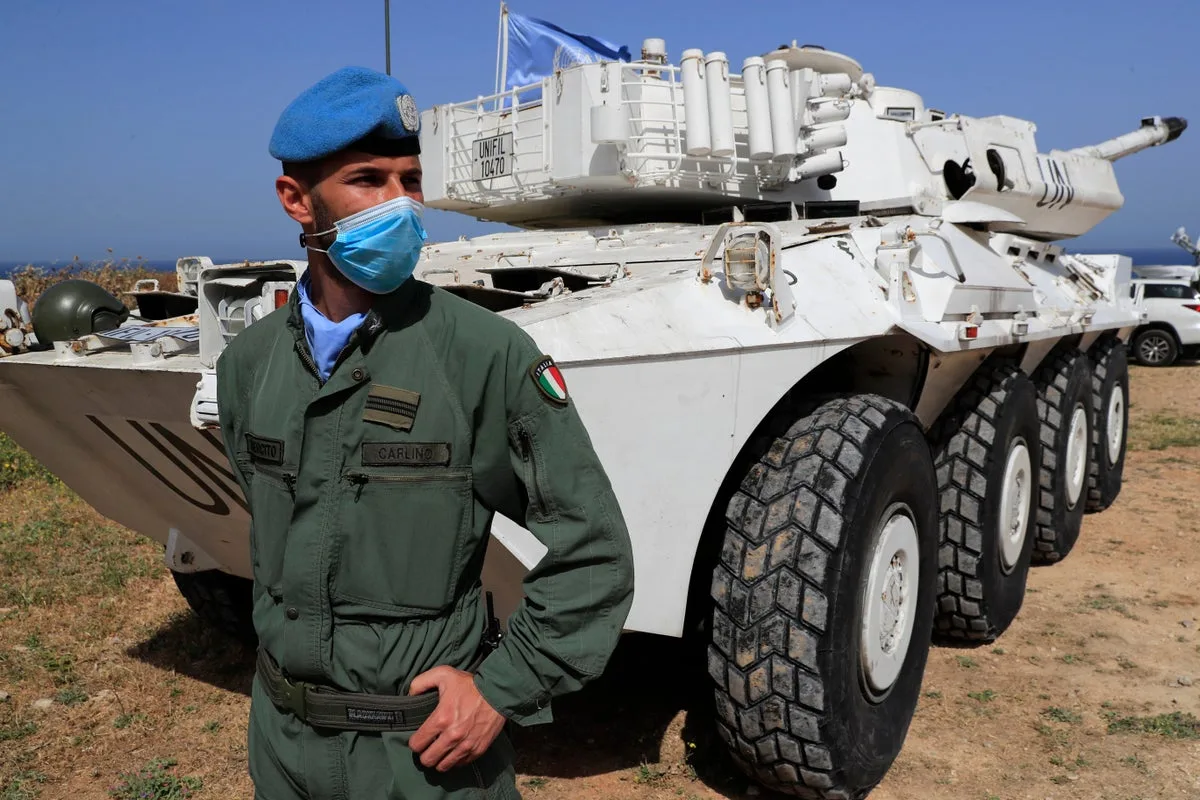
UN Peacekeepers in Lebanon Report Alarming Surge in Israeli Aggression
United Nations peacekeepers stationed in southern Lebanon have documented a dramatic and concerning escalation in aggressive behavior from Israeli military forces over the past year. According to an internal report reviewed by The Associated Press, incidents have skyrocketed from a single event in January to 27 by December, marking a significant deterioration in the security environment along the volatile frontier.
Detailed Account of Hostile Incidents
The confidential document, compiled by peacekeepers from one of the 48 contributing nations to the UN Interim Force in Lebanon (UNIFIL), details a disturbing pattern of confrontations. These include multiple instances of grenades being dropped by Israeli drones in close proximity to UNIFIL patrols, with one October attack resulting in injuries to a peacekeeper. The report also cites incidents of machine-gun fire directed near clearly marked UN positions and damage to UN vehicles.
The last four months of 2025 witnessed a particularly sharp spike, with direct fire incidents from Israeli positions on both sides of the U.N.-drawn Blue Line border surging to 77 in December, compared to just two in January. UNIFIL has confirmed that the number of attacks and aggressive behaviors toward its personnel has increased notably since September 2025, with the majority attributed to the Israeli military.
Alleged Strategic Motives and Regional Context
The internal assessment suggests that this targeting may be a deliberate strategy to undermine the international force and strengthen Israel's military footprint along the Lebanese border. The report posits that Israel could be using these incidents to justify maintaining a presence north of the Blue Line and to prevent displaced civilians from returning to the area.
This surge in violence occurs against a backdrop of prolonged regional tension. Following the Hamas-led attack on Israel in October 2023 and the subsequent war in Gaza, Hezbollah militants in Lebanon began launching rockets into Israel. This escalated into a full-scale war in September 2024, which was later tempered by a U.S.-brokered ceasefire. Israel continues to accuse Hezbollah of violating this truce by attempting to rebuild its military infrastructure in southern Lebanon, leading to near-daily Israeli strikes.
Israeli Response and UNIFIL's Precarious Position
In a statement to the AP, the Israeli military denied conducting a deterrence campaign against UNIFIL, asserting it operates within accepted frameworks to counter Hezbollah and takes steps to reduce harm to international actors. However, UNIFIL maintains that any action interfering with its mandated activities is a serious concern, even if most incidents do not cause physical harm.
The force's very future is now uncertain. UNIFIL's mission, established nearly five decades ago, is scheduled to terminate at the end of 2026, following a U.N. Security Council vote last August. Israel has long criticized the force as ineffective in preventing Hezbollah's border activities. Meanwhile, the Lebanese government argues that UNIFIL serves a vital purpose and that a follow-up international observer force will be necessary to maintain stability.
Recent Escalations and Environmental Concerns
The report follows additional alarming incidents in early 2026. UNIFIL reported that an Israeli tank fired small-caliber bullets at one of its posts on January 16. More recently, a drone dropped a stun grenade near a peacekeeping patrol before returning to Israeli territory.
In a separate development that sparked outcry, the U.N. and Lebanese authorities accused Israeli forces of dropping herbicide on Lebanese territory, forcing a nine-hour halt to peacekeeping patrols. U.N. spokesperson Stéphane Dujarric raised concerns about the long-term impact on agriculture and the return of civilians, noting that any Israeli military activity north of the Blue Line violates a key 2006 U.N. resolution.
As discussions continue about a potential successor force to UNIFIL, the dramatic increase in hostile incidents underscores the fragile and dangerous reality for international peacekeepers tasked with monitoring one of the world's most tense borders.