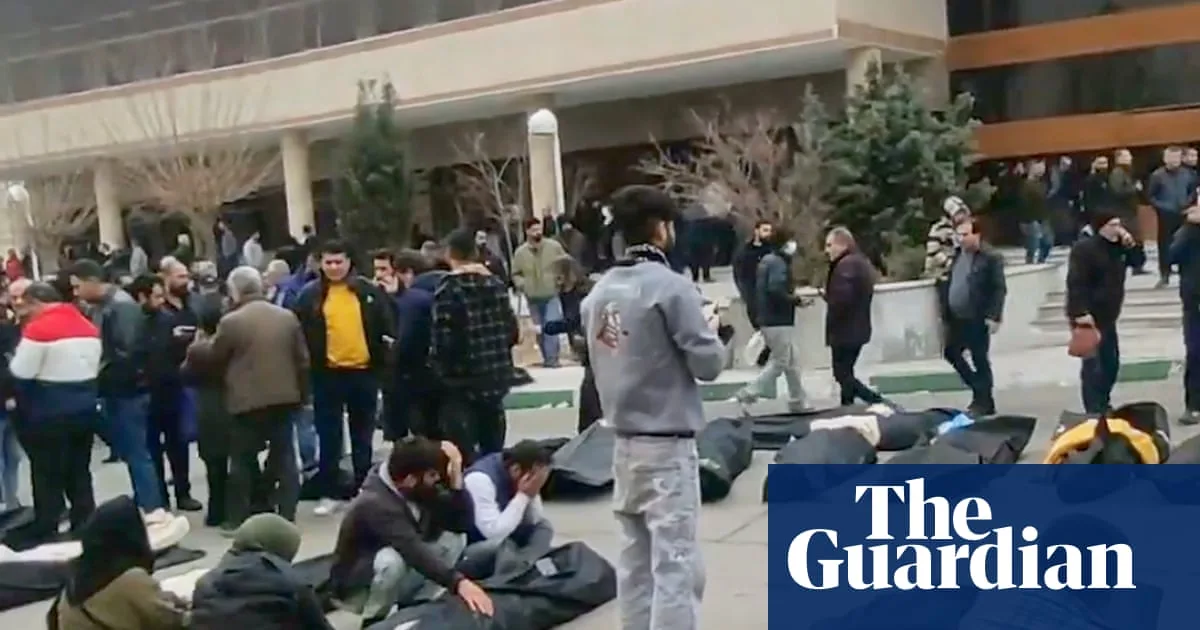
Testimony from medics, morgue and graveyard staff reveals a huge state effort to conceal the systematic killing of protesters, with estimates suggesting the death toll could exceed 30,000. A network of over 80 medical professionals across 12 provinces, assembled by a doctor using the pseudonym Dr Ahmadi, has documented close-range gunshot wounds and severe stab wounds to the chest, eyes and genitals. The doctors agree that all publicly cited death tolls represent a severe underestimation, with officially registered deaths likely representing less than 10% of the real number of fatalities.
Dr Ahmadi, whose identity has been verified by the Guardian, began treating wounded protesters outside the government hospital system after emergency room staff reported that many young people were avoiding hospitals for fear of arrest. Initially treating superficial injuries, the pattern shifted dramatically as protesters arrived with life-threatening wounds. More than 40 were killed in his small town alone. The internet blackout has hampered efforts to determine the national picture, but the doctors' observations, combined with accounts from morgues and graveyards, reveal the vast scale of violence.
The Iranian government has acknowledged more than 3,000 dead, while HRANA has verified over 6,000 and has more than 17,000 under investigation, giving a possible total of about 22,000. Other estimates from doctors outside Iran range up to 33,000 or more. Testimony from morgues, graveyards and hospitals reveals concerted efforts by authorities to conceal the true toll: bodies transported in ice-cream vans and meat trucks, piles of the dead hastily buried, and hundreds of bodies apparently disappearing from forensic facilities.
One doctor based in Tehran told the Guardian: 'I am on the verge of a psychological collapse. They’ve mass murdered people. No one can imagine … I saw just blood, blood and blood.' Across Iran, morgues and cemeteries were overwhelmed, with trucks filled with corpses turned away. At one morgue, staff were confronted with several trucks loaded with bodies, far exceeding storage capacity. When two trucks were moved elsewhere, staff could not trace where the bodies had been taken, expressing suspicion that this was linked to mass burial.