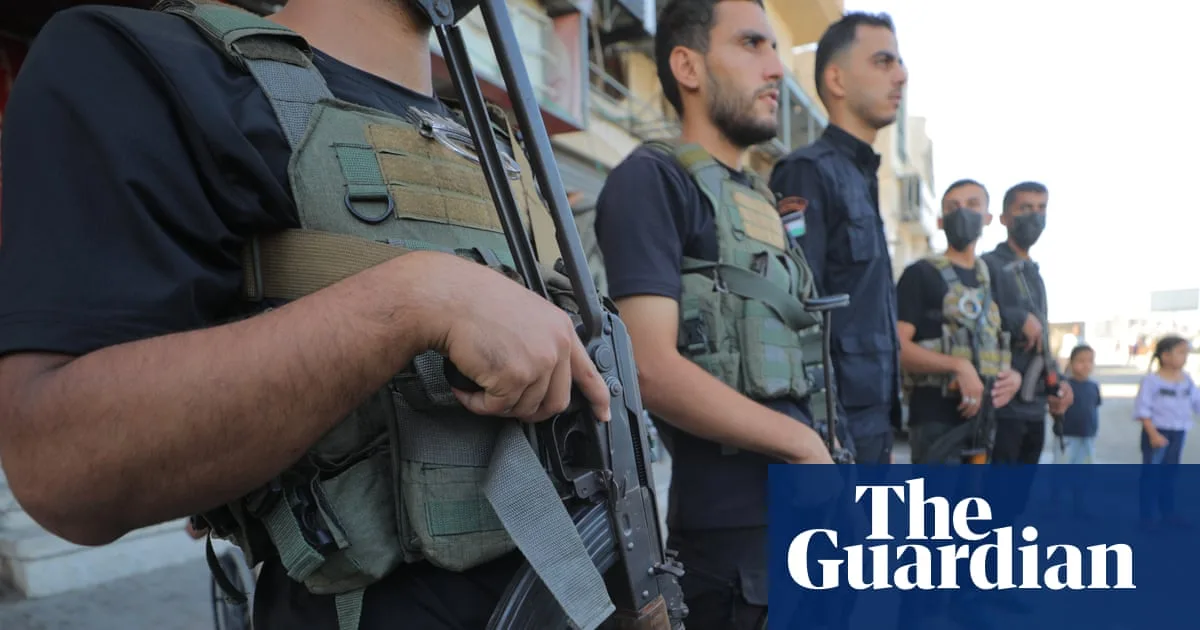
Hamas is intensifying a violent campaign to reassert its authority across Gaza, exploiting a power vacuum left by the absence of any alternative administration under the current ceasefire. The group, which has been the de facto ruler since 2007, is using weapons it is supposed to relinquish under the ceasefire deal to target looters, rival clans, and armed gangs, including some backed by Israel.
Recent skirmishes and shootings have been reported, including a public execution of seven alleged collaborators in the Zeitoun neighbourhood east of Gaza City. While some residents support the crackdown as a necessary measure to restore order, others condemn the extrajudicial killings. Najla Jundiya, a 36-year-old from Deir al-Balah, told the Guardian: 'I strongly encourage the measures taken against thieves and those causing chaos until a responsible government takes over to maintain safety and security.'
The chaos stems partly from Israel's refusal to outline a post-war governance plan for Gaza and its blocking of any role for the Palestinian Authority. Israeli efforts to promote armed groups as a counterweight to Hamas have instead created a vacuum that Hamas is now filling. H A Hellyer, an expert at RUSI and the Center for American Progress, noted: 'When you have a complete and total destruction of a society, the ones who can maintain some sort of monopoly of violence will rule.'
Hamas's crackdown appears to have tacit support from the US, with President Donald Trump suggesting the group had a green light to use force to prevent 'bad things'. However, Trump also threatened that if Hamas does not disarm, the US will do so 'quickly and perhaps violently'. The ceasefire deal's second phase, part of Trump's 20-point peace plan, envisions a transitional administration of unaligned Palestinian technocrats, excluding Hamas from future governance.