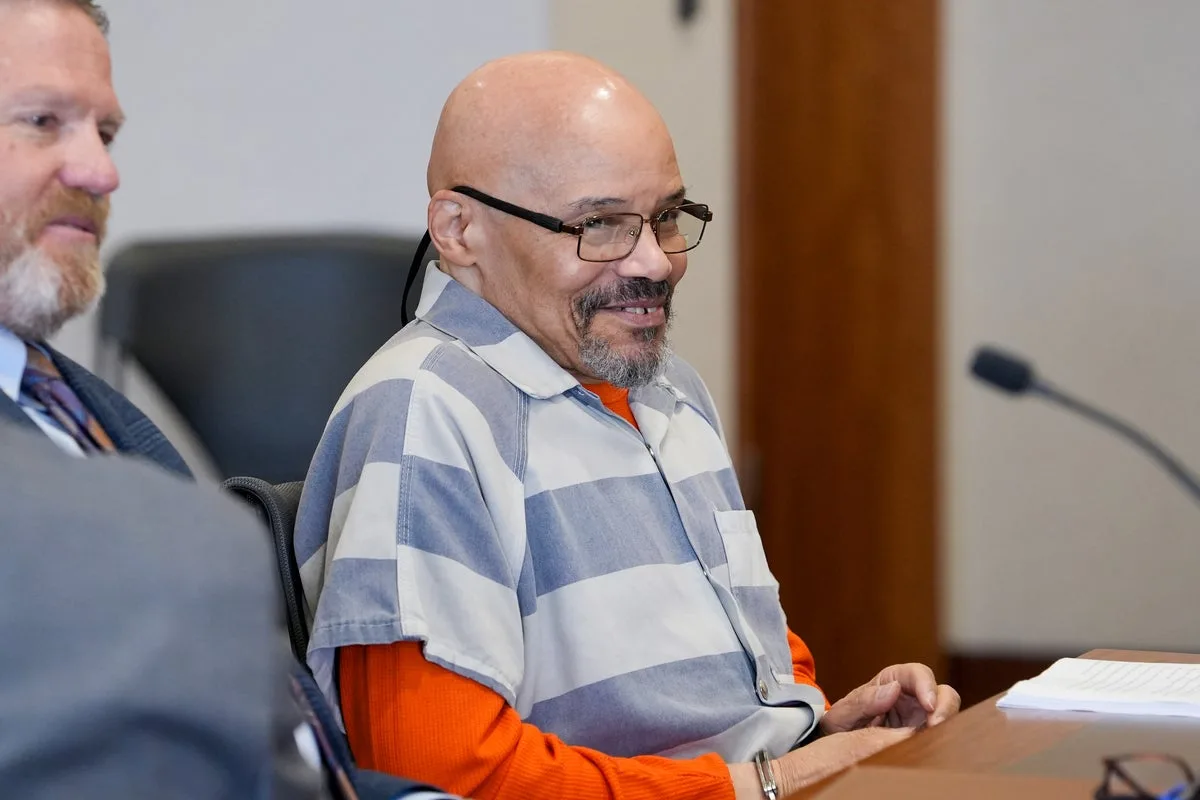
A man who spent decades on death row in Utah has asked a judge to dismiss his aggravated murder case, following a state Supreme Court ruling last year that ordered a new trial due to investigator misconduct. Douglas Stewart Carter, 70, was sentenced to death in 1985 for the murder of Eva Olesen, but his conviction was overturned in 2022.
Carter, who is Black, was convicted largely on the basis of a signed confession and testimony from two witnesses. He has long argued that the confession was coerced, and the witnesses later recanted, claiming police and prosecutors offered to pay their rent, coached them to lie, and threatened them with deportation if they did not implicate Carter.
In a motion filed Friday, Carter's defence team argued that an investigator suppressed evidence pointing to other suspects, including the victim's husband, Orla Olesen. The motion alleges that prosecutors were close to charging the husband but were asked by a police lieutenant to hold off. Carter was identified as a suspect soon after.
Prosecutors have maintained that the case should not be dismissed. They have not yet filed a response to the motion. The Provo Police Department and the Utah County Attorney's Office did not respond to requests for comment.
Orla Olesen, who died in 2009, had told police he found his wife dead in their home, partially undressed, with her hands tied. She had been stabbed 10 times and shot in the back of the head. Prosecutors said last week that they were unsure if police still had the tape recording of Olesen's polygraph test, and that the state no longer has clothes seized from him during the investigation.
A bond hearing for Carter has been scheduled for June. His defence team stated, 'Douglas Carter spent over 40 years on death row for a crime which he, and the evidence, says he did not commit. Legally, enough is enough.'