Supreme Court Leans Toward Ruling for Mississippi Death Row Inmate Over Jury Bias
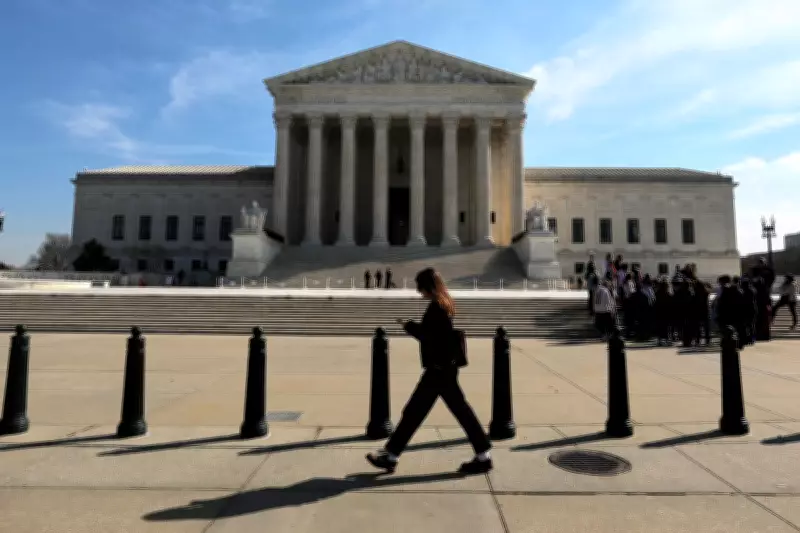
The United States Supreme Court on Tuesday signalled a strong inclination to rule in favour of a Black death row inmate from Mississippi, Terry Pitchford, who contends that racial bias infected the composition of the jury that convicted him. The justices heard arguments in an appeal that bears striking parallels to a previous case involving another Black man on Mississippi's death row, whose conviction the high court overturned seven years ago.
Background of the Pitchford Case
Terry Pitchford, now aged 40, was only 18 when he and a friend decided to rob the Crossroads Grocery store, located just outside Grenada in northern Mississippi. During the robbery, Pitchford's friend shot and killed store owner Reuben Britt with three gunshots. Because the friend was under 18 at the time, he was ineligible for the death penalty. Pitchford, however, was tried for capital murder and subsequently sentenced to death. This legal saga has been winding through the court system for two full decades.
Allegations of Racial Bias in Jury Selection
The jury that ultimately sentenced Pitchford to death included just one Black juror. The prosecutor in the case, Doug Evans—a now-retired official with a documented history of dismissing Black jurors for discriminatory reasons—excused four other Black individuals from serving. This practice directly contravenes the Supreme Court's landmark 1986 ruling in Batson v. Kentucky, which explicitly prohibited the exclusion of jurors based on race and established a framework for trial judges to assess claims of discrimination alongside prosecutors' race-neutral explanations.

Pitchford's current appeal centres on whether his defence attorneys adequately objected to the rulings of trial Judge Joseph Loper, and whether the Mississippi Supreme Court acted reasonably in concluding they had not. During oral arguments, Justice Brett Kavanaugh indicated he believed one of Pitchford's lawyers had indeed raised objections. Reading directly from the trial transcript, Kavanaugh stated, "She’s trying to make the objections right there."
Judicial Criticism and Comparisons to Prior Cases
There was a broad consensus among the justices that neither Judge Loper nor the defence lawyers performed particularly well during the jury selection process. Justice Samuel Alito remarked, "This is the most timid and reticent defence counsel that I have ever encountered." However, Alito also placed blame on Judge Loper, who accepted Evans' explanations without conducting a thorough analysis of whether race was a motivating factor. "The judge didn’t handle this the way it should have been handled," Alito asserted.
The case inevitably draws comparisons to the 2019 Supreme Court decision that overturned the death sentence and conviction of Curtis Flowers. In that ruling, Justice Kavanaugh described the prosecution's actions as a "relentless, determined effort to rid the jury of Black individuals." Mississippi Solicitor General Scott Stewart attempted to distinguish Pitchford's situation, arguing, "In Flowers versus Mississippi, this Court faced an extraordinary case and ruled against the state. This case is also extraordinary but in a very different way that requires a very different result."
Lower Court Proceedings and Potential Outcomes
In 2023, U.S. District Judge Michael P. Mills overturned Pitchford's conviction, ruling that the trial judge failed to provide Pitchford's lawyers with a sufficient opportunity to argue that the prosecution was improperly dismissing Black jurors. Judge Mills noted that his decision was partly influenced by Evans' actions in prior cases. However, a unanimous panel of the 5th U.S. Circuit Court of Appeals later reversed that ruling.
During the Supreme Court hearing, Justice Kavanaugh praised Judge Mills' handling of the case, telling Stewart, "Mills is a very experienced district judge. He had been a former Mississippi Supreme Court justice. He knows what he’s doing. He read the record entirely differently than you did." The Supreme Court could potentially rule in Pitchford's favour while still remanding the case to lower courts to determine whether his conviction should ultimately be overturned.