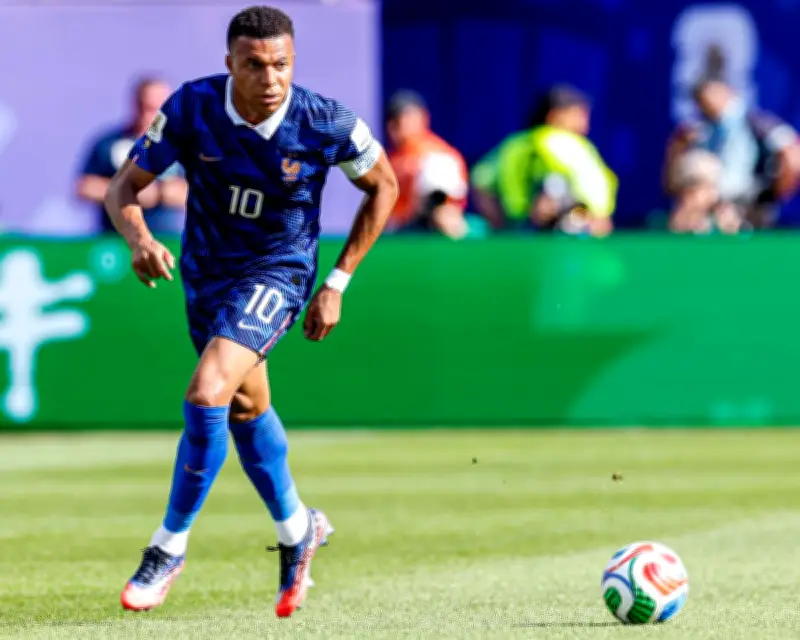
Social media racism against World Cup players has surged 13-fold during the group stage, with racially motivated abuse making up 11% of flagged posts, according to Fifa's social media protection service. This marks an increase from 8% during the 2022 World Cup in Qatar, leading Fifa to note 'a concerning direction of travel in terms of racially aggravated abuse.' More than 100 posts have been referred to law enforcement.
Experts Warn of Systemic Pattern
Samuel Okafor, chief executive of Kick It Out, a UK-based anti-discrimination organization, said: 'The political climate that we’re facing is clearly finding its way into football. And it’s making a huge difference in the levels of abuse we’re seeing – people are certainly being emboldened now more than ever.' He highlighted that social media firms remain largely unaccountable for ensuring their platforms are free from discrimination.
The global players' union Fifpro echoed these concerns, stating: 'In recent weeks, players have faced abuse online and in person, much of it racist and discriminatory. These incidents are not isolated; they point to a systemic pattern that cannot remain an accepted part of football or society.'
Recent Incidents During the Tournament
The tournament has seen a spate of incidents. The Dutch football association (KNVB) filed an official complaint after players were targeted with racist abuse following the Netherlands' loss to Morocco. The Paris prosecutor launched an investigation into an alleged racist attack on Kylian Mbappé by a Paraguayan senator. London mayor Sadiq Khan called on media regulator Ofcom to investigate 'out of control' online racism directed at World Cup players, including the England squad. Former Yugoslavia and Atlético Madrid striker Rade Bogdanović caused outrage with a racist comment on Serbian TV about Black players.
Political Context and Normalization of Racism
Jacco van Sterkenburg, a professor studying racism in sports at Erasmus University in Rotterdam, said the window of normalcy has shifted: 'Most people would dismiss explicit racism, but the more implicit, subtle forms of racism have become almost more acceptable, or they are not easily detected any more because of the broader atmosphere. And that subtle form of racism is the breeding ground for the more explicit forms of racism to occur.'
Researchers have long documented racially coded language in football commentary, where Black players are often described using references to athleticism, speed, and power, while their tactical intelligence or decision-making is minimized. Van Sterkenburg drew a direct link between these coded forms and overt discrimination.
Fifa's Role Under Scrutiny
Human Rights Watch's Minky Worden argued that the surge in racism is tied to the US administration's xenophobic rhetoric and immigration crackdown: 'If they’re deporting hundreds of thousands of people, often people of colour, then that is the backdrop for this World Cup. And it has to be affecting the uptick in racist attacks.' She criticized Fifa for partnering with autocrats and failing to implement its own non-discrimination rules, citing the reduction of anti-racism campaigning during the Club World Cup in the US and the awarding of the Fifa peace prize to Donald Trump. 'Fifa partnering with autocrats everywhere has sent a signal. Fifa’s failure to implement its own rules on non-discrimination in Russia and Qatar and the United States has absolutely sent a green light to communities of hate that it will be OK to attack players,' she said.