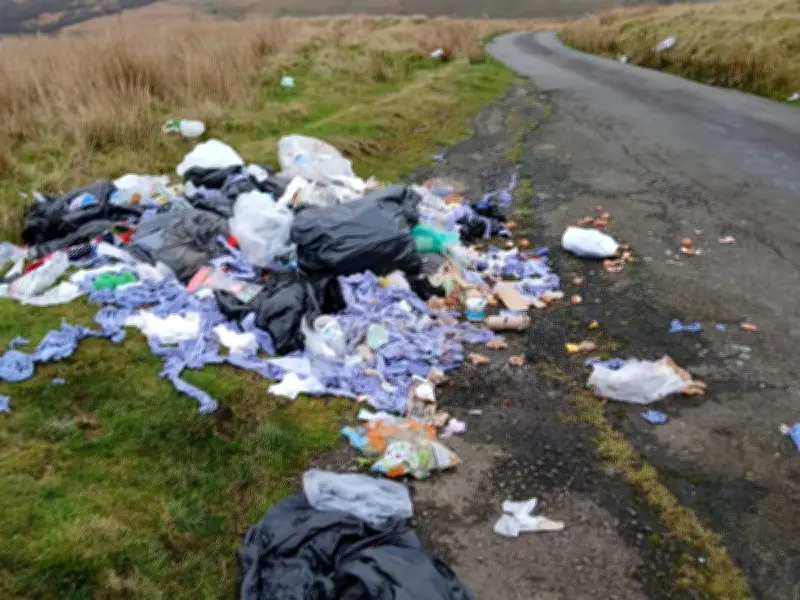
A man has been ordered to pay almost £3,000 after a large amount of waste was found dumped in a rural part of Neath Port Talbot.
It came after an investigation by Neath Port Talbot Council's Waste Enforcement Team who discovered three large fly-tipping incidents on Baran Road, Pontardawe, in November 2025.
Waste Enforcement Officers found substantial quantities of commercial waste at the site, including black bags, food packaging, cardboard and other materials that had been deposited illegally.
Investigation links waste to Swansea business
A spokesperson for the council said evidence recovered from the waste linked it back to a business premises in Swansea. Investigators discovered that waste from the business was collected by a company owned and run by Thomas Daniel Landek. They also linked the waste to a vehicle the 37-year-old controlled.
When interviewed under caution, Mr Landek confirmed he was the sole director of the company responsible for the collection and that a subcontractor had carried out the work using one of Landek's company vehicles.
Court hearing and penalties
Thomas Daniel Landek, 37, of Maes Y Gwernen Drive, Cwmrhydyceirw, appeared before Swansea Magistrates' Court where he pleaded guilty to an offence under Section 33 of the Environmental Protection Act 1990 relating to the illegal deposit of controlled waste.
He was fined £1,152, ordered to pay a victim surcharge of £461 and prosecution costs and compensation totalling £1,246.46, bringing the overall total to £2,859.46.
Council warning on waste disposal
Councillor Scott Jones, cabinet member for streetscene at Neath Port Talbot Council, said: "This case involved several large piles of commercial waste in Pontardawe, which would have caused serious harm to the surrounding environment. Fly-tipping damages our communities, countryside and public spaces, and we will continue investigating offences thoroughly and making those responsible be held accountable for their actions."
He added: "We would also like to remind businesses and householders alike of the importance of ensuring that anyone they pay to remove waste is properly authorised and disposes of it lawfully."