A mother has sparked a significant online debate after sharing her discomfort about overtaking a funeral car while driving on a dual carriageway, with public opinion sharply divided on whether the manoeuvre was disrespectful or simply practical.
The Viral Dilemma That Divided Opinion
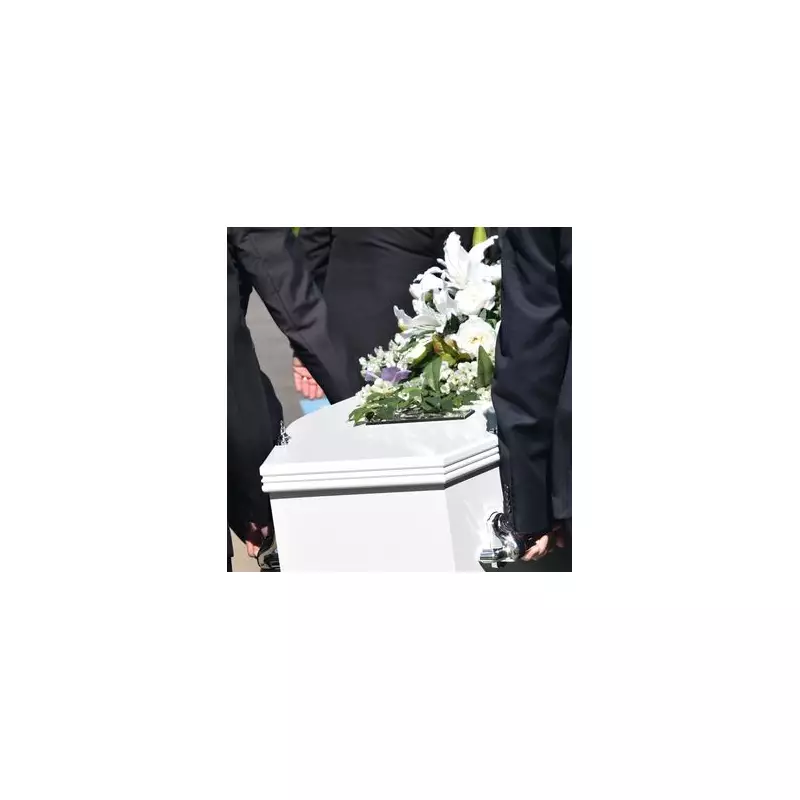
Amber Izzo, a content creator who shares parenting, pregnancy, and renovation content on TikTok, posted a video earlier this week detailing the moment her "soul left her body" when her husband instructed her to overtake a funeral procession. The couple had been driving home when they encountered a hearse carrying a coffin adorned with flowers displaying "mum," followed by the traditional procession of mourners.
"I was on the parkway, everybody was driving 70 miles an hour, come up behind and I'm like, oh no, oh no, do I overtake? Or do I indicate?" Amber explained in her video. "Do I join the end of the procession and drive at 40 mile an hour until they come off? I don't know."

Her husband advised her to simply overtake and continue driving, which she did while experiencing significant anxiety. "I panicked and I did, but I felt like my soul left my body," she confessed. "I feel really guilty about it. So is it disrespectful?"
The Outpouring of Criticism and Support
The comments section quickly became a battleground of conflicting perspectives. Many users strongly condemned the action as profoundly disrespectful to the deceased and their grieving family.
One commenter stated emphatically: "It’s the lowest of the lowest disrespect to overtake a funeral car. The deceased person deserves one last acknowledgement on their last journey."
Another added: "Please don’t overtake a funeral car, it’s very disrespectful, I also stand still when one is passing me by."
Personal Experiences Shape Perspectives
Some commenters shared deeply personal experiences that informed their views. One mother recounted how a driver had forced their way between her and her son's hearse during his final journey.
"This actually happened to us, January 2, my 23-year-old son was on his final journey," she wrote. "It was incredibly obvious, my son in his hearse followed by me and then his brother behind, a lot of cars and motorbikes. Not only did a lady overtake she forced herself between me and my son, when she was challenged she flipped us off."
She continued with a plea for consideration: "I know following a funeral procession is a bit slow but come on, if you can pass without interfering then do so, but please, for the love of Mike, don't force your way through."
The Crucial Clarification That Changed Everything
In a follow-up video, Amber provided essential context that dramatically shifted the conversation. She clarified that the "parkway" she mentioned was actually a dual carriageway, a detail that prompted many commenters to reassess their initial judgments.
This revelation led to an influx of supportive comments reassuring Amber that her actions were reasonable given the road conditions.
One person shared: "I was in a procession for a family member and people were overtaking us on a dual carriageway, didn’t even think about it, you’re fine. The comments are just trying to take the moral high ground when they’ve all probably done the same."
Another offered nuanced advice: "If on a motorway (I know that’s not very often) or dual carriageway then if they are in the left lane I would pass however pay my respects as passing. Wouldn’t overtake on any single carriageway though. Bless you for worrying though."
Expert Insight from a Hearse Driver
The debate received authoritative input when an actual hearse driver weighed in with professional perspective. "Hearse driver here. On a dual carriageway we wouldn’t think any less of you if you were to overtake," they commented.
They explained the practical considerations: "We go slower to keep our procession together on roads like that as we expect people not cut in. Hope this puts your mind at rest."
The Broader Conversation About Modern Etiquette
This incident has highlighted how traditional funeral customs intersect with modern driving realities. The discussion reveals several important considerations:

- Road Type Matters: The distinction between single carriageways and dual carriageways appears crucial in determining appropriate behavior
- Intent and Manner: How drivers execute the manoeuvre seems as important as whether they overtake at all
- Regional Variations: Funeral customs and expectations may vary significantly across different communities
- Safety Considerations: Driving significantly slower than surrounding traffic can create hazardous conditions
The viral discussion demonstrates how social media has become a forum for negotiating evolving social norms, particularly around sensitive topics like death and mourning. While Amber sought clarity about a specific driving situation, she inadvertently sparked a much broader conversation about respect, practicality, and how traditional observances adapt to contemporary life.
Ultimately, the divided responses suggest there may be no universal answer, with appropriate behavior depending on specific circumstances, road conditions, and local customs. What remains clear is that many drivers share Amber's uncertainty about navigating these solemn moments while maintaining both respect and road safety.