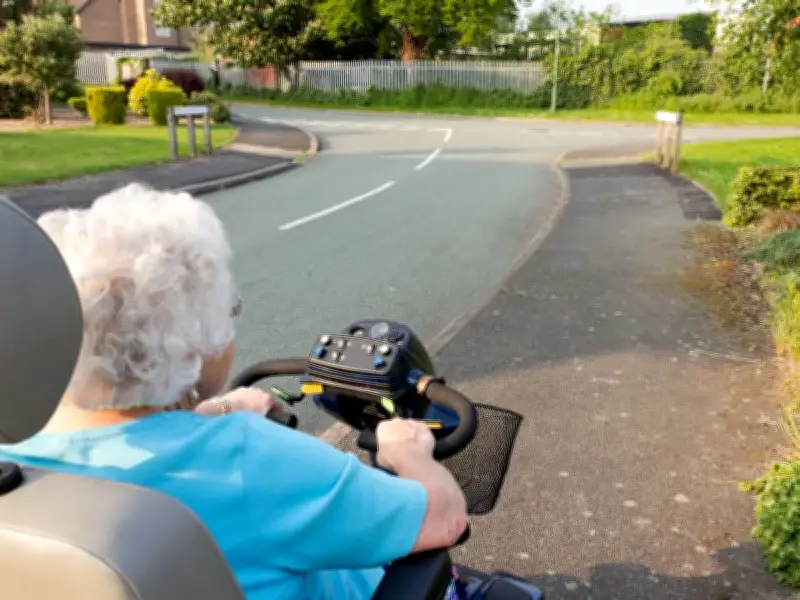
Mobility scooter users are being urged to check their vehicle's classification, as some models could leave owners facing an unlimited fine, driving ban or even prison if they fall foul of the law. While many people assume mobility scooters all follow the same rules, UK law actually separates them into different categories depending on their maximum speed, weight and width.
Most scooters fall into either Class 2 or Class 3, but vehicles that exceed certain limits are classed as being outside these categories and are subject to different rules. Anyone using a mobility scooter that does not fall into a recognised class must have a valid driving licence and register their vehicle with the DVLA. They can also only use it on the road, rather than pavements or pedestrian areas.
The consequences could be particularly serious if the user causes an accident, as they could face the same penalties as someone driving a car, including an unlimited fine, driving ban or prison.
Class 2 and Class 3 explained
Lee Cartwright, lightweight mobility scooter expert at Mobility Solutions Direct, explained the rules users need to know and how to check whether their scooter meets the legal requirements.
Under UK law, a mobility scooter or powered wheelchair is generally classed as:
- Class 2: Has a maximum speed of 4mph or less and is designed for use on pavements and pedestrian areas.
- Class 3: Has a maximum speed of 8mph and can be used on roads as well as pavements. These scooters must be registered with the DVLA.
However, a vehicle will fall outside these categories if it meets any of the following criteria:
- It can travel faster than 8mph.
- It is wider than 0.85 metres.
- It weighs more than 150kg, or 200kg if certain equipment needs to be attached, such as medical equipment.
If your scooter falls into this category, it is important to understand that you cannot use it in the same way as a standard mobility scooter.
What happens if your scooter is not in a recognised class?
A mobility scooter that falls outside Class 2 or Class 3 has to meet different legal requirements before it can be used. Users must have a valid driving licence and register their vehicle with the DVLA. They are also restricted to using it on the road, meaning they cannot take it onto pavements, pedestrian areas, cycle tracks or cycle lanes.
Depending on the vehicle's weight, insurance may also be compulsory. Those required to have insurance but caught driving without it could receive a £300 fixed penalty and six penalty points. If the case goes to court, the fine could be unlimited. Driving without the correct licence could also result in a fine of up to £1,000 and between three and six penalty points.
The consequences can be even more serious if someone causes an accident while using a vehicle that is not in a recognised class, as they could face the same penalties as someone driving a car, including an unlimited fine, driving ban or prison.
How to check your mobility scooter is legal
The first step is to check the manufacturer's specifications or ask the retailer which class your scooter belongs to. The seller or manufacturer should be able to confirm whether it meets the requirements for Class 2 or Class 3. If you are buying a second-hand scooter, it is particularly important not to assume it follows the same rules as other models simply because it is advertised as a mobility scooter.
“It's easy to assume that all mobility scooters follow the same rules, but that's not the case,” Lee explains. “The classification of your scooter can make a big difference to where you're allowed to use it and whether you need a licence or DVLA registration. We'd always encourage people to check the specifications before buying or using a scooter, particularly if they're looking at a larger or faster model. If you're unsure, speak to the manufacturer or retailer so you know exactly what you're buying and what rules apply.”
“Mobility scooters give many people greater independence, so the last thing anyone wants is to find out they're using their vehicle incorrectly. A quick check can help you understand your responsibilities and enjoy using your scooter with confidence.”