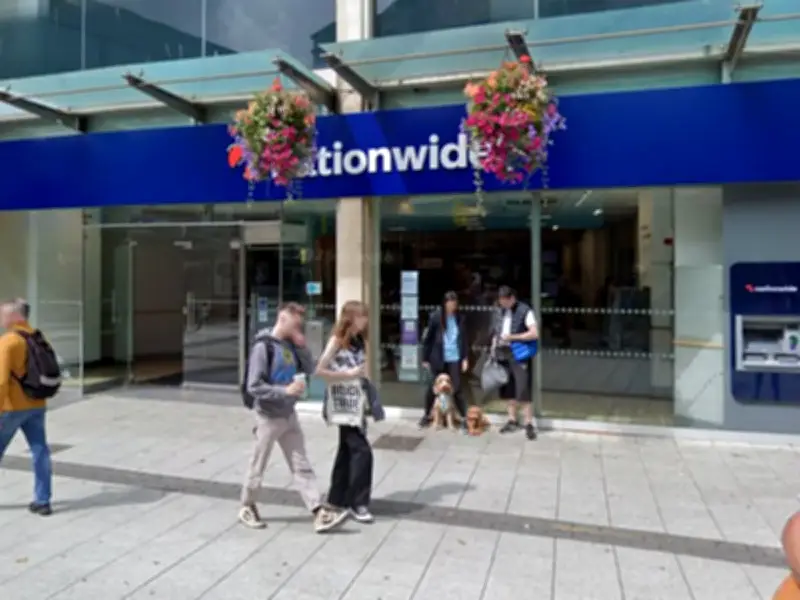
Nationwide Building Society has issued a warning to customers about convincing fake emails that fraudsters are sending in an attempt to steal their personal details. The building society said that in some cases, customers may need to contact them immediately for further help.
The scam came to light after a person posted on social media about an email they had received. Sharing an image of the email, they asked Nationwide: "Do you have a phishing email address? I'm not your customer so this isn't genuine."
Fake email details
The fraudulent message included Nationwide's actual logo. It informed the recipient: "A New Direct Debit Has Successfully Been Set up. We're writing to let you know that a new direct debit has been set up on your account."
The notice prompted the reader to verify certain details for the new direct debit—including a monthly recurring sum of £624.99, a transaction reference, a named merchant, and an initial payment scheduled for 3 November 2026.
To create urgency and funnel victims into speaking directly with scammers, the email added: "If the scheduled payment date falls on a weekend or public holiday, the payment will be processed on the next business day. If you did not initiate this activity and believe it may be unauthorised, we strongly advise that you contact our dedicated team immediately on 0203 332 0149."
Responding to the social media post, a Nationwide representative said: "I can confirm this is a fraudulent email." They told the person they could pass on the fake email to phishing@nationwide.co.uk so it could be investigated further. Nationwide was asked if there have been other reports recently of similar scams.
Nationwide statement
A spokesperson for the building society explained: "We continue to see criminals impersonating Nationwide through scam emails and letters. Scammers are opportunistic and often contact large numbers of people in the hope of catching someone out."
To help consumers identify these bogus impersonation emails, the lender stressed: "Customers should remember that Nationwide will never ask them to move money out of their account for any reason, ask them to lie or be untruthful about why they are making a payment, or ask for their PIN, passcodes or one-time passcodes."
Determined scammers will often use very personalised tactics beyond just firing off a load of emails. The spokesperson said: "We have seen examples where fraudsters coach people on what to tell their bank or building society when making a payment. If anyone asks you to conceal the true reason for a payment, stop and contact us using a trusted number before doing anything further. If you receive a suspicious email claiming to be from Nationwide, do not click links or provide any personal or banking information. It can be forwarded to phishing@nationwide.co.uk so it can be investigated."
Victims of these criminal ploys may be eligible for reimbursement through the mutual's Scam Protection Promise. Guidance from Nationwide states: "Unless we told you not to make the payment, we'll give you back every penny if it turns out to be a scam. This is our Scam Protection Promise. It's our way of supporting you when you need us. We may make changes to our Promise or withdraw it. If we do, we'll let you know in our branches and on our website. We'll try and provide 'reasonable notice' before we change anything or withdraw our Promise."
The promise covers transfers made via Faster Payments, CHAPS, and internal transfers between Nationwide accounts. However, this guarantee does not include card transactions, cash withdrawals, cheques, and international transfers processed through SWIFT or SEPA.