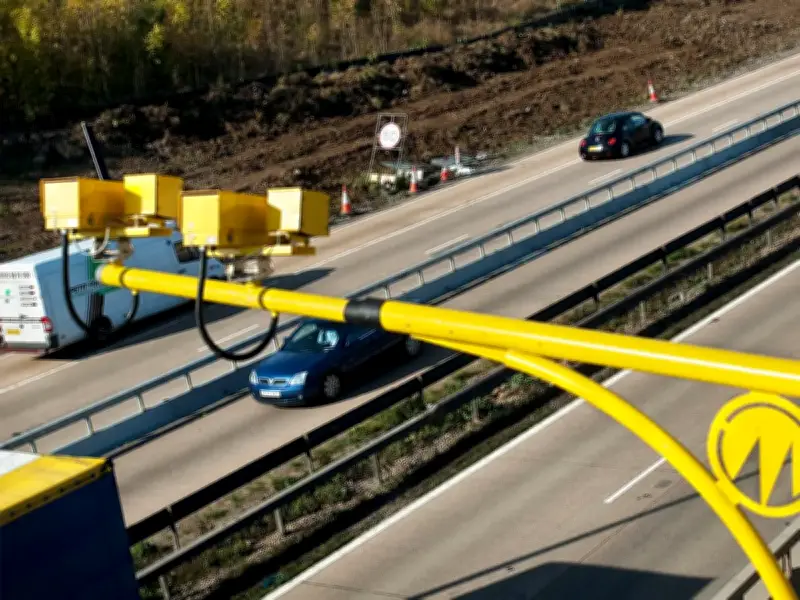
Drivers who think they can dodge average speed cameras by braking sharply or switching lanes are mistaken, according to a motoring law specialist. Solicitor Shazia Ali, from Scarsdale Solicitors, said such tactics are "completely ineffective" against modern camera systems.
How modern cameras track vehicles
Ms Ali explained that older tricks used against standalone Gatso cameras no longer work. "Tactics designed to evade older, standalone Gatso cameras — such as braking sharply right before the lens or changing lanes — are completely ineffective against modern camera systems," she said.
Modern SPECS and Vector average speed camera systems use Automatic Number Plate Recognition (ANPR) to track a vehicle's exact passing time between entry and exit cameras placed several miles apart. "Because the distance remains constant, basic physics calculates the vehicle's average speed over the entire stretch," Ms Ali added.
Why lane-swapping and braking fail
Motorists on dual carriageways or motorways might try swapping lanes to avoid detection, but this will not help. "Lane-swapping is futile as digital systems track registration plates across all lanes seamlessly," Ms Ali said.
Even braking hard as you approach a camera will have no effect. "System manufacturers cite a margin of error of just 0.1 per cent, meaning temporary deceleration before a camera point will not prevent a Notice of Intended Prosecution (NIP) if the overall average speed exceeds the limit," she said.
Routes with the most cameras
Driving warnings device supplier OOONO recently analysed popular UK routes to find the most camera-infested. The top spot was London to Cornwall, with 69 cameras, followed by London to West Wales with 62 cameras.
The study also found that 63 per cent of motorists said they received a speeding ticket when they did not realise they had passed a speed camera. The top 10 routes with the most speed cameras are: London to Cornwall (69), London to West Wales (62), London to Dorset (60), Manchester to Devon (58), Birmingham to the Lake District (46), London to Norfolk (40), Birmingham to Dorset (29), Manchester to Edinburgh (26), Manchester to North Wales (21), and Sheffield to Norfolk (21).