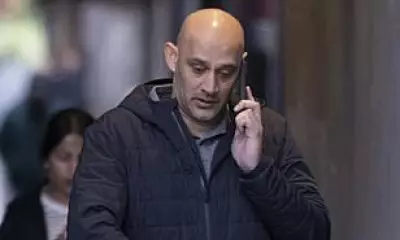
A motorist's electric car which struck and killed a five-year-old boy had no mechanical defects, a London court has been told. The driver claims the vehicle accelerated unexpectedly while he was parked.
Tragedy Outside London Bridge Flat
The incident occurred in November 2022 outside Ashenafei Demissie's flat near London Bridge in south London. Mr Demissie, 53, was sitting in his parked Volkswagen ID.4 when, he alleges, the car suddenly moved forward at speed.
The vehicle struck five-year-old Fareed Amir, who was standing in front of the car. The collision also seriously injured Mr Demissie's own 12-year-old son, Raphael, and damaged five other parked vehicles.

Fareed was taken to hospital but died from multiple traumatic injuries.
Expert Finds No Defects in Vehicle Systems
Giving evidence at the Old Bailey, traffic collision expert Mark Still stated that a thorough examination of the 2021 Volkswagen ID.4 revealed no issues. "I found no faults with the operations of the vehicle, including the steering, acceleration and braking," he told jurors.
Mr Still explained he was unable to make the car move without performing an intentional driving action. He also confirmed that the vehicle's braking system would override the cruise control and that, if both pedals were pressed, the brake overrides the accelerator.
"I was unable to make the car accelerate without a driver," Mr Still said, adding that the evidence from the scene supported the conclusion that the Volkswagen was "driven forward" into the other cars.
Driver's Account and 'Pedal Misapplication' Theory
Mr Demissie has pleaded not guilty to causing death and serious injury by careless driving. In his police interview, he described the event as "just like a moment of madness."
He claimed he had been talking to Fareed and his mother, close family friends, and had offered the boy a sweet. "Suddenly the car jumped. I believe the car jumped because Fareed had triggered the censor," he told officers.
Prosecutor Michael Williams asked expert witness Mark Still if he found anything that could cause the car to move forward without driver input. "No," Mr Still replied.
The officer described a known "phenomenon" in some collisions where drivers mistakenly press the accelerator instead of the brake. "They have put their foot on the wrong pedal... Because the driver thinks they have their foot on the brake, they will likely press harder to make it stop…It spirals out of control," he said.
Mr Still concluded the crash was a "case of pedal misapplication" and that the alleged fault "could not be replicated." The only way to make the car move, he stated, was through driver input.
The trial at the Old Bailey continues.