UK Confronts 'Extremely Serious' Security Threat from Iran Following Ambulance Arson
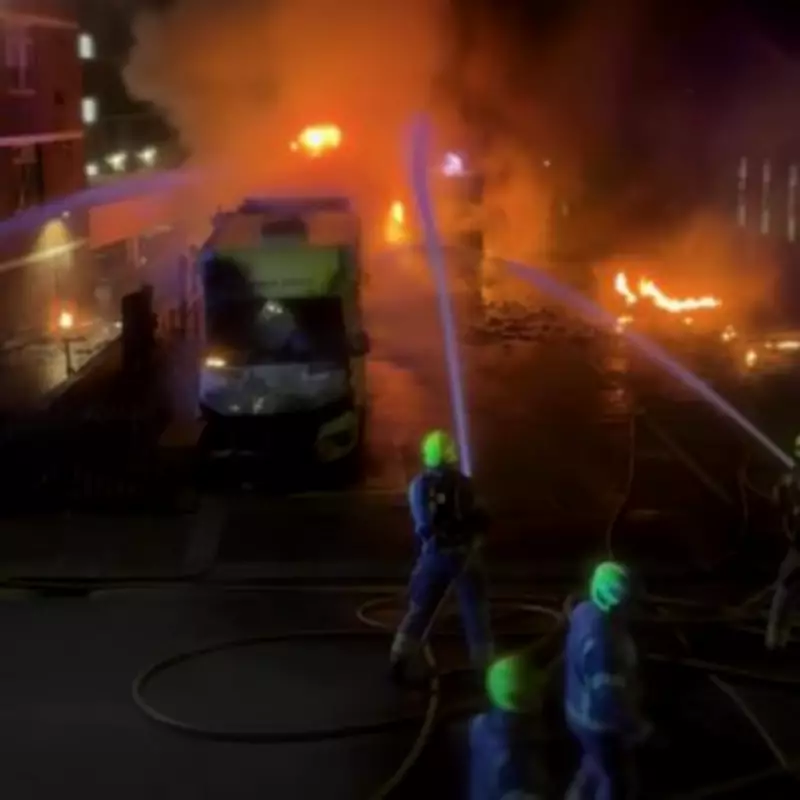
The United Kingdom is confronting an extremely serious security threat emanating from Iran, according to a leading security expert. This alarming assessment follows a terror attack in north London, where four Jewish charity-owned ambulances were deliberately set ablaze in the early hours of Monday morning. The incident has prompted a major counter-terrorism investigation, with authorities scrutinising claims of responsibility from a group aligned with Iranian interests.
Golders Green Attack and Terror Group Claim
In the Golders Green area of London, four Hatzola ambulances were completely destroyed by fire. No arrests have been made at this stage. However, police are actively investigating an online claim of responsibility posted by the terror group Harakat Ashab al-Yamin al-Islamia (HAYI). The group circulated a Telegram post and an unverified video on Monday, which included Google Maps imagery of the ambulance location and footage of explosions.
Metropolitan Police Commissioner Sir Mark Rowley stated that it is too early to definitively attribute the attack to the Iranian state. Nevertheless, he emphasised the grave concern posed by the rapid growth of Iranian state threats in recent years. Counter-terrorism police have taken the lead in this complex investigation.

Expert Analysis: A Grave and Escalating Threat
Security expert Professor Anthony Glees, in an exclusive discussion, warned that both the UK and Europe face an extremely serious security threat orchestrated by Iran. He specifically pointed to the directing role of the Islamic Revolutionary Guard Corps (IRGC).
"I think we face an extremely serious security threat from Iran, directed and organised by the Iranian Revolutionary Guard Corps and, as we are told, on a European as well as a UK level," Professor Glees stated.
The HAYI group, suspected of having links to pro-Iranian networks according to Israeli authorities, appears to have emerged publicly since the onset of the Iranian conflict with the US and Israel. Its Telegram channel was reportedly created just days before the attack.
Calls for Proscription of the IRGC
A significant point of concern raised by Professor Glees is the UK's failure to proscribe the IRGC under the Terrorism Act 2000, unlike nations such as the United States, Canada, and Australia. He described this as a "matter of huge concern" for national security professionals.
"It is a matter of huge concern to many of us who work on national security issues that IRGC has not yet been proscribed, a measure which gives our security service a lawful means of finding out more precisely what they are up to in the UK and who is working for them," he explained.
He further noted that intelligence is the cornerstone of effective counter-terrorism, making proscription a vital tool alongside recent legislation requiring foreign diplomats to register.
Broadening Targets and Intensifying Activity
Professor Glees highlighted that potential IRGC targets extend beyond this attack to include UK defence establishments, Jewish communities, and universities. He linked this heightened threat environment to the US-Israeli military action against Iran in late February, suggesting the danger is likely to persist and intensify as conflicts continue.
This assessment is supported by recent intelligence reports. Sir Ken McCallum, the Director General of MI5, revealed last October that the agency had tracked over 20 potentially lethal Iran-backed plots in the preceding year. Furthermore, Assistant Commissioner Laurence Taylor, head of UK counter-terrorism policing, reported on Tuesday a 50% increase in National Security Act investigations related to hostile state activity—including Iran, Russia, and China—in the six months leading to December. This surge follows a five-fold increase over the past four to five years, underscoring a rapidly escalating threat landscape.
The arson attack in Golders Green, therefore, is not an isolated incident but a stark manifestation of a broader, extremely serious security challenge facing the United Kingdom from state-sponsored terrorism.