Terror Watchdog Demands Social Media Ban for Under-16s Over Radicalisation Fears
Social Media Ban for Under-16s Urged by Terror Laws Watchdog

Terror Laws Watchdog Calls for Social Media Ban for Under-16s

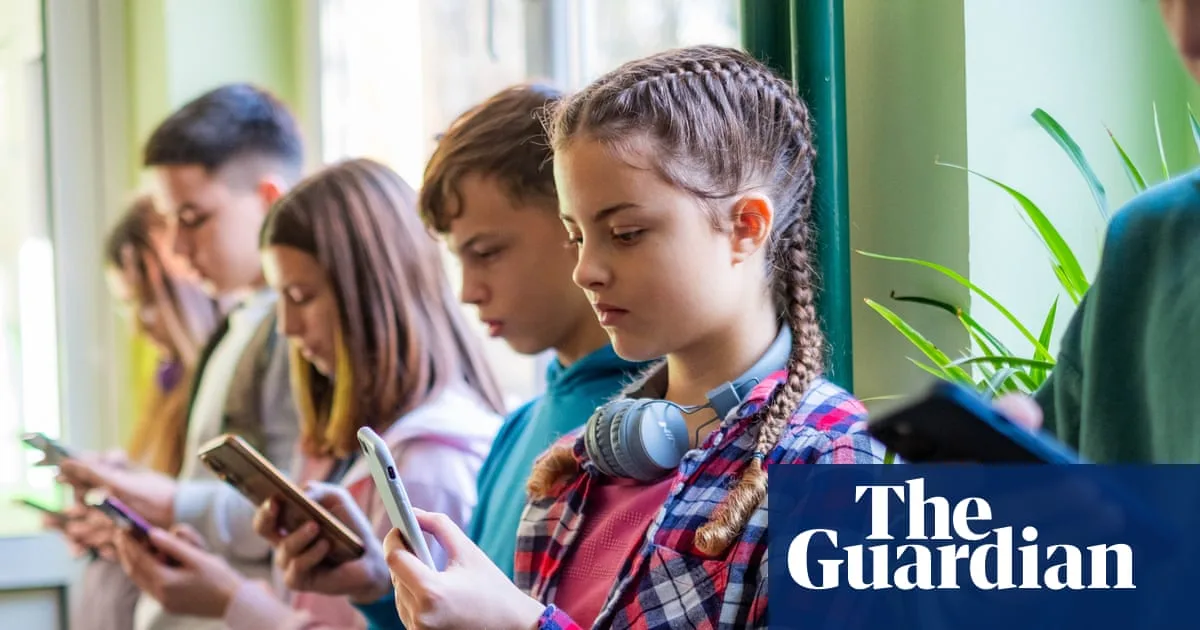
Jonathan Hall KC, the independent reviewer of terrorism legislation, has issued a stark warning that children under 16 should be prohibited from accessing social media platforms. He argues that current attempts to regulate harmful online content are fundamentally inadequate, leaving vulnerable young people exposed to extremist ideologies.

The Impossibility of Content Moderation

In an exclusive interview with the Press Association, Hall stated that the mammoth task of moderating online material is simply unworkable. He emphasised that social media companies either lack the capability or the willingness to effectively police their platforms, while UK regulatory bodies like Ofcom are critically under-resourced for enforcement.

"My own personal view is that under-16s should be off social media," Hall declared. "The alternative is to try and regulate content, and that is so difficult, it's so imperfect. The job is just too massive."

He highlighted that Ofcom's enforcement team consists of merely 50 personnel, a number he described as "a tiny number of people to take action against recalcitrants." Furthermore, many platforms operate from overseas jurisdictions with little regard for UK regulations.

Online Gaming: A New Frontier for Extremist Recruitment

The warning comes alongside alarming findings from the Global Terrorism Index, which reveals that multiplayer gaming environments and associated communication platforms are being systematically exploited by extremist recruiters.

Steve Killelea, executive chairman of the Institute for Economics and Peace which publishes the index, detailed how platforms like Discord, Twitch, Steam, and Roblox are being weaponised. "Multiplayer gaming environments provide ideal digital infrastructure for isolation, alternative community building, and the normalisation of violence," he explained.

Recruiters are leveraging popular games such as Minecraft, Fortnite, and Call of Duty to establish social bonds with isolated adolescents. This has escalated to the creation of custom servers where users role-play violent fantasies, and even use simulation games to rehearse real-world attacks on targets like mosques, synagogues, and schools.

"The gamification of extremism has also extended to the creation of 'scoreboards' and competitive dynamics," Killelea added, noting that online forums celebrate the 'kill counts' of mass attackers, creating perverse incentives that exploit the psychological reward mechanisms familiar to gaming culture.

Profile of Vulnerable Youth

Hall identified a specific demographic most at risk: children who are friendless, often with a high incidence of autism, and experiencing profound loneliness. These individuals, spending six to eight hours daily online according to Ofcom surveys, find a dangerous sense of meaning and community in digital spaces.

"We need to get out of the habit of thinking about the online world as an extra. It needs to be front and centre of everything, of all national security decisions," Hall asserted, calling for policy officials to engage directly with young people at risk to understand what pulls them "down the rabbit hole."

Statistical Evidence of Growing Threat

The scale of the problem is underscored by recent arrest data. In 2025, 39 out of 255 terrorism suspects arrested in England and Wales were under 18, following a similar proportion in 2024. The forthcoming Global Terrorism Index reports that in 2025, minors accounted for 42 percent of terror-related investigations in Europe and North America—a threefold increase since 2021.

Political Context and Regulatory Response

Earlier this month, the House of Commons rejected a specific ban on social media for under-16s. However, MPs supported measures granting the Secretary of State enhanced powers, potentially allowing Science Secretary Liz Kendall to restrict or ban children of certain ages from accessing social media services and chatbots in the future.

An Ofcom spokesperson responded to the debate, stating: "The Government is leading an important debate on this, which we'll be supporting with our independent expert advice and insights from our research. In the meantime, we're getting on with the job we've been given by Parliament – to implement and enforce the Online Safety Act – and change is happening."

Hall remains unconvinced by current regulatory approaches, concluding that the risks of online radicalisation are intolerably high, while the benefits of unrestricted social media access for children are "so dubious." His intervention adds significant weight to the growing call for more drastic protective measures for young people in the digital age.