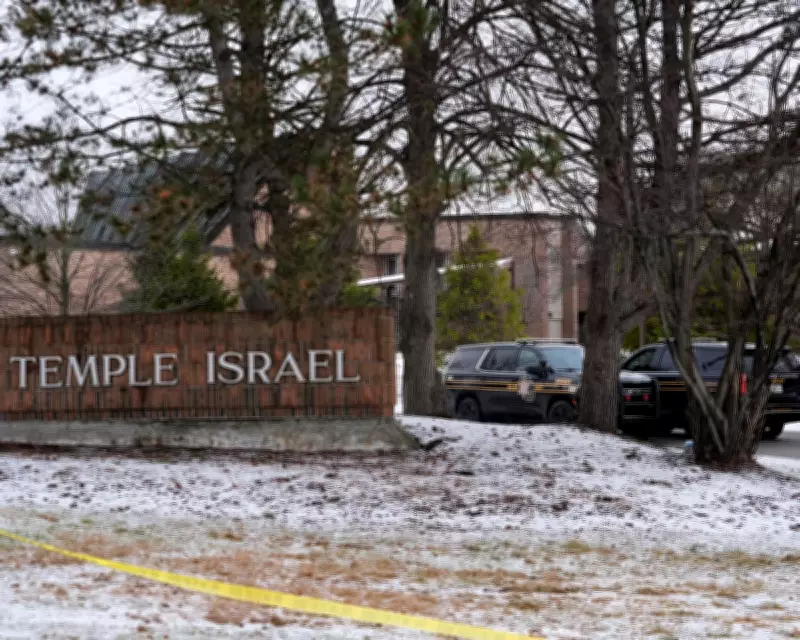
FBI Confirms Hezbollah Inspiration in Michigan Synagogue Terror Incident
The assailant responsible for attacking a synagogue in Michigan earlier this month was driven by inspiration from Hezbollah, as announced by the FBI on Monday. Jennifer Runyan, head of the FBI's Detroit field office, detailed during a press conference that Ayman Ghazali, 41, had frequently consumed online content linked to the Lebanese group prior to the assault.
Details of the Attack and Investigation
In a video recorded before he drove his truck into Temple Israel in West Bloomfield Township, a northwestern suburb of Detroit, on 12 March, Ghazali expressed his intent to "kill as many of them as I possibly can." Ghazali, a naturalized US citizen originally from Lebanon, crashed the vehicle into the synagogue before shooting and killing himself inside the truck, which had caught fire.
Runyan elaborated on the extensive investigation, stating: "Despite the fire in the truck and the assailant's attempts to delete his digital footprint, we have processed hundreds of digital and forensic evidence items. We've conducted over 100 interviews of witnesses, family, and associates." She added that evidence indicates this was a Hezbollah-inspired act of terrorism specifically targeting the Jewish community and Michigan's largest Jewish temple.

Online Activity and Motivations
According to the FBI, a review of Ghazali's online activity dating back to January revealed a recurring search history involving pro-Hezbollah and Iranian news channels, along with videos about shootouts and bullets. He regularly viewed coverage of Hezbollah's current secretary general, Naim Qassem, and content about an Iranian fatwa for total jihad against the US military.
In a video sent to his sister ten minutes before the attack, Ghazali said: "This is the largest gathering place for Israelis in the state of Michigan in the United States. I have booby-trapped the car. I will forcefully enter and start shooting at them. God willing, I will kill as many of them as I possibly can."
Background and Planning
Ghazali entered the United States in 2011 on a family-related visa as the spouse of an American citizen and became naturalized in 2016. Earlier this month, he lost two brothers, a niece, and a nephew in an Israeli airstrike in Lebanon, according to a local official in Mashgharah, central Lebanon. This strike occurred amid the ongoing US-Israeli war on Iran, which has included Israeli attacks in Lebanon targeting Iran-backed Hezbollah forces, displacing over a million Lebanese people.
Runyan noted that both the day before and the morning of the attack, Ghazali posted several photos on Facebook of his deceased family members and Iran's former supreme leader, Ayatollah Ali Khamenei, who was killed in US-Israeli strikes in February. He wrote: "We will seek retribution for his sacred blood."
In the days leading up to the attack, Ghazali began researching local synagogues, starting in the early morning hours of 9 March. His online searches included phrases such as "largest gathering of Israelis in Michigan" and "Israelis near me," with investigators adding that he attempted to delete his search history.
Weapons and Preparations
Ghazali tried to obtain a weapon from two individuals, both of whom refused. He ultimately purchased an AR-style rifle from a local gun store in Dearborn Heights, along with 10 rifle magazines and approximately 300 rounds of .223 ammunition, according to Runyan. Additionally, he ordered a rifle pouch and 40 5.3-gallon water containers online and researched local firework vendors.
At the same press conference, US attorney Jerome Gorgon referenced the 1983 Hezbollah barracks attack on US marines in Lebanon with a truck bomb, stating: "That is exactly what this terrorist did a few weeks ago in our backyard. He methodically planned, armed himself, and then drove an explosives-laden truck into a temple filled with American children."

Outcome and Broader Context
Although multiple officers were treated for smoke inhalation, no one inside the synagogue was injured, including all 140 children in the building's preschool. Since the start of the US-Israeli war on Iran, which has also included Israeli strikes on Lebanon and retaliatory attacks by Iran on regional US allies, the conflict has taken a heavy toll across the region.
According to Lebanese officials, more than 1,200 people, including 120 children, have been killed by Israeli strikes in Lebanon. At least 200 US troops have been injured and 13 service members killed since the fighting began. In Iran, US-Israeli strikes have killed approximately 1,500 people, while Iranian retaliatory attacks have left about a dozen people dead across Gulf states.