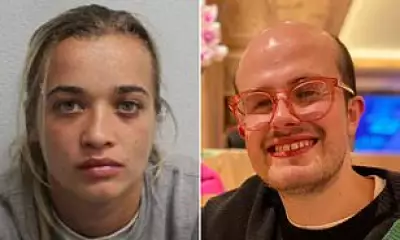
For two decades, Bekhal Mahmod has lived in the shadows, a life defined by fear and loss. Her existence in witness protection is the direct consequence of her bravery in testifying against her own father and uncle, who orchestrated the brutal honour killing of her sister, Banaz. Now, she is channelling that trauma into a campaign for legal change, fighting for 'Banaz's Law' to protect future victims of honour-based abuse.
A Sister's Betrayal and a Campaign for Justice
In January 2006, 20-year-old Banaz Mahmod from Mitcham, London, was subjected to a horrific, premeditated murder. Her crime, in the eyes of her family, was leaving an abusive arranged marriage and falling in love with another man. Her father, Mahmod Mahmod, and uncle, Ari Mahmod, ordered her death. The execution of their plan was chillingly systematic.
Banaz was raped by three of her cousins before being strangled. Her body was then forced into a suitcase, driven to Birmingham, and buried in the back garden of an abandoned house in Handsworth, where it lay undiscovered for three months.

Bekhal Mahmod, who had fled the family home in 2002, became a pivotal witness for the prosecution. Her testimony about the abuse and threats she faced was vital to the police investigation. Since giving evidence in 2007, she has remained in witness protection, a life of constant vigilance. "I'm never going to let my guard down," she told the Guardian. "[Banaz's murder] will never leave my life... my head turns instantly, it's a fear."
Systemic Failures and a Family's Brutality
The tragedy of Banaz's death is compounded by the multiple times she was failed by the authorities meant to protect her. Before her murder, she had approached the police on four separate occasions, reporting that her family wanted her dead and that her uncle had threatened to kill her and her boyfriend. She provided officers with the names of five men who were stalking and abusing her.
Despite her detailed pleas, she was not taken seriously. After fleeing an attempt on her life on New Year's Eve 2005, one officer dismissed her as "manipulative and melodramatic." Just three weeks later, she was dead. It was only after her boyfriend, Rahmat Sulemani, reported her missing that a proper investigation was launched, leading to the grim discovery of her body in April 2006.
The subsequent trial at the Old Bailey in 2007 saw her father and uncle convicted of murder and handed life sentences. Other relatives, including cousins directly involved in the killing, were later extradited from Iraq and jailed. The family's chilling lack of remorse was laid bare when Banaz's uncle, Ali Mahmod, later tried to sue ITV for £400,000 over a documentary and drama about the killing. Representing himself, he stated that honour-based murder was "normal" in his Iraqi Muslim culture and complained the rape allegation had damaged his reputation.
The Push for 'Banaz's Law' and the Scale of the Problem
Bekhal Mahmod's campaign, supported by the women's organisation Southall Black Sisters, seeks to establish 'Banaz's Law'. This would make honour-based abuse a statutory aggravating factor during sentencing, ensuring courts formally recognise the specific cultural coercion behind such crimes.
The need for greater awareness and action is stark. In the year ending March 2024, police in England and Wales recorded 2,755 honour-based abuse (HBA) offences – nearly five every day. Campaigners believe the true figure is far higher, as many victims are too terrified to come forward.
Dame Jasvinder Sanghera, a campaigner who was herself promised in marriage at age eight, runs the charity Karma Nirvana. She highlights a dangerous reluctance among some professionals to intervene for fear of being labelled racist. "All you're doing is giving the perpetrators more power by not doing so," she warned, emphasising that forced marriage crosses the line from tradition into abuse when a young person's consent is ignored.
For Bekhal Mahmod, the fight for Banaz's Law is a way to honour her sister's memory and create a legacy of protection from the profound injustice they both endured.