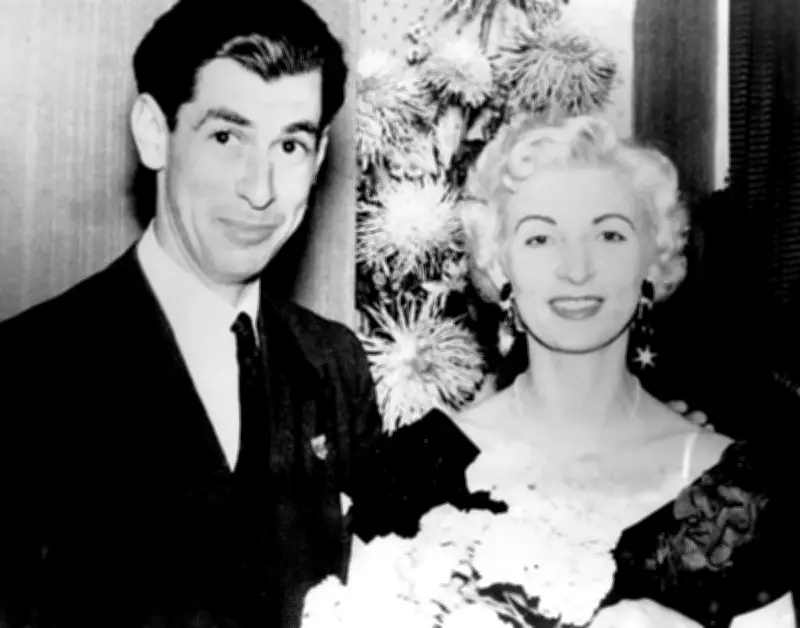
Ruth Ellis, the last woman to be hanged in Britain, was executed on July 13, 1955, at London's Holloway Prison after being convicted of murdering her lover, racing driver David Blakely. More than 70 years later, she has been granted a posthumous pardon by the King, replacing her death penalty with a sentence of life imprisonment.
The Crime and Conviction
Ellis, a Soho nightclub hostess originally from Rhyl in north Wales, shot Blakely outside The Magdala pub in Hampstead, north London, on Easter Sunday, 10 April 1955. The relationship was fraught with infidelity and physical abuse; Blakely had punched her in the stomach, leading to a miscarriage. On the day of the murder, Ellis tracked Blakely to the pub and, after he emerged, fired five shots from a .38 calibre Smith & Wesson Victory Model revolver. The first shot missed, and as he ran around his car, a second shot brought him down. She then stood over him and fired three more shots.
Arrested by an off-duty police officer, she reportedly said, "I am guilty, I'm a little confused." At her trial at the Old Bailey on 20 June 1955, the prosecution asked: "When you fired the revolver at close range into the body of David Blakely, what did you intend to do?" She replied: "It's obvious when I shot him I intended to kill him." The jury took just 20 minutes to find her guilty, resulting in a mandatory death sentence.
The Execution
Public executioner Albert Pierrepoint, who hanged Ellis, later recalled in a 1977 interview: "She's a brave woman." He described how she walked to the trapdoor, "flicked her eyes" and "tried to smile", but never spoke to him. The Bishop of Stepney, Joost de Blank, visited her shortly before the execution around 9am on July 13, 1955.
Posthumous Pardon
In July 2024, Justice Secretary David Lammy, standing in for Prime Minister Sir Keir Starmer at Prime Minister's Questions, announced the pardon, stating it was "to recognise a profound injustice in this exceptional case." He added: "We hope this brings a measure of peace to Ruth Ellis' family, who have carried the weight of what happened to her for over 70 years." Under modern law, Ellis could have argued partial defences such as loss of control or diminished responsibility, potentially reducing her conviction from murder to manslaughter, according to the Ministry of Justice.
Ellis's granddaughter, Laura Enston, said in a statement: "This pardon does not undo what happened 71 years ago. It does not restore the lives that were broken – the children left behind, the years lost. But it says, formally and finally, that Ruth should not have been executed; that the justice system failed her. That acknowledgement matters profoundly to our family."