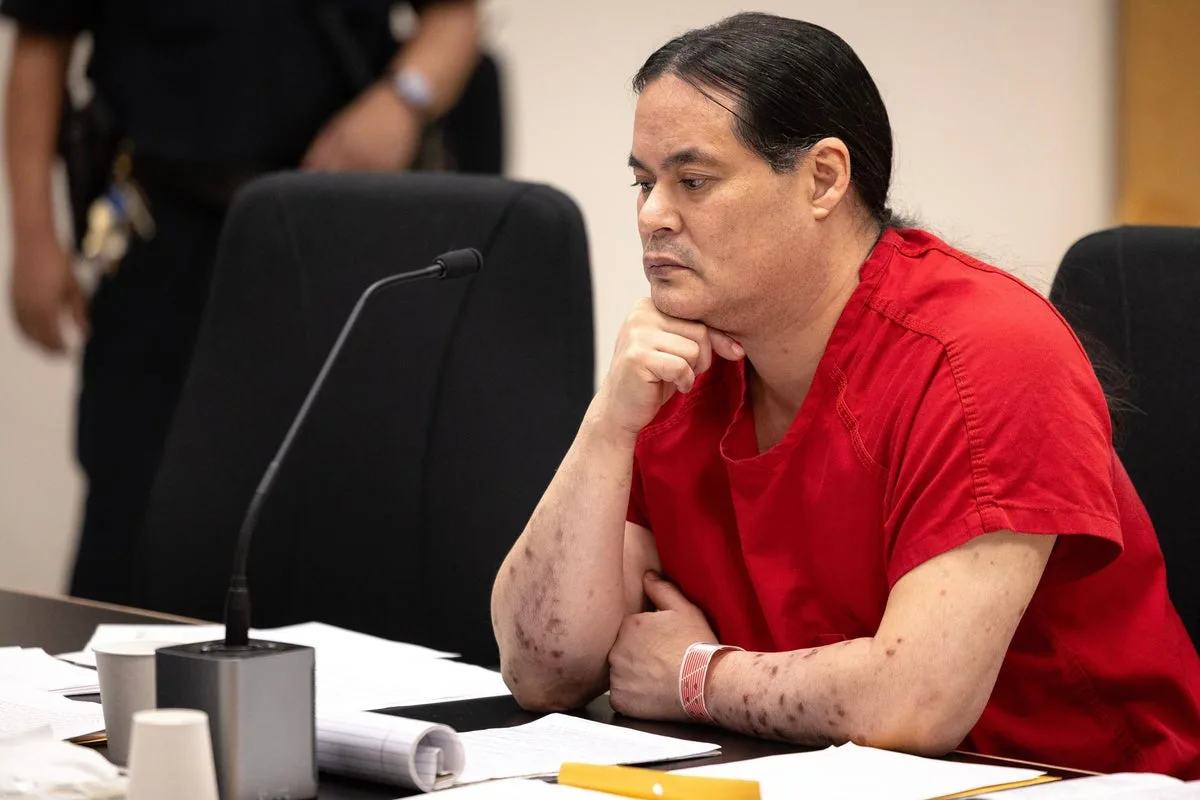
A man who built a public persona as a Native American activist has been handed a 46-year prison sentence for a series of horrific crimes involving the drugging and raping of multiple women. The case of Redwolf Pope has not only exposed a predatory serial offender but has also ignited a powerful campaign to change Washington state law, specifically regarding how self-represented defendants interact with their accusers in court.
A Trail of Evidence and Deception
The 49-year-old's crimes came to light in 2018 after guests at his Seattle apartment handed over his iPad to police. The device contained disturbing videos showing Pope sexually assaulting women who appeared to be unconscious. Further investigation uncovered a secret camera installed in his bathroom, used to film women showering without their knowledge.
"I've had the horror of witnessing the scale of violence Pope inflicted on multiple women over many years. It will never leave me," said one survivor, who was instrumental in discovering the hidden camera and video evidence.
Pope, who maintained residences in both Seattle and Santa Fe, New Mexico, was first convicted by a Santa Fe jury in 2020 on charges of rape and voyeurism related to one incident, for which he claimed consent. He received a four-year sentence, with credit for time served.
Self-Representation and Re-traumatisation
Upon his release, Pope was extradited to Washington state to face charges for attacks occurring in 2016 and 2017. Pleading not guilty, he chose to represent himself during his trial in September 2025. This legal manoeuvre allowed him to personally cross-examine one of his victims over several days, a process described as deeply traumatic.
The jury found him guilty on 3 September 2025. Following his recent sentencing, survivors and advocates are demanding legislative change. They are calling on the Washington State Legislature to amend the Crime Victim Bill of Rights, seeking to prevent defendants acting as their own lawyers from directly questioning those they are accused of assaulting.
Instead, they propose that judges should have the authority to appoint a neutral designee to conduct any necessary cross-examination of the accuser.
A Fabricated Identity Used to Gain Trust
Pope had publicly presented himself as an activist of Western Shoshone and Tlingit heritage, even serving as a spokesperson for the Seattle-based United Indians of All Tribes Foundation. His LinkedIn profile listed him as an attorney with over a decade of work for the Tulalip Tribal Court.
However, this identity unravelled after his arrest. The Washington State Bar Association confirmed he was never a licensed lawyer, and the Tulalip Tribes stated he had never worked as an attorney for them. Furthermore, several Tlingit and Shoshone tribes said they found no record of his enrollment.

Abigail Echo-Hawk, a leading advocate for Native women's rights, condemned Pope's actions, stating he created a "false identity and posed as a Native man to infiltrate Native communities and prey upon our Indigenous women." She emphasised that the legal system allowed him to "continue to traumatize his victims for years" after his initial crimes.
The 46-year sentence marks the end of Pope's direct threat, but the campaign for legal reform to protect future victims from similar courtroom ordeals is now gaining significant momentum.