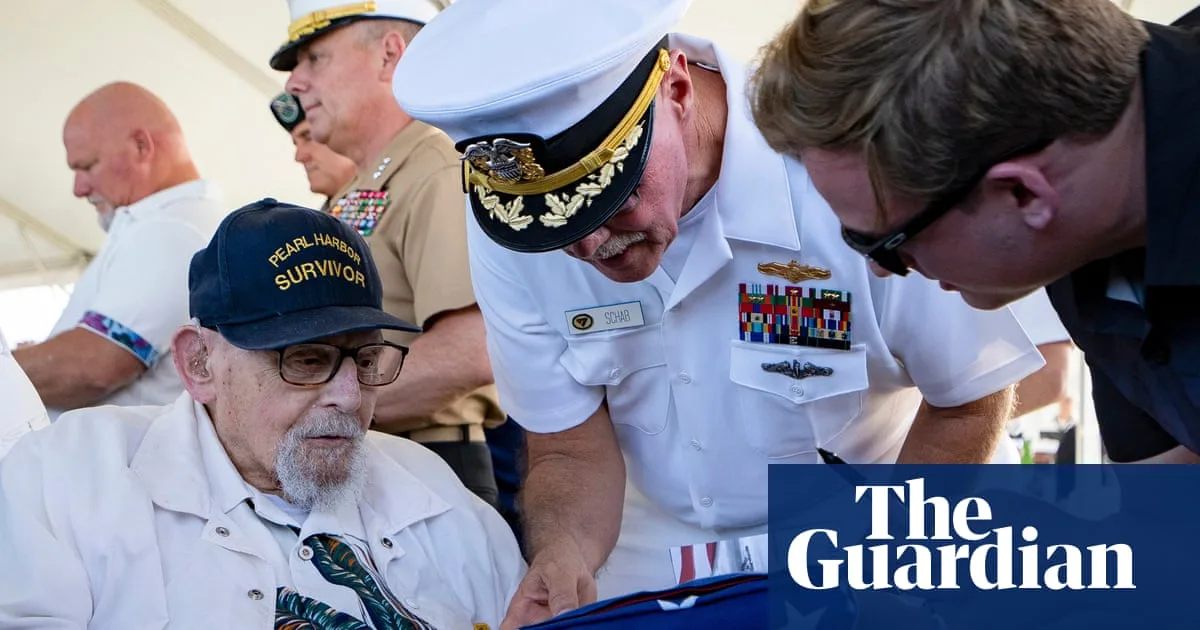
The United States military has announced a significant initiative to exhume and identify the remains of 88 sailors and Marines who perished during the Japanese attack on Pearl Harbor in 1941. These individuals, who were killed when the USS Arizona was bombed, have been interred as unknowns in the National Memorial Cemetery of the Pacific in Honolulu for decades.
Advanced DNA Technology Drives Identification Project
This effort leverages recent advances in DNA technology to attach names to those who have remained unidentified since the aerial assault 85 years ago. Kelly McKeague, director of the Defense POW/MIA Accounting Agency, stated on Thursday that the disinterments are scheduled to commence in November or December 2026. The process will involve removing about eight sets of remains every two to three weeks, with DNA comparisons made against samples collected from family members of missing troops.
Historical Context and Previous Successes
The December 7, 1941, bombing of the Hawaii naval base, which propelled the United States into World War II, resulted in dozens of ships sinking, capsizing, or sustaining damage. The identification project follows earlier endeavors dating back a decade, where DNA was used to identify hundreds of crew members from vessels such as the USS Oklahoma and USS West Virginia. The USS Arizona itself sank just nine minutes after being bombed, with its 1,177 fatalities accounting for nearly half of all servicemen killed in the attack. Today, the battleship remains submerged at its resting place, with over 900 sailors and Marines entombed inside; these underwater remains will not be disturbed, focusing solely on those buried in the cemetery.
Personal Stories Highlight Emotional Impact
Robert Edwin Kline, a 22-year-old gunner's mate second class, was among those killed on the Arizona. His great-nephew, Kevin Kline, a real estate agent in northern Virginia, shared that he long believed his great-uncle's remains were on the ship, only learning recently that some crew members were buried as unknowns. While Kline holds modest expectations for identification, he emphasizes the potential closure for families who receive a DNA match, many of whom continue to experience "generational grief." He recounted a poignant story of a woman who realized her family's sadness around Christmas stemmed from her grandmother and mother grieving the loss of a son and brother on the Arizona, a tradition of mourning that had been passed down through generations.
Overcoming Initial Resistance Through Advocacy
For years, the Defense POW/MIA Accounting Agency, a division of the Department of Defense, resisted exhuming the Arizona remains, citing impracticality due to limited medical and dental records and DNA samples from relatives—only 1% of families as of 2021. However, Kline and his organization, Operation 85, have spent the past three years locating families and facilitating DNA contributions. Out of 1,500 contacts, only about 15 declined to participate, resulting in samples from family members of 626 sailors and Marines, representing nearly 60% of the missing crew, with more kits still arriving. Kline expressed initial frustration with the military's reluctance but now feels gratified by the collaborative effort that turned a "hard no" into action.
Logistical Details and Future Steps
The exhumed remains will be transported to the agency's laboratory at Joint Base Pearl Harbor-Hickam for analysis, while DNA samples will be sent to the Armed Forces DNA Identification Laboratory at Dover Air Force Base in Delaware. The decision to disinter the Arizona unknowns was first reported by the independent military newspaper Stars and Stripes, marking a pivotal moment in honoring those who made the ultimate sacrifice. This project not only aims to provide long-overdue identification but also to offer solace to families grappling with unresolved loss, underscoring the enduring legacy of Pearl Harbor in American history.