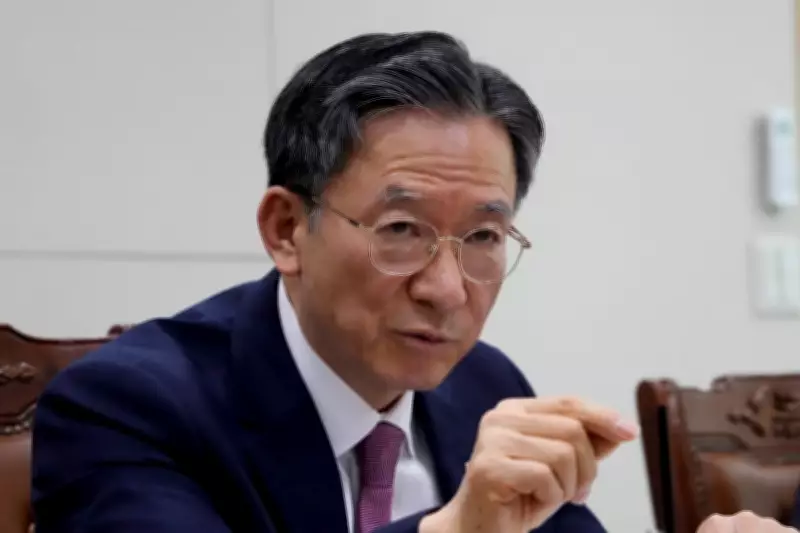
South Korean Minister Pledges Expanded Legal Remedies for Adoptees and Rights Victims
South Korea's Justice Minister, Jung Sung-ho, has made a significant commitment to broaden access to judicial remedies for victims of state-led abuses. This includes foreign adoptees whose adoptions were tainted by widespread fraud under previous military governments. In a roundtable interview with selected journalists on Thursday, Jung used unusually strong language, describing past adoptions as "forced child trafficking."
Government to Limit Appeals in Compensation Cases
Minister Jung announced that the government will largely refrain from appealing rulings in cases where victims seek compensation for government wrongdoing. This marks a pivotal shift in policy aimed at expediting justice. Jung, a close ally of President Lee Jae Myung—who issued an apology over South Korea's past adoption problems in October—stated the government is willing to expand legal redress and speed up compensation for verified victims.
Under a new law effective since February, victims have a three-year window to sue for damages even after statutes of limitations have expired. Jung's ministry, which represents the government in lawsuits, plans to withdraw time-limit appeals in over 800 cases. He indicated that a similar approach will be extended to lawsuits by adoptees in the future.

Truth Commission Findings and Legal Battles
Hundreds of Korean adoptees in the West have requested investigations by a fact-finding commission reviewing past human rights violations. The commission was relaunched in February after its previous mandate ended in November. The earlier Truth and Reconciliation Commission concluded that the government bore responsibility for an adoption program riddled with fraud and malfeasance.
This program was driven by efforts to cut welfare costs and carried out by state-authorized private agencies that systematically manipulated children's origins. Some adoptees hope these findings will provide legal grounds for damages lawsuits against the government or adoption agencies. However, victims of other government abuses recognized by the commission have often faced lengthy legal battles after state prosecutors appealed favorable rulings.
Delays in Compensation and Minister's Response
Despite provisions like the state compensation act—which theoretically allows victims to pursue claims without lengthy court battles—delays persist. For instance, adoptee Yooree Kim, sent to a French family in 1984 without parental consent and alleging abuse, has sought compensation. Her lawyer, Choi Jung Kyu, notes that while the Justice Ministry has four weeks to decide on such requests, it has failed to do so for over six months.
Jung acknowledged these delays, stating he would instruct officials to address them. However, he does not see a need for a separate new process to expedite compensation, as advocated by some.
Historical Context of South Korean Adoptions
From the 1970s to early 2000s, South Korea sent thousands of children annually to the United States, Europe, and Australia, peaking at over 6,000 per year in the 1980s. Under military rule, the government viewed population growth as a threat to economic goals and treated adoptions as a means to reduce welfare burdens. The truth commission's findings align with prior investigations, such as those by The Associated Press, which revealed how about 200,000 Korean children were sent overseas through corrupt or illegal means.
Broader Efforts Against Trafficking and Labor Abuses
Minister Jung also discussed initiatives to combat trafficking and forced labor, including at salt farms and other sites, as well as the abuse of migrant workers. These issues have gained urgency following recent U.S. investigations into countries accused of failing to curb forced labor, part of efforts to impose new tariffs after Supreme Court rulings.
The United States has already blocked imports from a major South Korean salt farm accused of using slave labor. Jung vowed to "uproot" such abuses by instructing prosecutors to seek tougher penalties and strengthening oversight of companies employing foreign workers, asserting South Korea's capability to supervise these matters thoroughly.