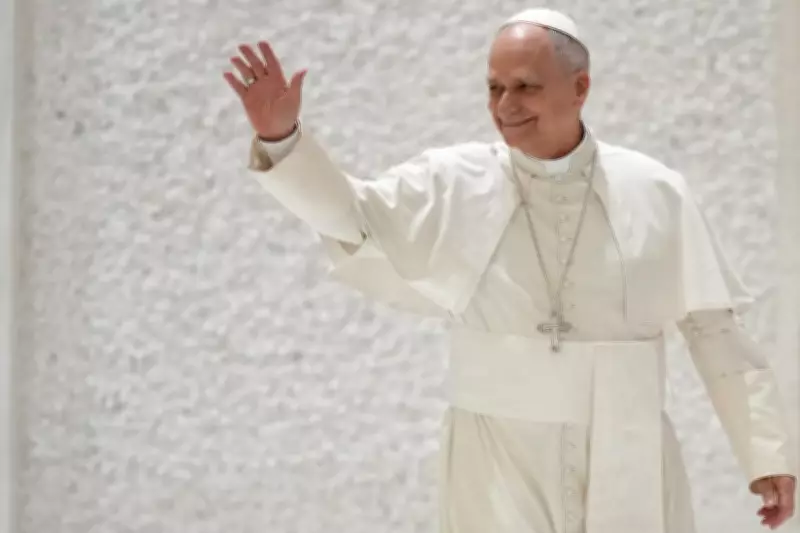
Pope Leo XIV has delivered a significant address to the Vatican's doctrine office, emphasising the critical importance of upholding truth, justice and charity when adjudicating clergy sexual abuse cases. The pontiff's remarks confirm a carefully calibrated institutional approach to handling a scandal that has profoundly damaged the Catholic Church's global credibility for decades.
Doctrine Office Directed on Core Principles
During his Thursday audience with members of the Dicastery of the Doctrine of the Faith, the American-born pope dedicated a specific portion of his speech to abuse case management. This Vatican office holds dual responsibilities: policing Catholic doctrine worldwide and processing clergy abuse allegations through its disciplinary section.
"It is a very delicate area of ministry, in which it is essential to ensure that the requirements of justice, truth and charity are always honoured and respected," Pope Leo told the assembled bishops and cardinals. He instructed them to welcome and accompany religious superiors who, under canon law, bear responsibility for investigating and sanctioning priests accused of molesting or abusing young people.

Notable Omissions and Institutional Separation
What the pontiff chose not to mention during his doctrine office address proved almost as revealing as his explicit instructions. Significantly, Pope Leo made no reference to abuse victims in his remarks, suggesting he views the dicastery primarily as an ecclesiastical tribunal rather than a pastoral support office.
This approach maintains functional separation from another Vatican department, the Pontifical Commission for the Protection of Minors, which has become the main reference point for abuse survivors. Notably, no representatives from this survivor-focused commission participated in Thursday's audience, reinforcing the distinction between judicial and pastoral functions.
The current pope appears keen to preserve this separation, despite his predecessor Pope Francis having integrated the commission into the doctrine office structure. This institutional arrangement reflects Leo's generally cautious methodology for handling abuse cases, developed over two decades since the scandal first erupted prominently in his native United States.
Balancing Victim Support and Priestly Rights
While emphasising procedural rigour within the doctrine office, Pope Leo has simultaneously advocated for improved listening to victims through other channels. During a recent closed-door meeting with cardinals from across the globe, he acknowledged the abuse crisis remains ongoing and demanded better engagement with those who have suffered.
"We cannot close our eyes or hearts," Pope Leo told cardinals on June 8. "The pain of the victims has often been greater because they did not feel welcomed or heard."
This dual-track approach reflects the pontiff's attempt to balance necessary support for victims with what he has described as concern for protecting priests' rights within canonical procedures. He has consistently insisted that church leaders must enhance their capacity to truly and actively listen to abuse survivors while accompanying them through their trauma.
Parallel Meeting with Controversial Order's Lay Branch
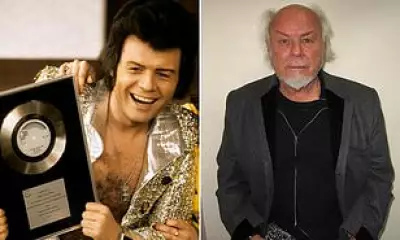
Perhaps coincidentally, following his doctrine office audience, Pope Leo proceeded directly to a separate meeting with consecrated members of Regnum Christi. This organisation represents the lay branch of the Legion of Christ religious order, which remains the Catholic Church's most egregious twentieth-century case of clergy sexual abuse and systematic cover-up.
The Mexico-based Legion's founder, Reverend Marcial Maciel, was eventually sanctioned by the Vatican in 2006 to a lifetime of penance and prayer. This disciplinary action occurred only after Rome ignored five decades of credible reports documenting Maciel's activities as a paedophile, con artist, drug addict and religious fraud.
In his remarks to Regnum Christi members gathered in Rome for their general assembly, Pope Leo made no direct mention of the Legion or its disgraced founder. However, he suggested the Vatican-imposed reform process initiated in 2010, following full revelation of Maciel's crimes, remains ongoing work.

The pontiff noted that Regnum Christi still needs to better define its unique spiritual inspiration, known in ecclesiastical terminology as its charism, which justifies its continued existence. He also encouraged exploration of new governance styles, stating: "You should not be afraid to experiment with new models of governance."
This Vatican-endorsed reform follows an investigation that identified profound problems within the cultlike organisation, including systematic abuses of authority by superiors. The investigative report mandated a necessary process of "purification" for the movement.
"A truly evangelical government, moreover, is always oriented toward service: it supports, accompanies, and helps each member to become more like the saviour every day," Pope Leo advised the Regnum Christi assembly, emphasising service-oriented leadership models.
The Legion itself is concurrently conducting its once-every-six-year assembly to elect new leadership, though no confirmation has emerged regarding whether Pope Leo will meet directly with Legion priests during their Rome gathering.