A Mother's Unending Grief
Lauren Spierer stood at a personal crossroads during the spring of 2011, grappling with substance abuse issues and the complexities of a turbulent romantic relationship. On the evening of June 2, the twenty-year-old Indiana University sophomore attended a student gathering without her boyfriend, embarking on a night from which she would never return. She would have celebrated her thirty-fifth birthday last month, marking another painful milestone for her family.
The Birthday That Never Was
On a bitterly cold and snowy Saturday, January 17, Charlene Spierer remained in the New York family home where Lauren and her older sister were raised. Sitting before a computer, the now seventy-one-year-old mother composed an agonizing message to her absent daughter. "You are desperately missed," she typed. "You are eternally loved. You will always be in our hearts. Today. Especially today. You should be here on this your 35th birthday. You should be here."
Had Lauren safely returned to her Midwest college town that fateful night, one can envision her family gathering last month to joyously sing "Happy Birthday." Lauren might have leaned forward to blow out candles on a carrot cake baked by her proud mother, possibly surrounded by her own children eager to sample the cream cheese frosting. Two days later, celebrations could have continued as Lauren reunited with college friends to watch the Indiana University football team secure its inaugural national championship.

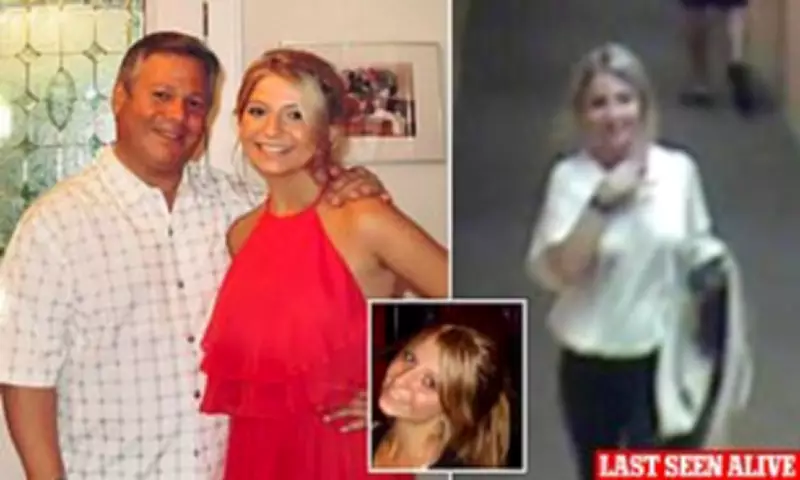
Instead, Lauren's birthday served as yet another gut-wrenching reminder of elapsed time—5,342 days since Charlene and her husband Rob received the devastating phone call informing them of their daughter's disappearance. Nearly fifteen years later, Charlene, now a grandmother to her other daughter's children, shared this latest message on the family's Facebook page. She accompanied it with a cherished photograph showing her arms wrapped around her smiling young daughter, eyes closed as she kissed the child's cheeks.
A Community of Support
The Facebook page has amassed 93,000 followers nationwide who have shared the family's suffering and offered words of encouragement throughout the years. At home in Washington, D.C., with his own wife and children, journalist Shawn Cohen teared up upon seeing Charlene's post, wishing he could provide comfort. Lauren Spierer vanished on June 3, 2011, after a night out with friends in downtown Bloomington, Indiana. Grainy surveillance footage represents the last confirmed sighting of her. Had fate not intervened, she would now be thirty-five years old, yet her parents have refrained from filing paperwork to officially declare her deceased.
Cohen's wife understands the profound significance this family holds for him, which is why she permitted him to dedicate years to reporting on the case and even utilize part of his parental leave pursuing leads. He released College Girl, Missing, his book on the case, on the thirteenth anniversary of Lauren's disappearance. The work plunges readers into that night with excruciating detail, illustrating how Lauren ended up at the doorstep of a group of affluent, well-connected young men.
The Night of Disappearance
Lauren had left her shoes and cell phone in a bar. She was severely intoxicated, barely able to stand, with her eye blackening from repeated falls onto the pavement. Instead of summoning assistance, one of the young men, Corey Rossman, carried her to his residence. His friend Jay Rosenbaum, living two doors away, was the last person to report seeing her alive, providing inconsistent accounts of her walking out of his townhouse shortly after 4 a.m.
College Girl, Missing became an instant New York Times bestseller. For Cohen, no moment was more tense than when Charlene revealed she had read it. "I can't say it wasn't difficult to read because it was," she later wrote on Facebook. "Most things we knew. Some things we did not. We are still fiercely protective of Lauren."

Investigative Journey
Cohen first encountered Charlene and Rob Spierer on the streets of Bloomington just days after the disappearance. They were trapped in their worst nightmare, while he was an aggressive reporter uncovering disturbing details about their daughter's chaotic night for their hometown newspaper in Westchester, New York. As the police investigation grew cold, their relationship deepened. The family eventually entrusted Cohen with the private investigative files they had accumulated.
Lauren's father, Robert Spierer, believes she would still be alive today if she "never met Corey Rossman." Cohen spent weeks scrutinizing the records before branching out, following up with witnesses and identifying new individuals who had not been questioned. He returned to ground zero in Bloomington to retrace Lauren's steps with fresh perspective. Unable to progress beyond the lobby with police who continued to seal their files, he later door-knocked some officers involved in the investigation.
Breakthroughs and Setbacks
This effort yielded further progress. One retired officer shared suspicions about the young men who became "persons of interest" in the case. He mentioned a curious video showing Rossman apparently making a phone call around 3 a.m., while Lauren was slumped on a curb—shortly before he carried her to his townhouse. Cohen obtained Rossman's cell phone records and identified the teenage girl he called, a confidante from his hometown in Massachusetts.
He later confronted that now young woman. Subsequently, he reached out to Rossman and Rosenbaum, who had secretly been monitoring his progress and ultimately decided to speak publicly. Although Cohen fell short of breaking the case, he shed new light on the events surrounding Lauren's disappearance. When College Girl, Missing was published in May 2024, it achieved one objective—returning the case to the spotlight.
Public Reaction and Emotional Fallout
Cohen began his book tour with a humbling experience in Bloomington, meeting community members who packed a local bookstore to hear him speak. Many had participated in the original search and shared their continued heartbreak for the family and deep desire to see the case resolved. Days later, Bloomington police—long criticized for soft-pedaling the investigation—released a statement welcoming the book's publication and hoping the renewed attention would generate fresh tips.
The book also stirred emotions among those impacted by Lauren's disappearance. The mother of one "person of interest" lashed out, sending Cohen a video of herself setting fire to a copy of his book before tossing it into her fireplace. Another young man, who dated Lauren in high school, reached out to share that she was his first true love and that the book evoked powerful feelings he had struggled to process since her loss.
Cohen has been inundated with messages from individuals who never knew Lauren but related to her experience, as well as true crime enthusiasts who read and reread the book, contacting him with follow-up questions. He invites some people to call him, wanting to hear their perspectives, potentially dispel myths, and sharpen his thinking. Others share intelligence they have uncovered on individuals connected to the case and their associates, including social media threads from the period when Lauren vanished.
Persistent Pursuit of Answers
Most comments conclude with the same refrain—that Cohen should continue pushing for information. Even while maintaining a full-time position with the Daily Mail exclusives team, he still loses sleep contemplating new avenues to pursue. He accepts nearly all interview requests, determined to keep the case in the public consciousness.
This commitment explains why, while working on an assignment in Seattle on the fourteenth anniversary last June, Cohen pulled over to the side of the highway to take a video call from an Indiana television station. The interviewer placed him on the spot with an uncomfortable question, reading a message Charlene had just posted on social media: "Even as this year marks the day, I am anticipating next year, the 15th year. That's how quickly these days pass, one folding into the next, one year folding into the next. It has been a very long 14 years. At times unbearable, at other times hopeful. Never any resolution. The not knowing what happened on June 3, the not knowing where Lauren's remains are, the lack of any kind of closure is devastating, exhausting, endless."
The interviewer suggested the mother sounded like she was losing faith. Cohen, while not speaking for Lauren's family, muddled through a response: "They may sound like they're losing hope, but I know they're not. One of the lines they put in there is they're speaking out because they want to remind the individuals who are responsible that they're never going to give up until they have answers."
And then came last month's post—an eternally loving mother living our worst fears, sending a message into the abyss, addressed to her daughter but read by followers who pray for her yet, mercifully, can only imagine the depth of her enduring anguish.