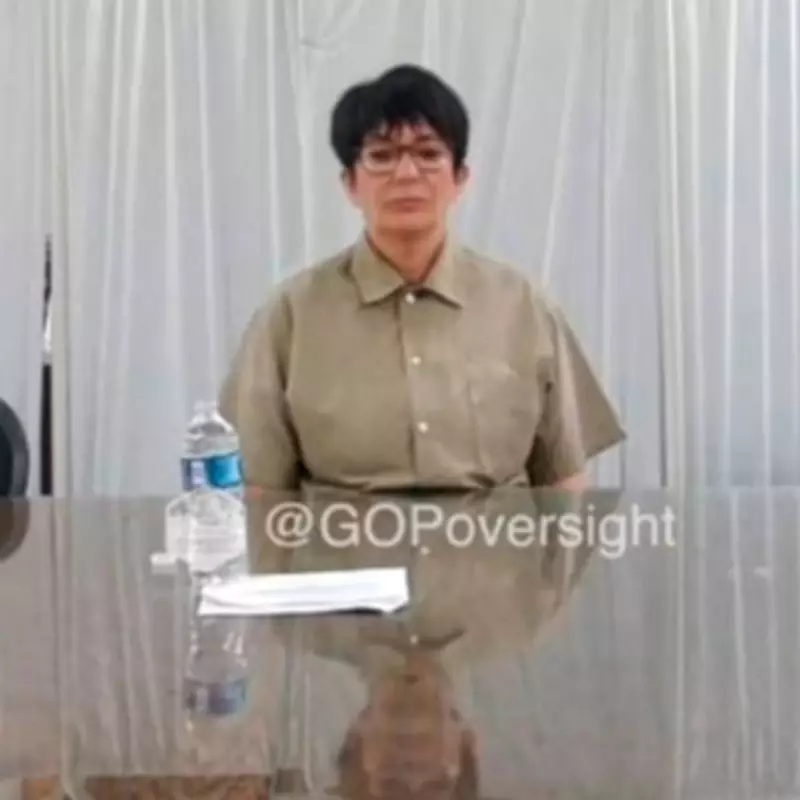
Ghislaine Maxwell, the convicted sex trafficker, has been captured on video invoking her constitutional right to silence during a congressional deposition, as shocking new details emerge about Jeffrey Epstein's abuse network. The footage shows Maxwell, appearing healthier and visibly heavier in her beige prison uniform, calmly refusing to answer questions from US lawmakers.
Congressional Deposition Reveals New Horrors
During a twenty-minute video deposition from Bryan Federal Prison Camp in Texas, Maxwell repeatedly declined to provide testimony, speaking only to spell her name. The session occurred as members of the House Oversight and Government Reform Committee examined newly released documents connected to Epstein, which have ignited global political fury.
Lawmakers Disclose Disturbing Details
Democratic Representative Jamie Raskin revealed that the unredacted Epstein files contain references to previously unreported young victims, including one as young as nine years old. "You read through these files, and you read about fifteen-year-old girls, fourteen-year-old girls, ten-year-old girls. I saw a mention of a nine-year-old girl today," Raskin stated, describing the contents as "preposterous and scandalous."

Additionally, lawmakers disclosed that six men have had their names redacted from the publicly released Epstein documents, including one current senior foreign government official. Republican Thomas Massie suggested these individuals were "likely incriminated by their inclusion in these files," while Democrat Ro Khanna noted there was "no explanation why those people were redacted."
Maxwell's Conditional Cooperation
Following the deposition, Maxwell's attorney, David Oscar Markus, made a controversial proposal. He stated that Maxwell would only provide evidence clearing former Presidents Donald Trump and Bill Clinton of wrongdoing in exchange for executive clemency. "Ms Maxwell alone can explain why, and the public is entitled to that explanation," Markus told reporters.
This suggestion prompted immediate backlash from Democratic lawmakers, who argued Maxwell should be transferred back to a maximum-security prison for refusing to cooperate. The White House swiftly dismissed the prospect of a pardon, with officials stating it was "not something he's talking about or even thinking about at this moment in time."
Political Reactions and Demands
Democratic members of the oversight committee were particularly critical of Maxwell's performance during the deposition. Suhas Subramanyam described her as appearing "robotic" and "unrepentant," while accusing the president of obstructing the investigation by potentially offering a pardon.
Ro Khanna called for Maxwell's immediate transfer to a high-security facility, writing on social media: "Here is my conclusion after sitting through Maxwell's deposition with her refusing to answer a single question about the men who raped underage girls, saying she would only do so for clemency. She must immediately be sent back to the maximum security prison where she belongs."
Epstein Network's Continuing Fallout
The controversy unfolds amid heightened tension over the handling of the Epstein files, released under legislation passed overwhelmingly by Congress last year. The legislation explicitly prohibits redactions made solely to prevent embarrassment or reputational damage to powerful figures, while requiring protection of victims' identities.
According to FBI investigations, Epstein abused more than one thousand victims over decades, with his network extending into politics, business, academia, and celebrity culture. Epstein was found dead in his New York jail cell in 2019 while awaiting trial on federal sex-trafficking charges, with his death officially ruled a suicide.
Maxwell's Current Circumstances
Maxwell, once a fixture in elite social circles in New York and London, has rarely been seen since her 2022 sentencing to twenty years in prison for procuring underage girls for Epstein. Her appearance via video link from the minimum-security Texas facility prompted renewed scrutiny of her prison conditions, which are widely regarded as America's easiest female prison.

Her brother, Ian Maxwell, defended her decision to invoke the Fifth Amendment protection against self-incrimination, arguing she risked perjury because she hadn't been able to review all newly published documents. Meanwhile, her attorney maintained that her testimony was constrained by an ongoing appeal against her conviction.