Lovejoy Television Episode Provides Crucial Clue in Recovery of Stolen Napoleon III Tomb Artefacts
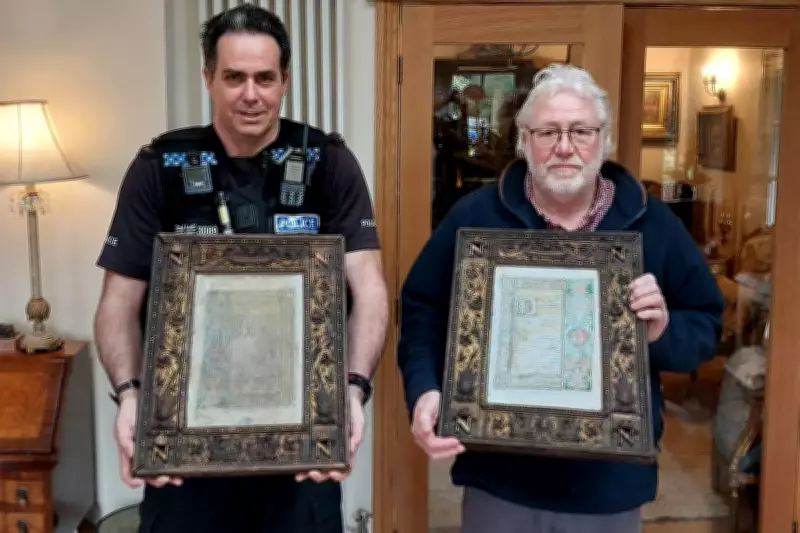
In a remarkable twist of fate, two historically significant altar plaques stolen from the crypt of Napoleon III have been successfully recovered after an antiques dealer identified them using knowledge gained from a thirty-year-old episode of the BBC television series Lovejoy. The wooden prayer frames, described as priceless and dating back to the nineteenth century, were taken during a burglary at St Michael's Abbey in Farnborough, Hampshire, in February 2014.
Dealer's Television-Inspired Recognition Leads to Breakthrough
Paul Gostelow, a Derbyshire-based antiques dealer, contacted Hampshire Constabulary on February 10 this year after recognising distinctive motifs on the plaques. Mr Gostelow had spotted a ball and crown design in the corner of the frames, which he remembered seeing on an episode of the 1990s comedy-drama Lovejoy, starring Ian McShane as a roguish antiques dealer. This television-inspired insight allowed him to correctly date the items to the Napoleonic era.
Police Constable Mark Webb, a heritage crime specialist from the Country Watch Rural Crime Task Force, intercepted the call. Subsequent verification with the International Stolen Arts Register confirmed that the two plaques were indeed the stolen artefacts. Officers from the task force travelled to Derbyshire last week to recover the items, and PC Webb has since returned them to St Michael's Abbey for restoration and eventual reinstatement in the crypt.

Historical Significance and Ongoing Investigation
The plaques hold profound historical value. They originate from the crypt of Napoleon III, nephew of Napoleon Bonaparte, who fled to England in exile after the Franco-Prussian War. He died in 1873, and his widow, Empress Eugenie, later built St Michael's Abbey as a monastery and imperial mausoleum. The stolen prayer frames were created from handwritten prayers found in the wallet of her son, Prince Imperial Napoleon, who was killed in the Zulu War in 1879.
A spokesman for Hampshire Constabulary stated: "After twelve years, the plaques were thought to have been lost forever. This recovery is a testament to public vigilance and specialist policing. Ongoing investigative work has identified several lines of inquiry, and efforts will continue to locate the third plaque, which remains missing."
Community and Abbey Response
A spokesman for St Michael's Abbey expressed gratitude, noting: "The altar cards were stolen from beneath the tomb of Empress Eugenie. Although they have returned in poor condition, the Abbot and community are delighted at their recovery. We are thankful for the public's diligence and the collaboration between the army and police. We hope the third card will be found and that these can be restored to their proper use."
This case highlights the intersection of popular culture, historical preservation, and law enforcement, demonstrating how even decades-old television content can play a pivotal role in solving real-world crimes and recovering invaluable cultural heritage.