An 80-year-old Italian man has become the first suspect in a major investigation into alleged 'human safari' sniper trips during the Balkan wars of the 1990s. The unnamed former metalworker and truck driver from Vento faces charges of voluntary manslaughter, accused of being a paid 'weekend sniper' who hunted civilians during the brutal siege of Sarajevo.
Boasts of Manhunts and Disturbing Allegations
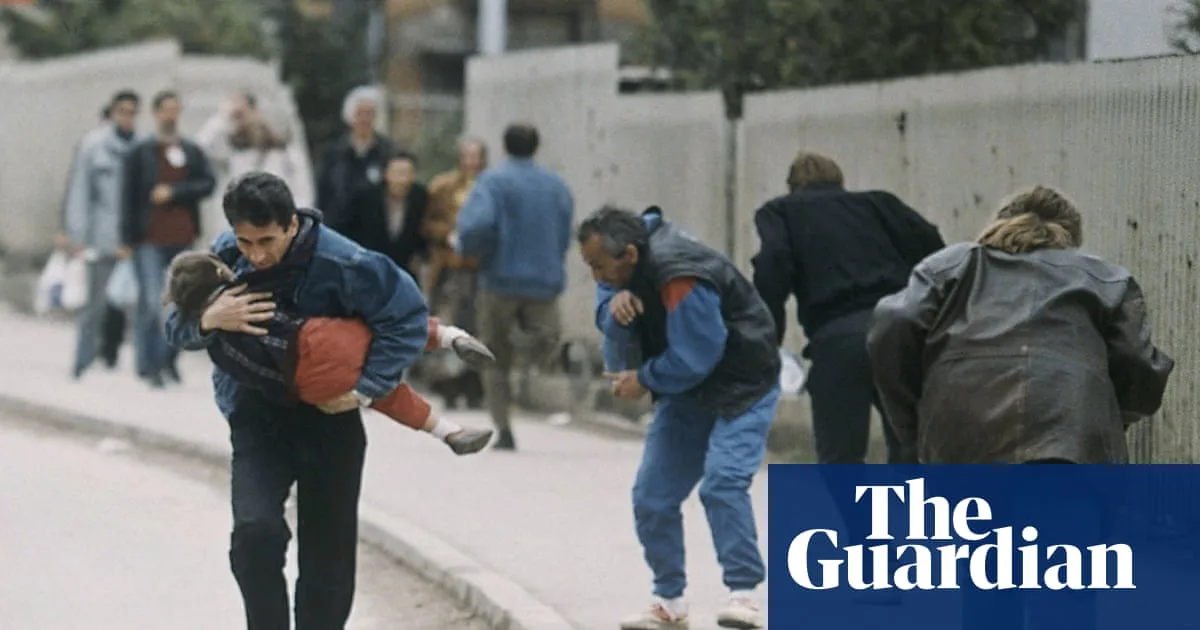
On Thursday, the elderly suspect reportedly stated, 'I conducted a manhunt,' while boasting about his shooting spree against defenseless civilians in the besieged Bosnian capital. The allegations include targeting women, elderly people, and children during the 1992-1995 siege, which claimed over 11,000 civilian lives as Bosnian Serb forces surrounded the city and fired from surrounding hills.
Prosecutor's Investigation and Firearm Discovery
The suspect is scheduled for questioning on Monday by prosecutor Alessandro Gobbis, who will demand proof that his frequent trips to the former Yugoslavia during the war years were solely for work purposes. Italian media reports describe the man as 'right-wing' and a firearm enthusiast, following a police search of his home that uncovered two pistols, four rifles, and a carbine.
Prosecutors initiated their investigation in November after Italian journalist and writer Ezio Gavazzeni filed a formal complaint. Gavazzeni's allegations claim that visitors from Italy, the United States, Russia, and other countries paid Bosnian Serb fighters between £70,000 and £88,000 for access to sniper positions. The case further alleges that depraved tourists paid extra premiums to hunt minors as part of the long-rumoured 'human safari' scheme.
Documentary Inspiration and Historical Testimony
Gavazzeni revealed he was inspired to investigate after watching 'Sarajevo Safari,' a 2022 documentary by Slovenian filmmaker Miran Zupanic. The documentary features disturbing accounts from witnesses, including a Slovenian man who worked as an intelligence officer for the US. He described seeing foreigners in high positions committing crimes against innocent civilians, stating: 'These people were certainly not ordinary people. They were people in high positions, protected... people who, after having everything, seek another thrill.'
The allegations of human safaris gained significant attention in 2007 when a former US Marine provided testimony at The Hague detailing war crimes committed during the period. He described how unarmed civilians were constantly under attack, with the youngest family members facing increased threats of violence. The former Marine also claimed Sarajevo was filled with tourists who would pay substantial sums to shoot people, with some reportedly paying up to £200,000 for a weekend 'shoot.'
Key Witness Death and Political Implications
In a significant development for the investigation, a key witness died unexpectedly in December. Slavko Aleksic, a 69-year-old Bosnian former militia leader who commandeered a Jewish cemetery above Sarajevo used by snipers, passed away in Trebinje despite reportedly being in good health. According to Serbian lawyer Cedomir Stojkovic, Aleksic 'would have been a crucial witness' because 'he could have said who did the shooting and who organised it.'
Croatian investigative journalist Domagoj Margetic noted the suspicious timing: 'In November, Aleksic was apparently in good health — and now he has suddenly, and very conveniently, died.' Margetic has appealed to war crimes prosecutors to prevent cremation or burial and conduct a post-mortem to check for poison. Stojkovic added: 'It's reasonable to think Aleksic's death was linked to the 'human safari' probe and that Serbian intelligence was involved.'
The investigation has political dimensions, with Serbian president Aleksandar Vucic accused in October of involvement in Sarajevo's 'human safari' sniper trips—an allegation he strongly denies. Aleksic had given an interview on Serbian television in November insisting the president had no involvement in sniper activity. Margetic observed: 'Aleksic was alive and well then, did not announce a fatal illness and, on the contrary, said he would testify in favour of Vucic.'
Survivors' Calls for Justice and Macabre Evidence
Survivors of the Sarajevo massacres have called for the death penalty for the 'sick tourists' who allegedly paid to shoot civilians. The investigation has reopened painful memories for Sarajevo residents, though many hope it may finally provide answers about one of the most disturbing allegations to emerge from the conflict.
Adding to the macabre nature of the case, a video resurfaced showing a car allegedly used by Aleksic featuring a human skull on the bonnet—said to be extracted from a Bosnian corpse—wearing a UN helmet. This grotesque imagery underscores the brutality of the siege and the alleged 'human safari' activities that turned civilian suffering into perverse entertainment for wealthy foreigners.
The Italian investigation continues to develop, with prosecutors examining evidence that could shed new light on one of the darkest chapters of the Balkan wars. As survivors await justice, the case highlights the enduring trauma of the Sarajevo siege and the international dimensions of wartime atrocities that continue to demand accountability decades later.