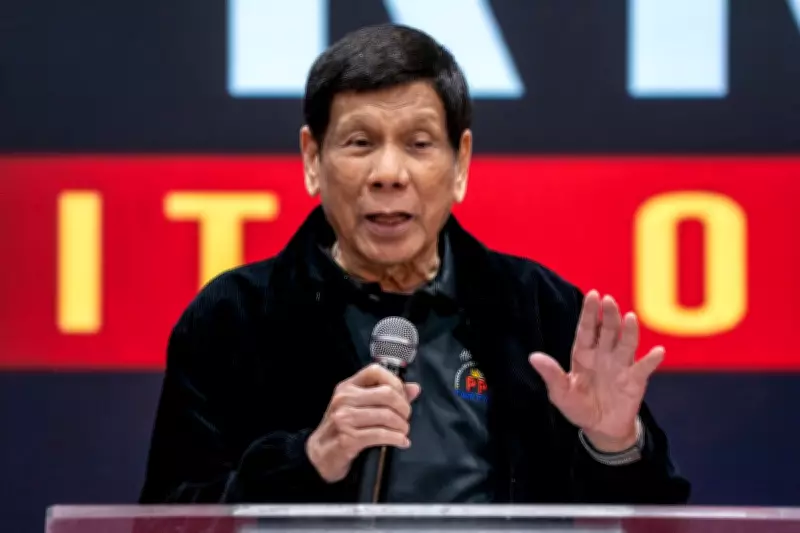
The International Criminal Court has formally opened pretrial hearings concerning former Philippine President Rodrigo Duterte, who is confronting three serious charges of crimes against humanity. These allegations stem directly from the brutal anti-drugs crackdowns he authorised and supervised during his tenure in office.
Prosecutors Outline Case in The Hague
Prosecutors at the International Criminal Court addressed judges on Monday, asserting that former President Rodrigo Duterte actively encouraged death squads to execute extrajudicial killings. They claimed he utilised both fear and financial incentives to motivate these actions. The court, situated in The Hague, is conducting these pretrial hearings for the ex-leader, who faces three counts of crimes against humanity for overseeing deadly anti-drugs operations.
According to the prosecution's detailed statements, police officers and members of hit squads carried out dozens of murders directly at Duterte's behest. Their motivations reportedly included the promise of monetary rewards or the desire to avoid becoming targets themselves. "For some, killing reached the level of a perverse form of competition," deputy prosecutor Mame Mandiaye Niang declared in his powerful opening statement.

Duterte's Absence and Defence
Rodrigo Duterte, now 80 years old, was not present in the courtroom, having formally waived his right to appear. He has consistently described all charges against him as an "outrageous lie." Last month, judges determined he was medically fit to stand trial, following the postponement of an earlier hearing due to concerns about his health. It is crucial to note that The Hague hearing is not a full trial but allows prosecutors to comprehensively outline their case before the court.
After meticulously weighing all presented evidence, judges have a strict 60-day period to decide whether the case is sufficiently strong to merit putting Duterte on formal trial. The charges originate from Duterte's time as mayor of Davao City in the southern Philippines and later during his presidency, encompassing dozens of killings as part of his so-called war on drugs.
Protests and Public Reaction in Manila
In the Philippines, dozens of activists and relatives of suspects killed during Duterte's anti-drugs crackdowns held a noisy and emotional protest in metropolitan Manila on Monday. More than 100 grieving relatives gathered to watch the pretrial hearings broadcast on large television screens at three separate venues organised by civic groups across the capital region.
"We're hoping that the ICC, even if it's thousands of miles away, will finally render justice to all these families," said Randy delos Santos, a volunteer at a charity shelter hosting one event. The 17-year-old nephew of delos Santos was shot and killed by three police officers during a purported drug raid in August 2017. This particular killing sparked significant public outcry. In a rare conviction, the officers were found guilty of murder by a Manila court the following year.
Political Context and Jurisdictional Disputes
Supporters of Rodrigo Duterte have sharply criticised the administration of current Philippine President Ferdinand Marcos Jr., Duterte's political rival. They accuse the government of arresting and surrendering the former leader to a court whose jurisdiction they vehemently dispute. Notable detractors include Duterte's own daughter, current Philippine Vice President Sara Duterte, who announced last week her intention to seek the presidency in the 2028 elections.
ICC prosecutors initially stated in February 2018 that they would open a preliminary investigation into the violent drug crackdowns. In a move that human rights activists argue was aimed at escaping accountability, Duterte, who was president at the time, announced just one month later that the Philippines would withdraw from the International Criminal Court.

Legal Challenges and Death Toll Estimates
Judges have already rejected a formal request from Duterte's legal team to dismiss the case on jurisdictional grounds following the Philippine withdrawal. The court's September decision explicitly states that countries cannot "abuse" their right to withdraw from the court's foundational Rome Statute "by shielding persons from justice in relation to alleged crimes that are already under consideration." An appeal of this significant decision remains pending.
Estimates of the death toll during Duterte's presidential term vary dramatically. Official national police reports cite more than 6,000 deaths, while human rights groups claim the figure could be as high as 30,000 individuals killed in connection with the anti-drug campaigns.