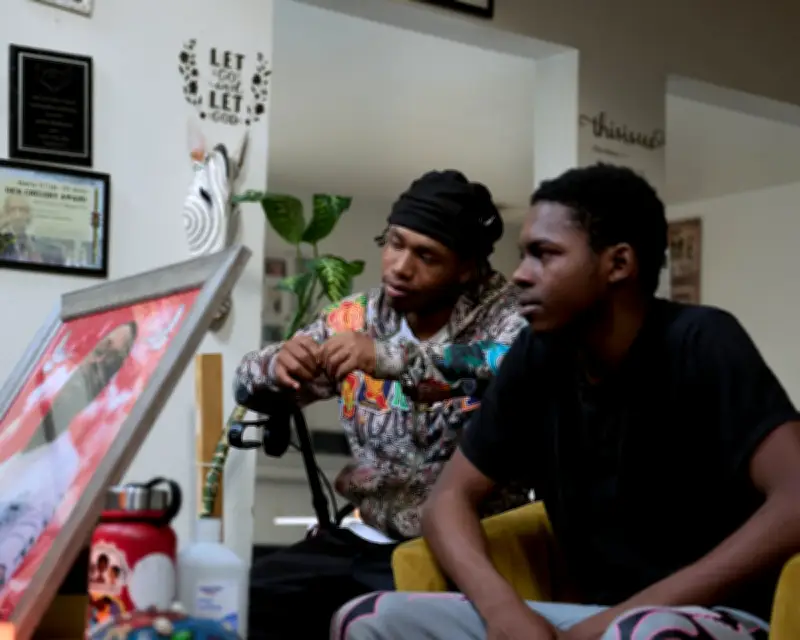
Nearly six years after André Robinson Jr was shot and killed while dropping off breakfast at his girlfriend's home in Oakland, California, his four surviving siblings remain fractured by grief and trauma. The family, once bound by Sunday gatherings filled with food and laughter, now struggles to communicate without conflict. André Jr, known as "Lil Dre," was the glue that held them together, according to his sister RoShanda Robinson, the eldest child. "He was one of my closest friends. It was never a dull moment with him. He always had a smile on his face," she said.
Immediate Aftermath and Family Upheaval
The murder on November 8, 2020, left the Robinson family reeling. JaDen Robinson, then 12, had spoken to his older brother the night before. "I'm going to come pick you up," André Jr had said. The next day, JaDen waited for him to come home. Instead, his mother burst in screaming and crying, telling him his brother was dead. "It wasn't real," JaDen recalled. "I literally talked to him. He was going to come get me." JaDen became withdrawn, feeling invisible amid the family's whirlwind of grief, police dealings, and funeral arrangements. "I was pushed away," he said.
RoShanda, 34, learned of the shooting while on a weekend trip. She ignored her mother's repeated calls, then saw one from her father and knew something was wrong. She rushed home without packing. At the hospital, her father emerged from the waiting room unable to speak through tears, confirming André Jr's death. "For a minute, I couldn't believe it. I just couldn't believe it. Like, this is not happening to our family," she said. RoShanda began self-medicating with alcohol after the loss, leading to two drunk driving incidents. She now drinks less and tries to be present for JaDen.
Siblings' Unique and Overlooked Trauma
De'Andraney Robinson, 28, described André Jr as her best friend. She recalls ironing his clothes and laying out his outfits for school. After his death, a rift developed between her and her mother over who they thought was responsible. She went four months without speaking to her mother and is now mostly estranged from her parents, except for family gatherings commemorating André Jr's birthday and an annual candlelight vigil. She still talks to JaDen daily but feels distant from the rest. "I don't know how to be emotionally available for [my family] if I wake up some days and don't know what the fuck to do," she said.
Tinisch Hollins, executive director of Californians for Safety and Justice, noted that siblings often navigate their trauma while managing the feelings of others. "For a lot of siblings, we're forced to negotiate how we carry our grief while we also manage everyone else's feelings," she said. "We do this without having that same compassion extended to us." Hollins lost three first cousins she considered brothers, two to shootings and one to suicide. She felt pressure as the eldest to be a stable presence and manage logistics.
Broader Impact and Lack of Resources
Chevist Johnson, a violence prevention professional at UC Davis medical center, said siblings often step into parental roles after a homicide, feeding younger siblings and getting them to school while parents are incapacitated by grief. "A lot of times the parenting changes because of that grief and because of thoughts of 'What can I have done differently?'" he said. "Unfortunately sometimes parents just check out." Johnson emphasized that resources like grief counseling exist but are not well-promoted, leaving siblings without support. "If a sibling is left to their own devices, or if they're being fed negativity, then that's what they're going to latch on to," he said.
Brielle Savage, a doctoral fellow at the New Jersey gun violence research center, studies how Black people interact with the justice system after losing a loved to gun violence. She found that siblings often feel invisible and desire the same attention as parents. "There was so much going on at the time of the loss that no one checked on if they were coping," she said. "That invisibility can fester and lead to more trauma and harm."
Moving Forward Amidst Pain
The Robinson family continues to struggle. André Sr regularly emails the homicide division for updates, but the case remains unsolved. JaDen, now 17, finds solace in his newborn son and close friendships. "I had my patnas and they helped me get through it, and my son helped me get through it, too," he said. He tries to be a strong role model for his nephew Denzel, as André Jr was for him. "I've got to show my nephew that I'm going to be bigger than this," JaDen said. "I've got to be bigger like Dré was. He didn't cry in front of any of us so I'm not going to cry in front of my nephew."
LaTanya Robinson, the mother, finds purpose in her two new grandchildren, JaDen's son and RoShanda's daughter Brooklyn. "I'm never going to get my son back, but I still try to live because I'm thankful to have my two new grandbabies," she said. "I'm in love with them so they give me the strength to keep going." However, she worries about her children's stagnation. "When I look back and see that my kids are still in that same space, it hurts," she said. She hopes to mend their relationships, urging them to love each other. "Why are we not loving each other? We just lost somebody. We can never get him back. We need to be loving on each other," she said.
Despite the pain, LaTanya sees hope. The siblings show up for family events in André Jr's honor and keep arguments minimal out of respect. The recent loss of LaTanya's mother has also improved communication among them. "I have faith that my kids will conquer this," she said. "They've had good times together in these past five years. But I can tell that the bridge that kept them together is cracking."
With nearly 23,700 homicides annually in the US, hundreds of thousands of families face similar upheaval. The Robinsons' story underscores the need for targeted support for siblings, who often bear hidden burdens in the wake of violent loss.