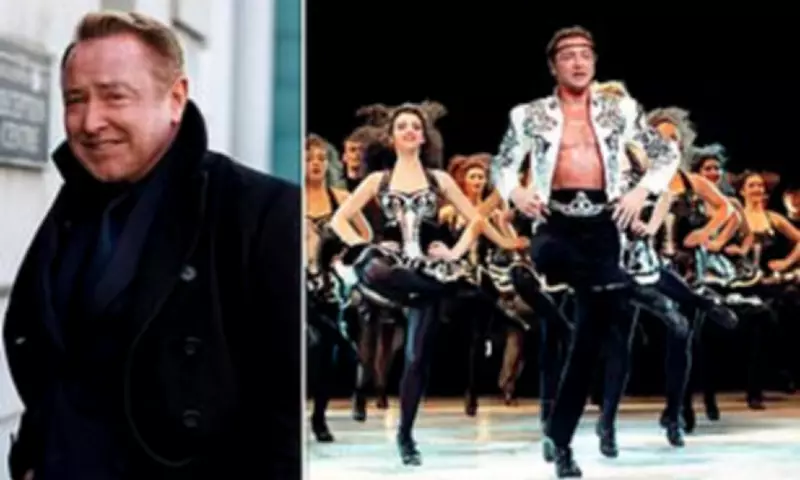
Michael Flatley has been sustaining the extravagant "lifestyle of a Monaco millionaire" through extensive borrowing, displaying an "insatiable appetite" for what has been termed "lifestyle cash," according to evidence presented at the Chancery Court in Belfast's Royal Courts of Justice. The Irish dancer and choreographer, now 67, finds himself embroiled in a significant civil case brought by Switzer Consulting, which alleges breach of contract concerning an agreement to manage his renowned dance productions.
Legal Battle Over Lord of the Dance Intellectual Property
The core of this legal confrontation revolves around a terms of service agreement under which Flatley transferred intellectual property rights for his iconic show, The Lord of the Dance, to Switzer Consulting. In return, the firm was obligated to provide comprehensive business management services, including handling accounts and payroll operations. For these services, Flatley committed to paying £35,000 monthly for the initial twenty-four months, with this figure escalating to £40,000 per month thereafter.
Switzer Consulting has already secured a temporary injunction to prevent Flatley from interfering with the productions. His legal representatives have previously contended that the performances risk "falling apart" without his direct involvement and creative input. Gary McHugh KC, representing Switzer, informed the court that the injunction was essential to safeguard the company's interests, arguing that Flatley's precarious financial position would leave him incapable of covering potential damages.

Allegations of Extravagant Spending and Financial Mismanagement
The court heard detailed allegations regarding Flatley's financial conduct, drawn from a statement by his former financial advisor, Des Walsh. Walsh asserted that the dancer "knows why he finds himself in this position," describing how Flatley "has lived the lifestyle of a Monaco millionaire" by consistently borrowing funds. This pattern began when he "did not even have the minimum cash required to open a residency package" in Monaco and was advised against entering such an affluent circle due to insufficient resources.
According to the testimony, Flatley disregarded this counsel and has "essentially maintained this facade of wealth using other people's monies ever since." This situation was reportedly worsened by what were described as "horrendous business mistakes," which allegedly cost him millions in additional borrowings during periods when he had no income and was "running out of room financially."
Walsh's statement further claimed that, "instead of reining in his spending, adjusting his lifetime costs and cutting his cloth to suit his measure, Michael simply borrowed more money from more people." It was characterised as being "all about image," with all borrowing directed towards "maintain[ing] a pretence of wealth." The affidavit specifically noted that Flatley's "appetite for lifestyle cash was insatiable," citing examples where he borrowed £65,000 to fund a birthday celebration and £43,000 to gain membership to the exclusive Monaco Yacht Club.
Flatley's Legal Team Mounts Robust Defence
David Dunlop KC, acting for Michael Flatley, vigorously contested the portrayal of his client as a poor manager of his affairs burdened by substantial debts. He dismissed many of the claims as "ad hominem" attacks on the dancer's character, arguing they were irrelevant to the legal substance of the case. Employing a football metaphor, Dunlop suggested that Switzer's legal team had "attacked the player not the ball," failing to address the "legal core" of the dispute.
Dunlop asserted that Switzer's entitlement was strictly limited to a fee of £420,000 for the sixty remaining months of their service agreement with Flatley. He revealed that, "overnight," Flatley had secured £433,000 held by a solicitor in Dublin, which could be used to pay damages and terminate the contract with Switzer. "While many averments were made about Mr Flatley's financial affairs the proof is in the pudding," Dunlop stated. "He is the one who's managed to generate and has made available half a million pounds. It's not Mr Flatley who has the financial difficulties in this case, it is the plaintiff."

Concerns Over Control of Valuable Intellectual Property
The defence also raised serious concerns about the potential consequences of Switzer retaining control over The Lord of the Dance intellectual property. Dunlop argued that if Flatley's loss of trust in Switzer as an agent was justified, the firm could "do untold damage" to his intellectual property over the next twelve months. He contended that Switzer had "no skin in the game" to protect the show's value, as its compensation was merely a fixed service fee, not tied to the production's success or preservation.
"Ultimately if there's damage caused to the operation of the Lord Of The Dance when Mr Flatley is undertaking it, well it's his property," Dunlop told the court. "If it suffers loss, that's really his problem. However if he's right, and Switzer is a completely untrustworthy agent in whom he has lost all trust whatsoever for the next 12 months or thereabouts it will control the intellectual property."
Background and Ongoing Productions
Michael Flatley rose to international fame following his electrifying performance of Riverdance at the 1994 Eurovision Song Contest. He subsequently created the phenomenally successful stage show, The Lord of the Dance, which has endeared him to millions of fans worldwide. The production is currently celebrating its thirtieth anniversary with a tour scheduled to perform at Dublin's 3 Arena next Wednesday, with further dates planned across the United Kingdom, Germany, Croatia, Slovakia, and the Czech Republic.
The court is expected to deliver its ruling on the injunction and broader contractual dispute later today. This case highlights the complex intersection of artistic legacy, financial management, and intellectual property rights in the high-stakes world of international entertainment.