A landmark trial begins in Peru this week, putting five men in the dock for the contract killing of an Indigenous Amazon defender. The case represents a rare and crucial legal test of whether the country can deliver justice for violence linked to illegal logging and drug trafficking in one of the world's most perilous regions for environmental activists.
A Foreseeable Tragedy in the Forest
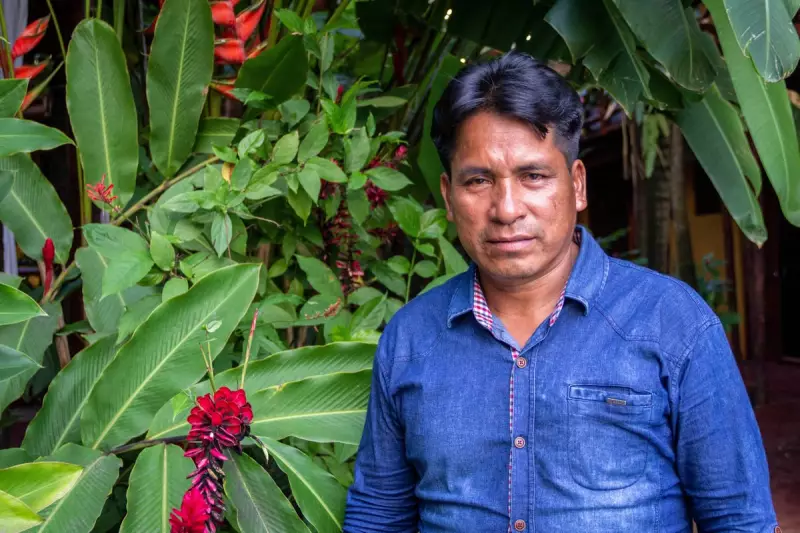
Quinto Inuma Alvarado, a 50-year-old leader of the Kichwa tribe, was ambushed and shot dead on 29 November 2023. His killing followed years of threats that went unheeded, stemming from his persistent denunciations of illegal activities within his community's territory in the northern San Martín region.
Cristina Gavancho, a lawyer with the Instituto de Defensa Legal supporting the victim's family, stated the outcome was tragically predictable. "He was returning to his community after participating in an event for defenders and Indigenous people, and he was ambushed and killed," she explained. Prosecutors allege illegal loggers targeted Inuma for his role in defending Indigenous land and reporting crimes to authorities.

The attack occurred as Inuma travelled by boat along a river route. He was shot during the ambush and fell into the water. Another community member was wounded but survived. Of six original suspects, five will stand trial; a sixth was killed last year during an attempted arrest after he attacked police officers with a machete.
A Potential Precedent for Latin America
Prosecutors are seeking life sentences on charges of contract killing—a first in a Peruvian case involving the murder of an Indigenous environmental defender. They have built their case on forensic gunshot-residue tests and witness testimony placing the accused at the scene. Investigators also link the suspects to individuals Inuma had repeatedly reported for illegal logging and drug trafficking.
The trial is being closely monitored by Indigenous groups, environmental advocates, and international observers. A conviction with life sentences would be unprecedented in Peru and could send a powerful signal across Latin America that such crimes will no longer enjoy impunity.
"This case is significant because it is the opportunity that the Peruvian state has to establish an exemplary sanction," said Gavancho. She added that convictions could demonstrate that thorough investigations are possible and that a lack of resources can no longer justify inaction.
Failed Protections and a Family's Loss
The case has starkly exposed the failure of Peru's system for protecting environmental and Indigenous defenders. Despite being granted a security detail under a state protection mechanism created in 2021, the measures for Inuma were never implemented.
Matías Pérez Ojea del Arco of the Forest Peoples Programme criticised the system's shortcomings. "Quinto Inuma had all the paperwork that was supposed to protect his life, and he was still killed. These protection mechanisms stay on paper. Paper does not stop bullets." Gavancho echoed this, citing a lack of budget as the reason the ordered protection was never carried out.
For Inuma's family, the tragedy has meant a devastating upheaval. His son, Kevin Arnol Inuma, 30, said the death forced the family to leave their community and adapt to a difficult life in the city, losing their home, crops, and way of life. "Living in the city feels like being imprisoned," he said.
Kevin Inuma acknowledged the trial's importance but stressed its limits for his family. "Even if there is justice, it won't bring my father back. We will never see him again." The family's plight underscores the immense personal cost behind the statistics of violence against defenders, with at least 35 Indigenous defenders killed in Peru over the past decade.
International bodies, including the United Nations and the Inter-American Commission on Human Rights, are watching the proceedings. Mary Lawlor, the UN Special Rapporteur on human rights defenders, noted that the investigation alone represents a rare step forward, as such crimes are seldom properly probed. She expressed hope the trial would "mark a new chapter" for prosecuting attacks on defenders in Peru.