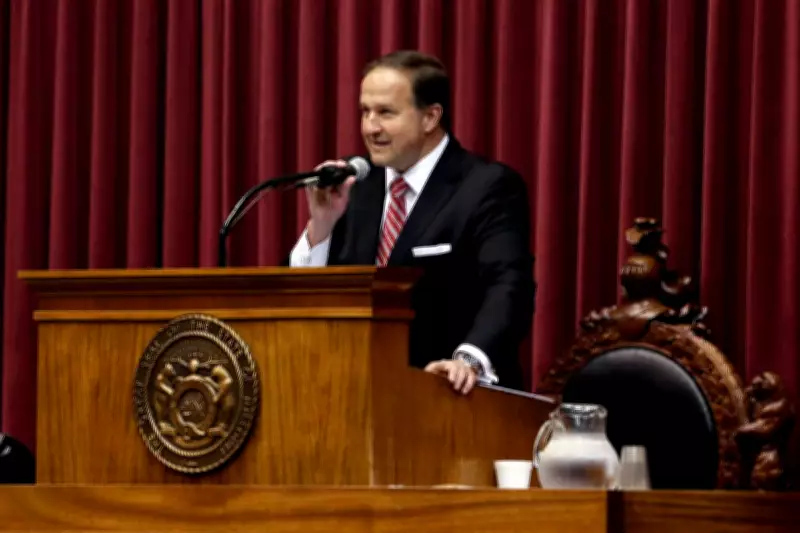
Former Missouri House Speaker Sentenced to 21 Months for COVID Relief Fraud
A former top Missouri lawmaker has been sentenced to 21 months in federal prison after pleading guilty to wire fraud for misusing pandemic relief funds intended to support businesses during the coronavirus crisis. John Diehl, who served as Republican House Speaker in Missouri, received the sentence on Monday following his admission of guilt in a September plea agreement.
Misuse of Federal Funds for Personal Gain
Between 2020 and 2022, Diehl obtained approximately $380,000 in federal loans through a Small Business Administration program designed to help cover operating expenses for businesses impacted by the pandemic. However, instead of using the funds for legitimate business purposes, Diehl diverted the money for his personal benefit.
Prosecutors revealed that Diehl used the relief funds to pay for:

- Country club membership dues
- Swimming pool maintenance at his residence
- Home mortgage payments
- Vehicle payments for a Tesla, Audi, and Jeep
Additionally, more than half of the funds were directed toward his law firm's defined benefit plan, in which he was the sole participant. The former speaker also used a portion of the money to settle a civil lawsuit related to his tenure as House speaker.
Previous Controversies and Legal Issues
This is not the first time Diehl has faced legal and ethical scrutiny. In 2015, he resigned as House speaker after The Kansas City Star reported that he had exchanged sexually suggestive text messages with a college student serving as a Capitol intern. At that time, Diehl acknowledged "making a serious error in judgment" regarding the inappropriate communications.
More recently, in 2023, the Missouri Ethics Commission imposed a substantial fine of approximately $47,000 on Diehl for campaign finance violations. These violations included allegations that he used nearly $6,800 of campaign funds to cover personal expenses, demonstrating a pattern of financial misconduct.
Sentencing and Judicial Response
Despite Diehl's request to avoid prison time—citing that he had already repaid all the pandemic relief funds to the Small Business Administration—the court imposed the 21-month sentence. The U.S. attorney's office had recommended a prison term ranging from 21 to 27 months, and in addition to the incarceration, the court ordered Diehl to pay a $50,000 fine.
Assistant U.S. Attorney Hal Goldsmith emphasized the severity of Diehl's actions in a court filing, stating: "Through his education and public office, Defendant had every privilege and opportunity, and to put it bluntly, he knew better than to engage in the charged fraud scheme."
The case highlights ongoing concerns about the misuse of COVID-19 relief funds across the United States, with prosecutors continuing to pursue those who exploited emergency programs during the pandemic for personal enrichment.