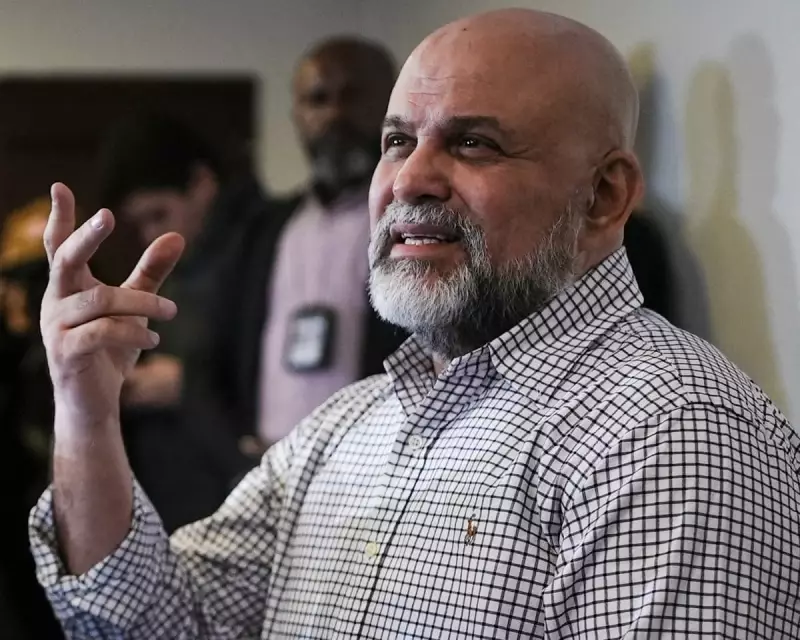
A Colombian court has imposed a 40-year prison sentence on former paramilitary commander Salvatore Mancuso for a catalogue of atrocities committed against Indigenous communities.
A Reign of Terror in La Guajira
The special tribunal for Colombia's armed conflict ruled that Mancuso was responsible for 117 specific crimes carried out by fighters under his command in the northern province of La Guajira. These offences, which occurred between 2002 and 2006, included homicides, forced disappearances, and the violent displacement of people from their ancestral lands.
However, the court stipulated that his time behind bars could be significantly reduced to just eight years. This reduction is conditional on his full cooperation with truth and reparation activities designed to benefit the victims of his former paramilitary organisation.

From US Prison to 'Peace Facilitator'
The 61-year-old, who also holds Italian citizenship, was recently repatriated to Colombia in 2024. He had just completed a lengthy prison sentence in the United States for drug trafficking offences. Despite multiple requests to be sent to Italy after his US term, he was deported to Colombia instead.
Upon his return, in a controversial move, Colombia's President Gustavo Petro named Mancuso a "peace facilitator." This designation allows him to act as a mediator in government talks with active armed groups, including the Gulf Clan, a powerful successor to Mancuso's old faction.
The Legacy of the AUC and Colombia's Conflict
In the late 1990s and early 2000s, Mancuso was a senior commander of the United Self Defense Forces of Colombia (AUC). This was a right-wing paramilitary coalition that collaborated with drug traffickers and sectors of the national elite to combat left-wing guerrillas, often through brutal tactics that targeted civilians.
While the AUC pushed rebels out of some regions, it was accused of massacring hundreds of innocent villagers. A national truth commission reported that at least 450,000 people were killed in Colombia's multifaceted conflict between 1985 and 2018.
The AUC officially began disarming in 2003 under a peace deal that offered reduced sentences to its leaders. However, its dissolution gave rise to new illegal armed groups, like the Gulf Clan, which continues to operate across the country today. Colombia's government is currently engaged in peace negotiations with this very group.
Mancuso's complex journey from jailed drug trafficker to a state-appointed peace broker underscores the challenging and often contradictory path of seeking reconciliation after decades of bloody conflict.